
.jpg)
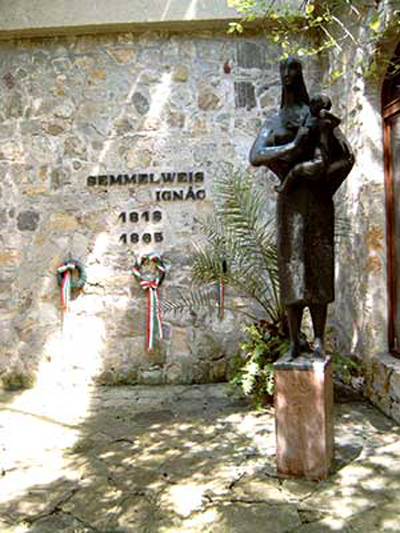
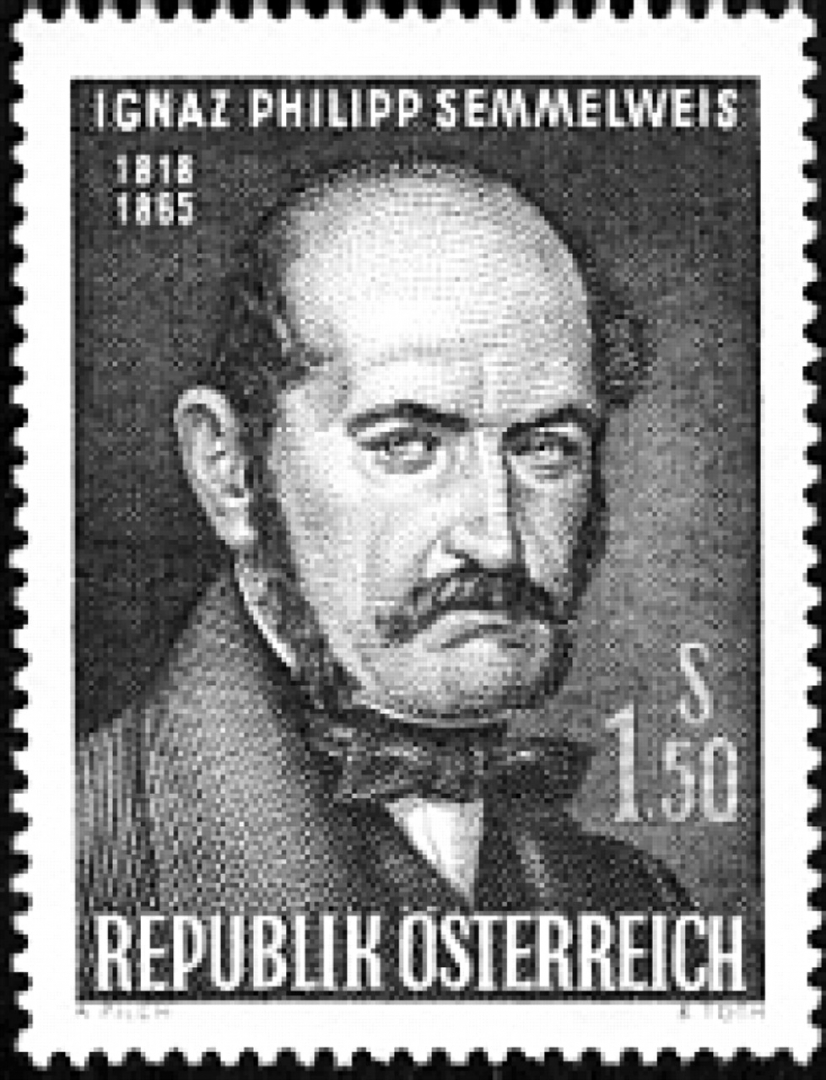
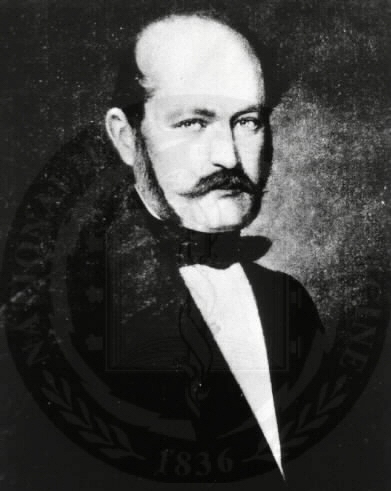
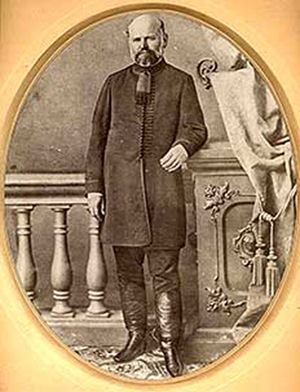
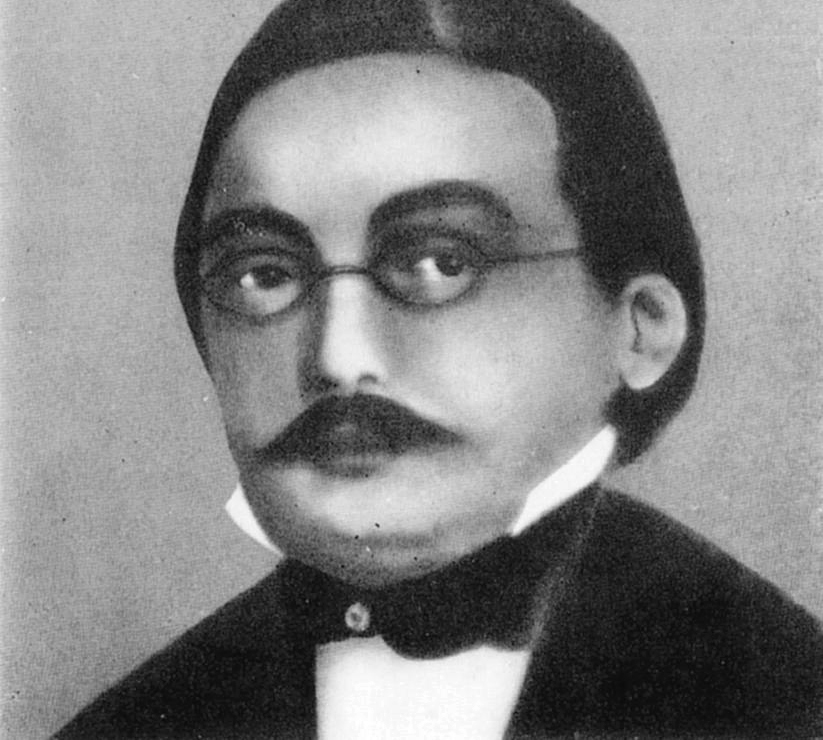
Ignaz Semmelweis (1 July 1818, Buda – 13 August 1865, Vienna) was a Hungarian doctor in the Austrian Empire. He is now recognised as the father of the antiseptic method
♦ Early life and education
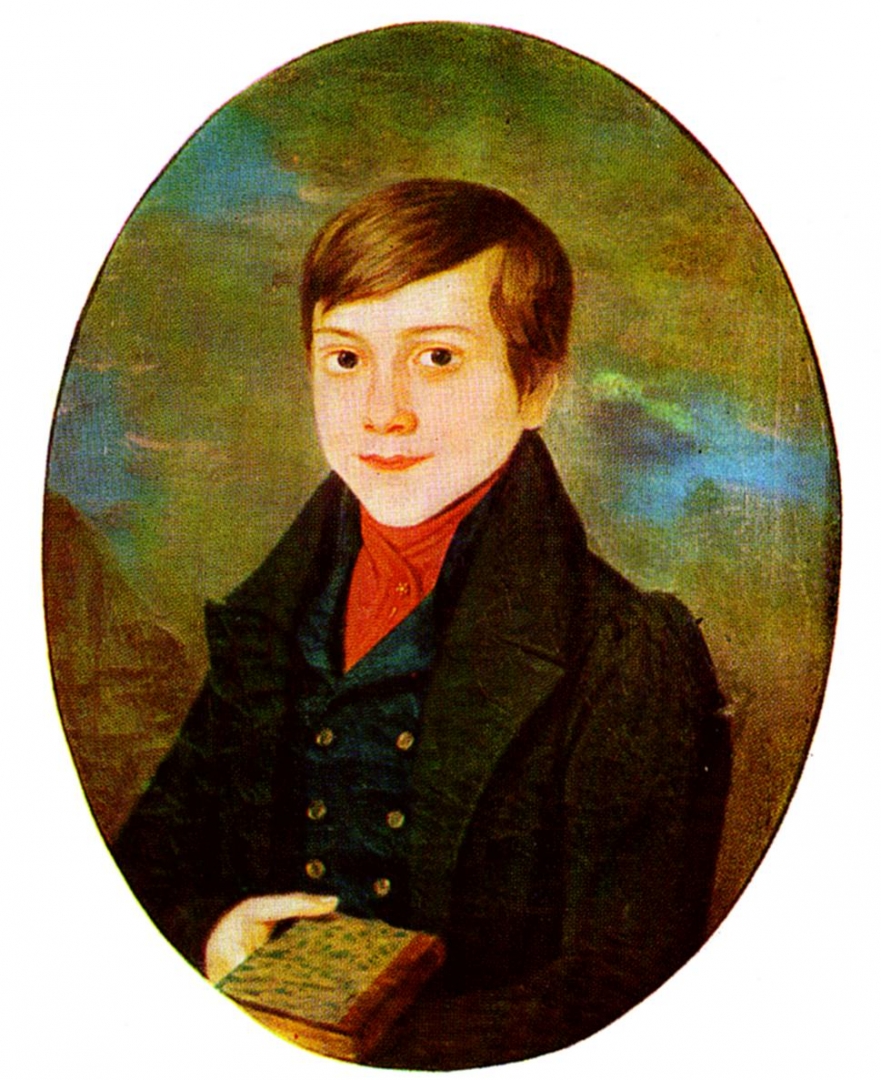
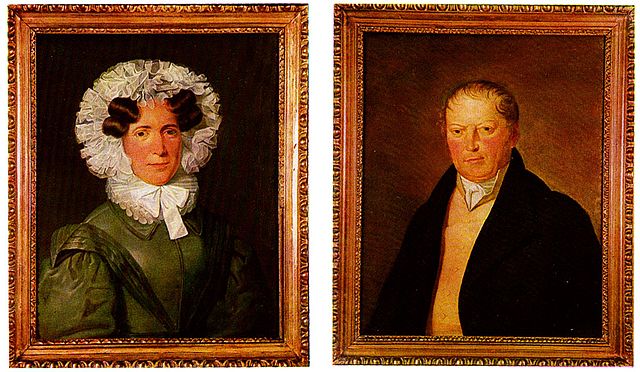
Ignaz Semmelweis was born in 1818; his father was a grocer in Buda
After completing his secondary education in Pest, he enrolled at the University of Vienna in 1837. In July 1844, he decided to study obstetrics at the Vienna General Hospital and became an assistant to Professor Johann Klein.
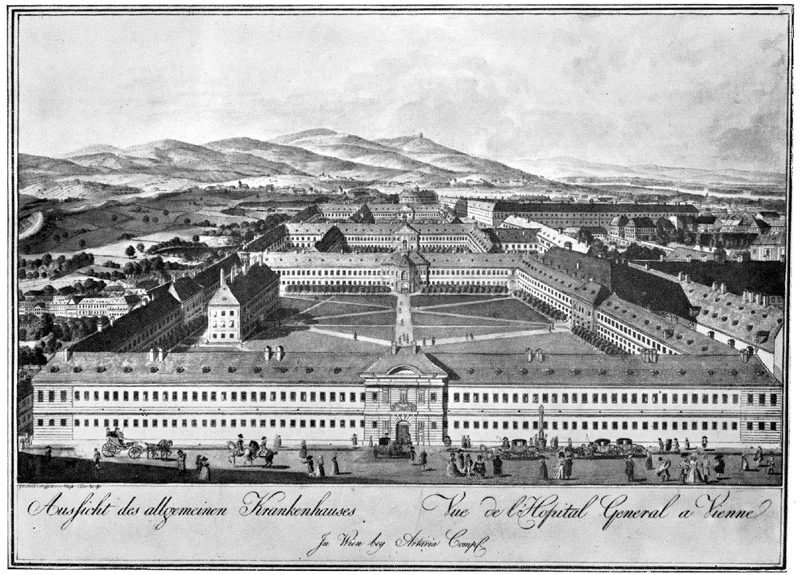
♦ Vienna General Hospital
He was put in charge of two adjoining obstetrics wards and made a startling discovery. In one ward, where students and junior doctors attended births, 700 women died each year from puerperal fever
(25 per cent of the total number of admissions). In the ward where midwives attended births, that mortality rate was just 2 per cent.
Various experts had been studying this phenomenon for years and had put forward a number of theories. These ranged from harmful bodily fluids, overcrowding in the hall, poor ventilation, the influence of weather conditions and the seasons, to the suspicion that some sort of epidemic was to blame.
Ignaz Semmelweis identifies all possible factors and formulates various hypotheses based on statistics.
• In his view, an epidemic is out of the question. Why should it occur in that one ward of the Krankenhaus and not in the others?
• Why not in the rest of Vienna, where there is no sign of this phenomenon?
• And women who give birth at home, even in the poorest slums, almost never die of puerperal fever.
• He also establishes that the mortality rate increases in direct proportion to the birth trauma to the cervix.
To put this to the test, he had students and midwives swap wards and observed that mortality was highest where students were attending the births.
At this time, his best friend, Jacob Kolletschka, a professor of forensic medicine, is dying from the effects of a finger injury sustained during a dissection. Semmelweis performs the post-mortem and notes that there is a striking resemblance between Kolletschka’s affected organs and those of the deceased women.
♦ Eureka
And then he has a stroke of genius, which he puts into words as follows:
‘If, as in the case of Professor Kolletschka, septic changes arose from contamination with particles from corpses, then childbed fever must have the same origin. This implies that the transmission of these “corpse particles” must take place via the hands of the students and attending doctors.’
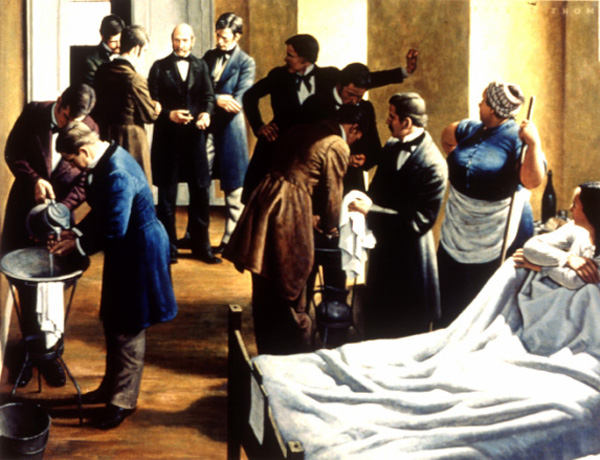
Following that ‘eureka moment’, Semmelweis immediately introduced a measure that became known as the ‘Semmelweis doctrine’.
Every student coming from the autopsy room must, before attending a birth, wash their hands in chlorinated water until the smell of the corpses has disappeared. (Bacteria were not yet known at that time.)
At first, the students failed to see the point of the measure, until the mortality rate from puerperal fever fell dramatically in the following weeks.
Within a month, it had dropped to 1.3 per cent. (Among midwives, it was 1.2 per cent.)
Wie Anyone who now thinks that this simple, life-saving measure marks the beginning of a global breakthrough in the prevention of maternal mortality is bound to be disappointed. From this point onwards, the story takes a completely wrong turn. On the one hand, this was due to the extremely conservative medical thinking of the time; on the other, to a kind of self-destructive impulse in Semmelweis’s character.
The discovery of these so-called ‘corpse particles’ sends shockwaves through the office of the elderly and staunchly conservative head of department, Johann Klein.
He is actually seized with horror at the thought that, because of this discovery, he could be held directly and indirectly responsible for the deaths of thousands of young women.
Driven by a sort of survival instinct, Klein clings to the conviction that puerperal fever is a complex and intractable problem, and will continue to take its toll amongst hospitalised mothers.
When Semmelweis’s assistantship in obstetrics came to an end, Klein did not renew it. did not renew it.
Why would he?
The entire reputation of the Krankenhaus was at stake, and certainly his own.
Semmelweis is hurt, embittered and makes one foolish mistake after another.
- he does not publish his brilliant discovery
- he leaves for Budapest with his family
♦ Budapest
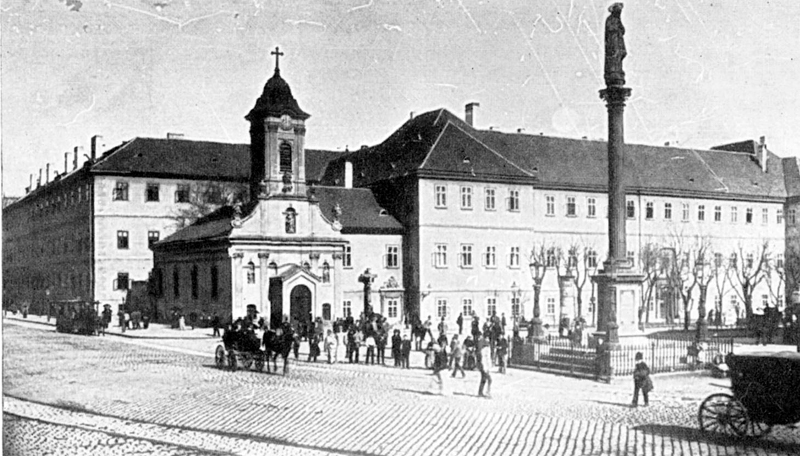
In Budapest, Semmelweis accepted the post of Head of the Obstetrics Department at St Roch’s Hospital.
The mortality rate from puerperal fever there immediately fell to 0.85 per cent, an unprecedentedly low figure.
• In 1855, he became a professor of obstetrics at the university, but was not particularly well-liked there due to his tactlessness and impulsiveness.
• In 1860, he vented his frustrations in a book in which he hoped – note his choice of words – to ‘destroy his opponents’. In the preface, Semmelweis sets the tone straight away.
1_ ‘Fate has imposed upon me the task of revealing the truth contained in this book (…)
2_I can no longer act in accordance with my own peaceful nature, but must consider the lives that depend on who prevails – I or my opponents.’
•• his book has been poorly received because his argument is far too convoluted
•• and has provoked the anger of those who feel personally attacked
Semmelweis is furious and writes a few open letters to his main enemies
A few quotes:
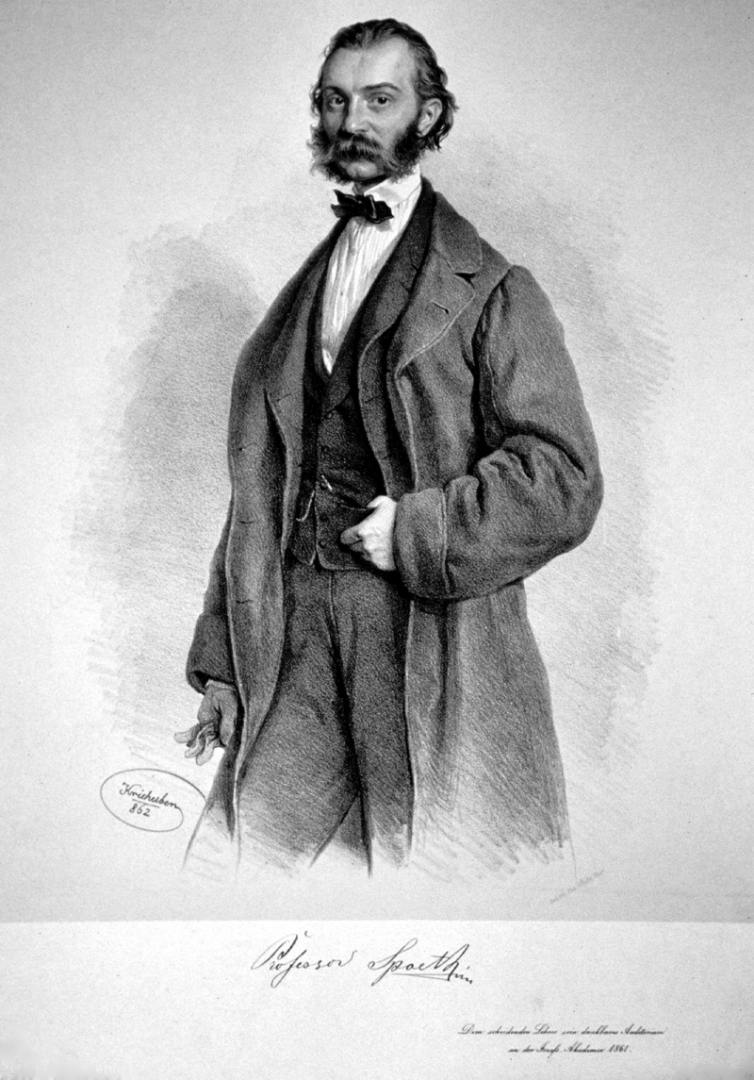
• He writes to Josef Spaeth, professor of obstetrics in Vienna:
1_ ‘Herr Professor, you have convinced me that the Puerperal Sun (by which he means himself), which rose above Vienna in the year 1847, has not enlightened your mind … Your arrogant disregard for my theory and this arrogant boasting about errors compel me to make the following statement:
2_ since the year 1847, thousands upon thousands of new mothers and infants have died who would not have died had I not remained silent … And you, Herr Professor, have contributed to this slaughter. (…) To put an end to this massacre, I have no choice but to mercilessly denounce my opponents.’
• Semmelweis writes to Friedrich Scanzoni, Professor of Obstetrics at Würzburg:
1_‘To put an end to this slaughter, I have taken the unshakeable decision to fight ruthlessly against all those who spread erroneous views on puerperal fever. (…)
2_If you, Herr Professor, persist in teaching your students the theory of epidemic puerperal fever in your practice, then I declare before God and the world that you are a murderer … a medical Nero …’
Instead of winning those midwives over to his cause, he ends up with everyone against him.
♦ The rest of his life
He became paranoid, unpredictable, violent, hysterical and completely broke down. His wife tried to look after him at home for a few more weeks but eventually took him to Vienna, where he was immediately admitted to a mental asylum. When Mrs Semmelweis tried to visit him the following day, she was refused entry.
Two weeks later, Semmelweis is dead.
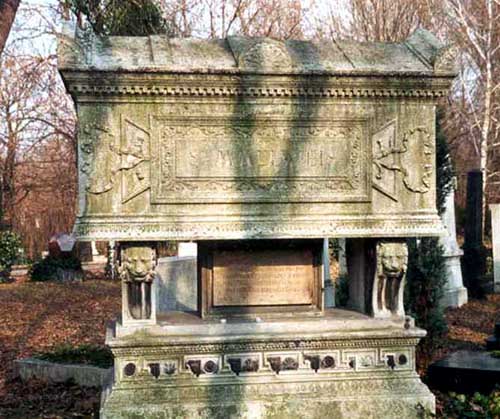
After a brief post-mortem examination, he is buried in a shabby grave àzoz
It was once claimed that Semmelweis died as a result of a contaminated needle prick, and thus succumbed to the very disease he had spent his entire career fighting amongst new mothers.
That would be a poignant final scene to a life full of tragedy and misunderstanding, with a chorus of thousands of young women still alive bursting into tears in the background, but the reality is far less romantic.
A hundred years after his death, a group of scientists unearthed the original post-mortem report and exhumed his remains.
X-rays of Semmelweis’s skeleton revealed that, as was often the case at the time with violent psychotics, he had been so severely beaten by the nursing staff that he succumbed to his injuries two weeks after being admitted.
He was subsequently reburied.
It was not until around 1890 that his ideas on antiseptic research gained acceptance.
It was only after Louis Pasteur’s discovery of the bacterium that his method received the necessary theoretical underpinning. It was Joseph Lister who posthumously gave Semmelweis the credit he deserved.