



.jpg)
♦♦ The History of the Toilet ♦
The Romans used a precursor to the modern toilet. Toilets have been found in Pompeii and Herculaneum that were connected to a continuously flushing sewer system.
From that time onwards, however, toilet technology went into decline: between Roman times and the nineteenth century, there were hardly any improvements made to the little room. In fact, there was hardly a little room to speak of.
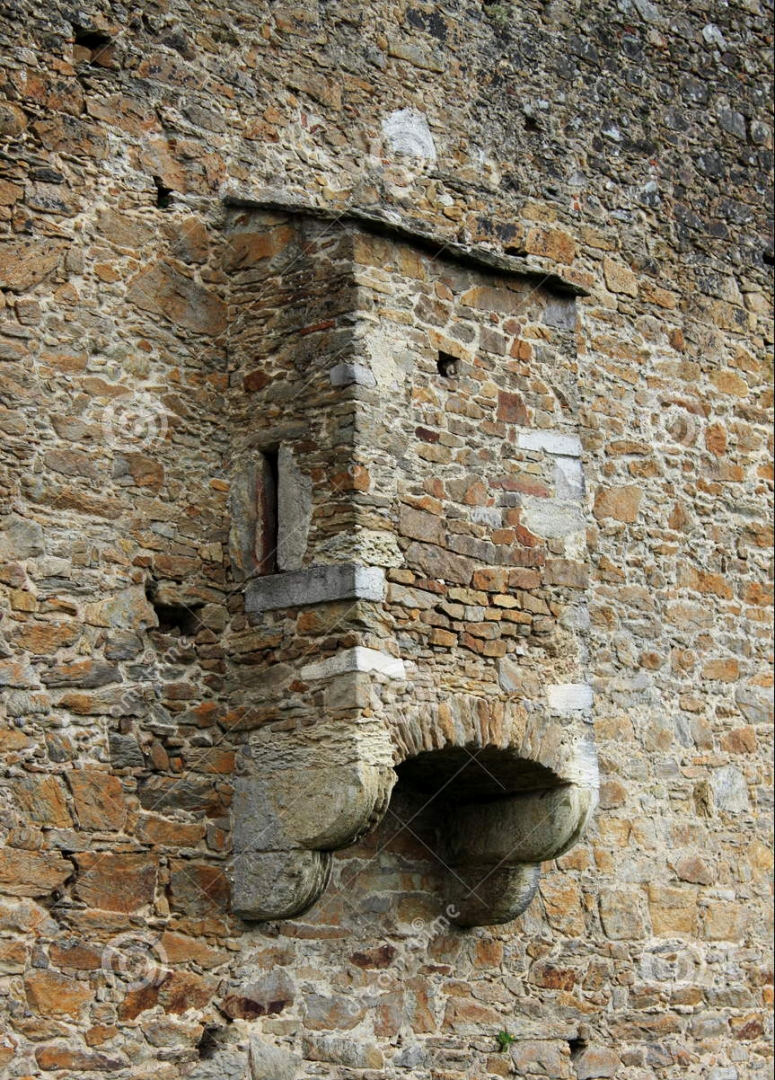
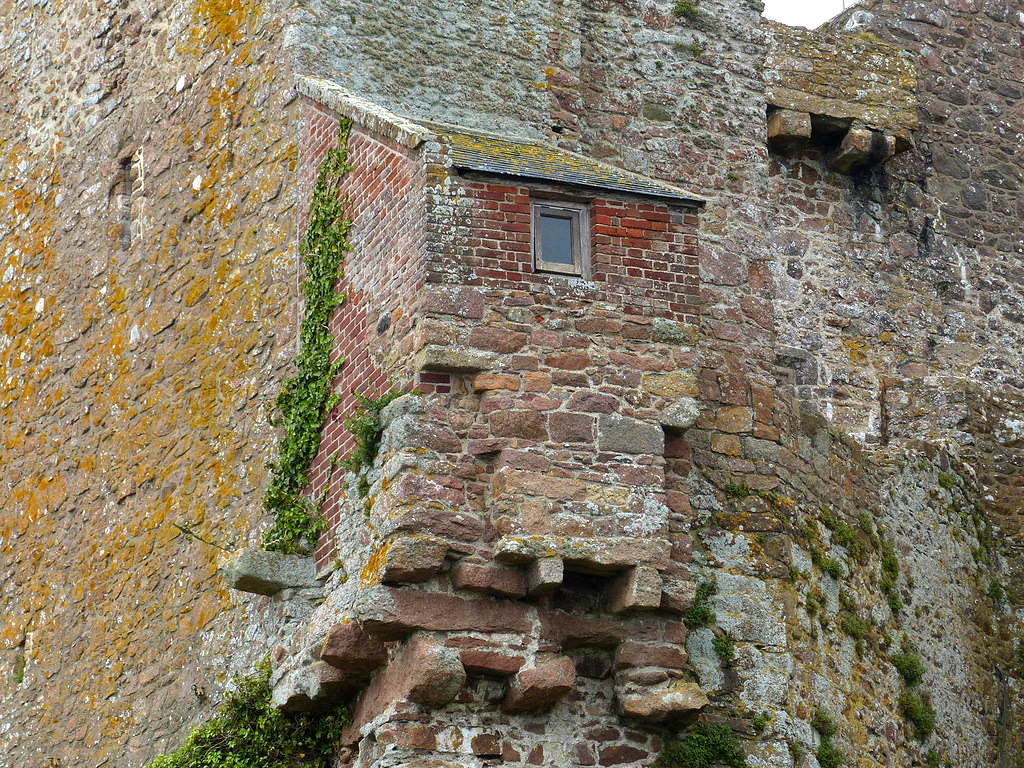
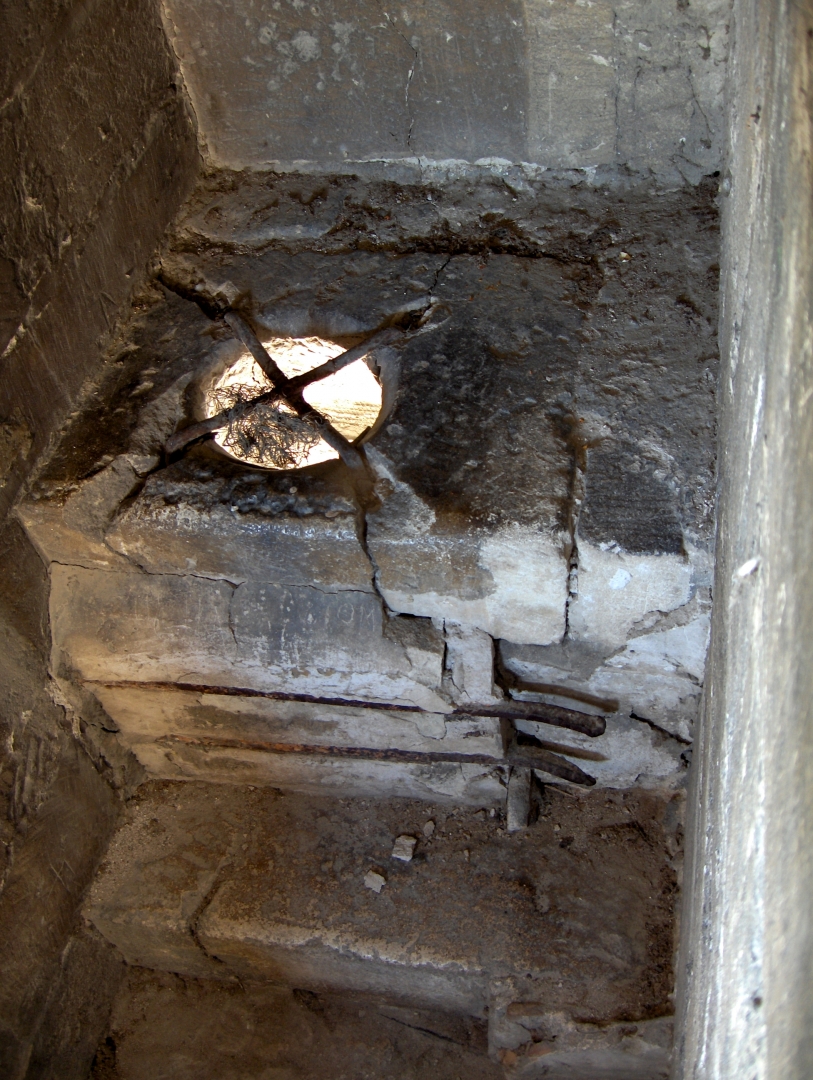
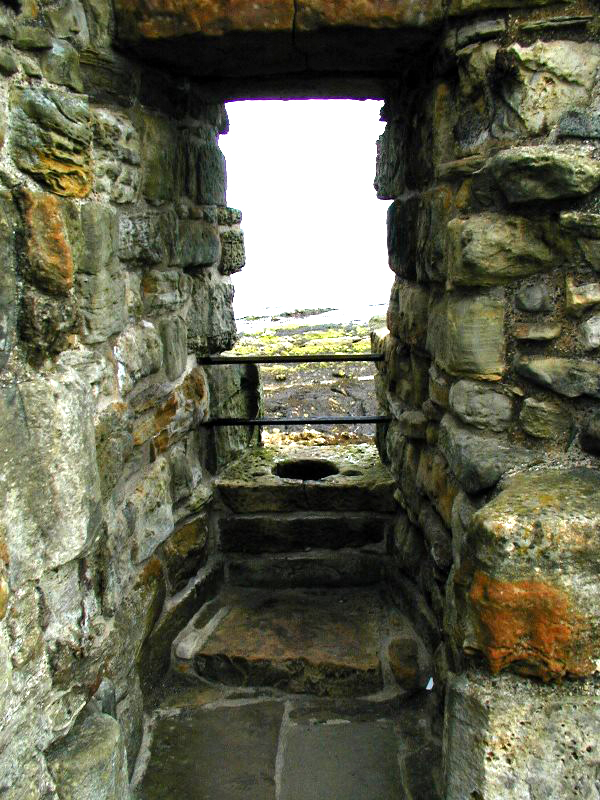
In the Middle Ages, the nobility relieved themselves in a separate cubicle attached to the castle wall. At best, their excrement ended up in the moat or a ravine. This was by no means hygienic, as the moat water was often used for washing or drinking.
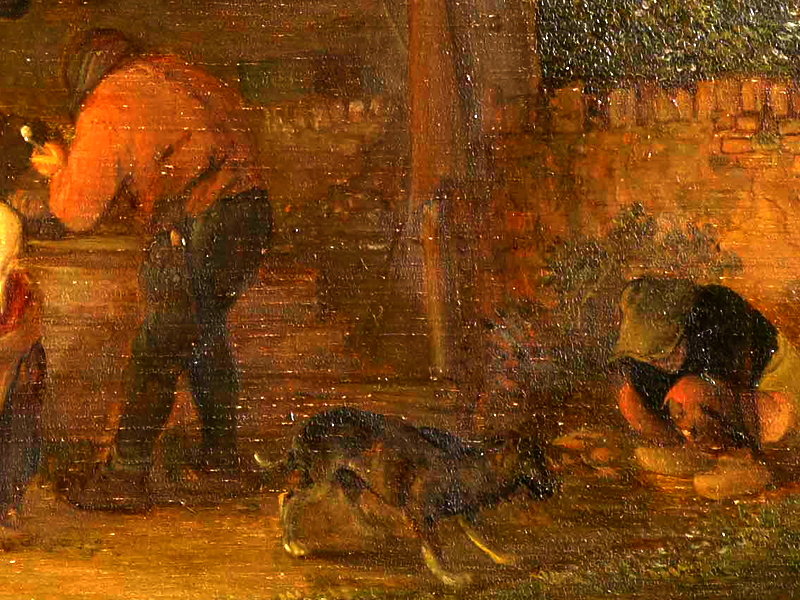
Whilst the nobility still had their own little room, the ordinary town or village dweller had nothing: he relieved himself in the open air, above the manure heap or in the street. Or into a bucket which he emptied somewhere in one of these places.
♦ Renaissance: comfort and a poo chair
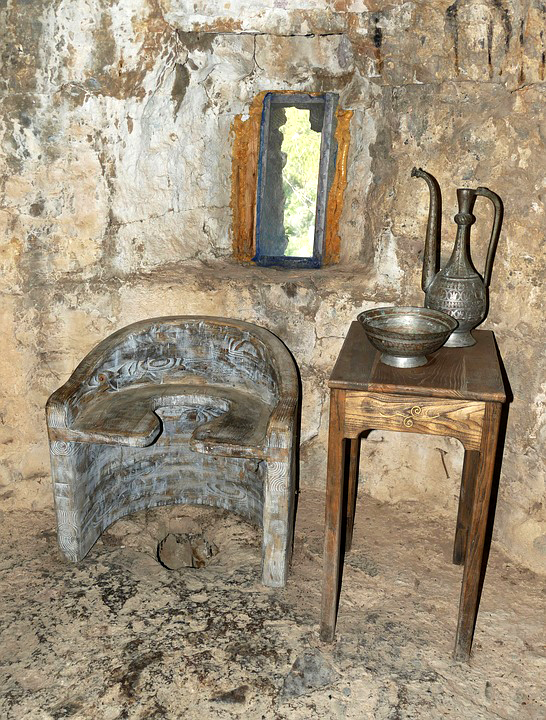
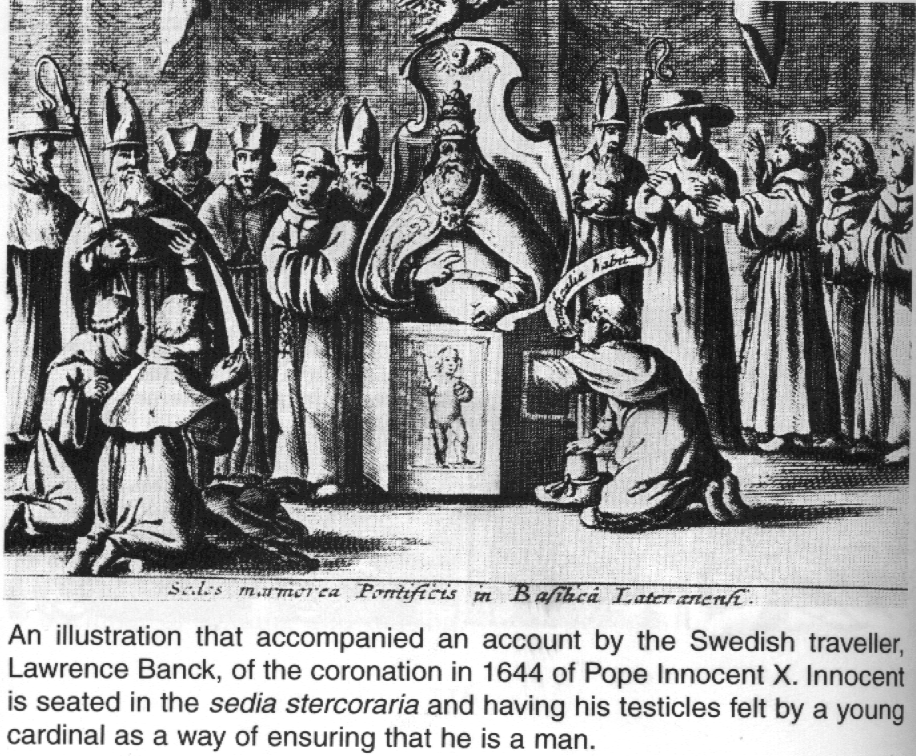
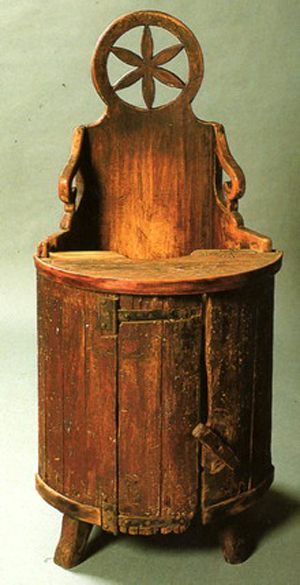
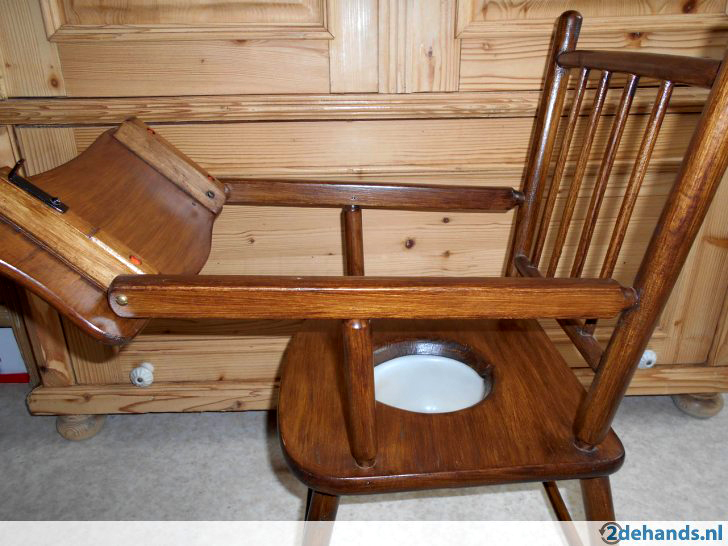
With the advent of the Renaissance, around 1450, the wealthy felt that a toilet attached to the outside of the castle wall did not harmonise with the architecture, and so the ‘commode’ or ‘toilet chair’ was introduced. Incidentally, people were far less self-conscious about it than they are today. It was often the case that the pooping chair was not kept in the bedroom, but was simply part of the furniture in the living room.
It is known that Louis XIV continued to receive his subjects whilst he was relieving himself, seated on his Royal Toilet.
For the lower-ranking court staff, there were latrines – a communal poo box consisting of a large plank with holes on which several people could sit together, with the poo falling into a gutter, hole or ditch. These latrines were extremely filthy, even for a time when people, having a more relaxed view of hygiene, were prepared to put up with a bit of a stench. They were in fact so filthy that people preferred to relieve themselves in the garden, in dark corners or behind the curtains. This often got completely out of hand. There are documents ordering footmen, staff and soldiers to do their business in the latrines.
The stench of all that excrement made the situation at court untenable after a few years. The entire court would then move to another, ‘clean’ palace. Courts thus often led a nomadic existence due to faecal nuisance.
Townspeople, too, were rather lax about their bowel movements. People would shamelessly position themselves between two battlement towers of the city wall and drop their excrement outside the city walls.
♦ 17th century: posh snob
Around the time of Louis XIV, townspeople relieved themselves into a pot or into ‘poop boxes’ built over cesspits. A ‘poop box’ is a wooden chest or bench with a hole in it, and a cesspit is a deep pit with a narrow opening.
As mentioned, the wealthier classes used a commode; the chamber pot attached beneath it was emptied by the servants into an open sewer (often a kind of ditch or trench) or a cesspit. The derogatory term ‘kouwe kak’ (literally ‘cold poo’) for people who wanted to appear ‘better’ and pretended to use a commode, but in reality had to relieve themselves in the cold open air, in a small cubicle or under a lean-to, probably dates from that time.
Incidentally, some of these chamber pots had several holes. In rural Scandinavia, the ‘honourable person’s chamber pot’ is, in fact, still in use today.
Cesspits often posed a health hazard: the cesspit liquid, contaminated with micro-organisms, would frequently seep into nearby wells and could thus cause typhoid or cesspit fever.
Although it was not yet known exactly how the infection occurred – bacteria would only be identified as the culprits in the course of the nineteenth century – the risk of infection was recognised. Strangely enough, the stench was regarded as the cause of disease.
♦ The modern toilet: from the flush pan to the water closet
By the end of the eighteenth century in England, the modern toilet had been invented. This innovation quickly gained popularity, and the British began to install sewers and water mains on a large scale.
Since the introduction of this status symbol, people gradually became more prudish. Many people turned out to value privacy whilst carrying out this daily chore.
Unlike communal outhouses and latrines, communal toilets were never manufactured on a large scale. Except for factory workers and soldiers.
In France, incidentally, the ‘Latrine Anglaise’ struggled to gain ground; people preferred to erect impressive public buildings rather than invest in underground – and therefore invisible – sewerage and water supply networks.
The Netherlands, too, was largely spared the sanitary consequences of the Industrial Revolution; here, too, there was a delay in the installation of sewers and water mains.
For reasons of hygiene, the so-called chamber pot system began to be used in the Netherlands and France during the nineteenth century. Under this system, people relieved themselves into a chamber pot, which was periodically exchanged for an empty one by so-called chamber pot collection trolleys. As there was no need to install underground sewers, this system was considerably cheaper than the flush toilet. The chamber pot system significantly reduced the risk of infection and odour nuisance. It represented a hygienic improvement on the cesspit, but is in no way comparable to a modern toilet connected to the water mains and the sewerage system. People did try their best, however: for example, families in which an infectious disease was rife were given a differently coloured barrel. The certainly not-so-fresh-smelling cesspit carts were given ironic nicknames: ‘Boldoot’s cart’ and ‘the 4711’.
In parts of the Frisian towns of Leeuwarden and IJlst, the rotating barrel system lasted right up until the era of moon landings and colour television. Only then was the whole of the Netherlands able, at the touch of a button or a tug on the chain, to entrust its yellow and brown waste to Mother Earth.
♦ Flush toilet for urgent needs
Anyone who uses the toilet usually doesn’t realise that our ancestors had to manage without one for centuries. With all the consequences that entailed for hygiene.
Diseases such as dysentery, cholera and typhoid took on epidemic proportions from time to time as population density increased.
When people did not yet have a permanent place of residence or abode, there were no toilets of any kind. Wherever the ‘urgent need’ arose, it was simply relieved on the spot – along the roads, in the fields and in the woods.
This was the case for centuries, with the exception of a few highly developed cultures. Archaeological excavations show, for example, that on the island of Crete, toilets with running water were already in use as early as 1700 BC.
The Cretan kings were renowned for their extraordinarily luxurious bathrooms and water networks with running hot and cold water.
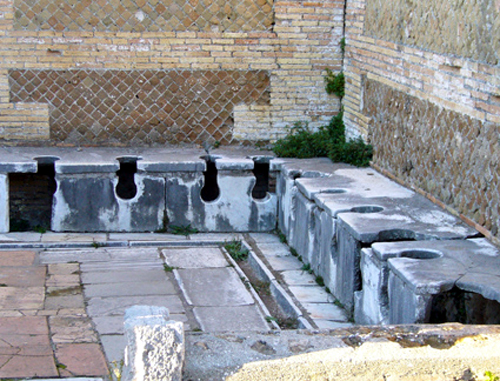
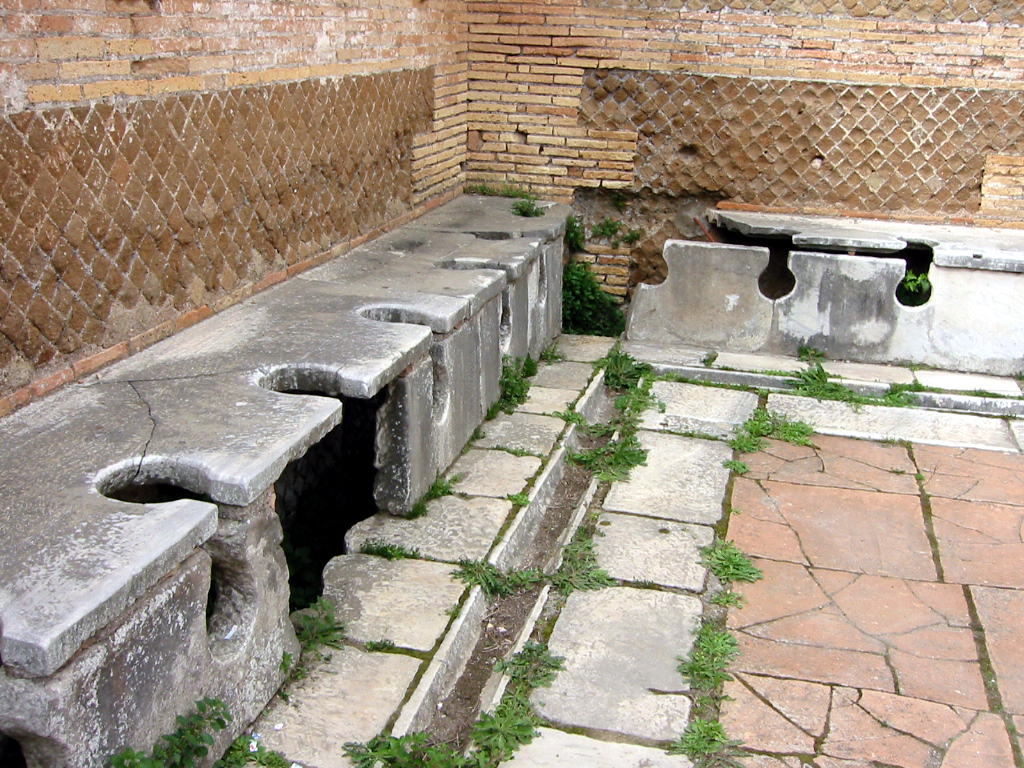
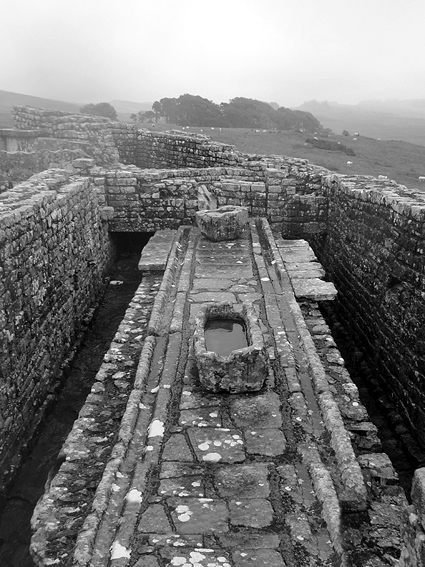
The Romans, too, were far ahead of their time. They constructed advanced water networks right into the furthest corners of their vast empire. For the common people, there were large latrines through which water flowed to carry away the excrement. The water came from stone tanks or was supplied via an aqueduct. Aftercare was also taken into account. In a bucket of salt water stood a stick with a sponge attached to it, which users could use to clean themselves after using the facilities. Afterwards, the sponge was returned to the water, ready for the next user.
Wealthy Romans had their own toilets in their homes, which consisted of a hole in the floor, without a seat.
A vertical pipe connected it to a cesspit situated beneath it.
♦ The Middle Ages
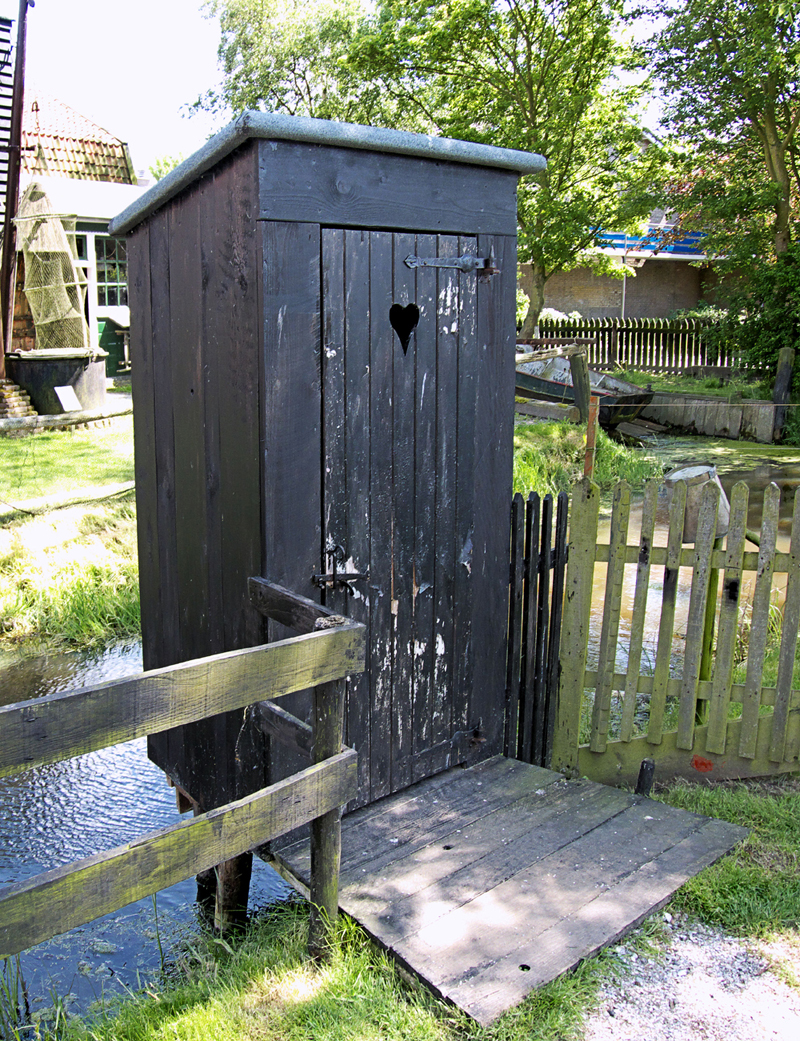
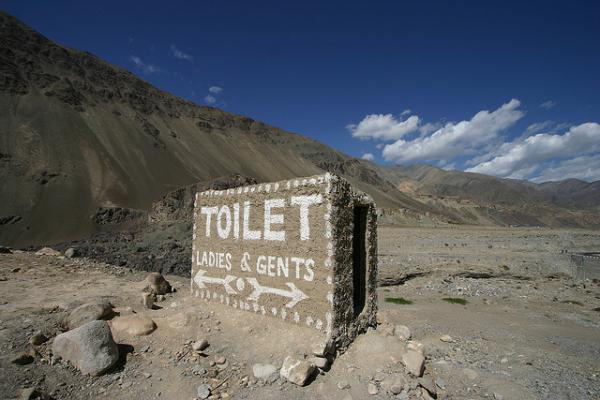
After the fall of the Roman Empire, the era of civilised toilet facilities came to an end. To relieve themselves, people once again had to resort to the bushes. The growth of towns and villages made matters more complicated. Country houses and farms were often fitted with a primitive outhouse in the garden. This was usually little more than a plank with a hole in it, with a bucket underneath that had to be emptied from time to time.
The stench, especially in summer, attracted a great many flies.
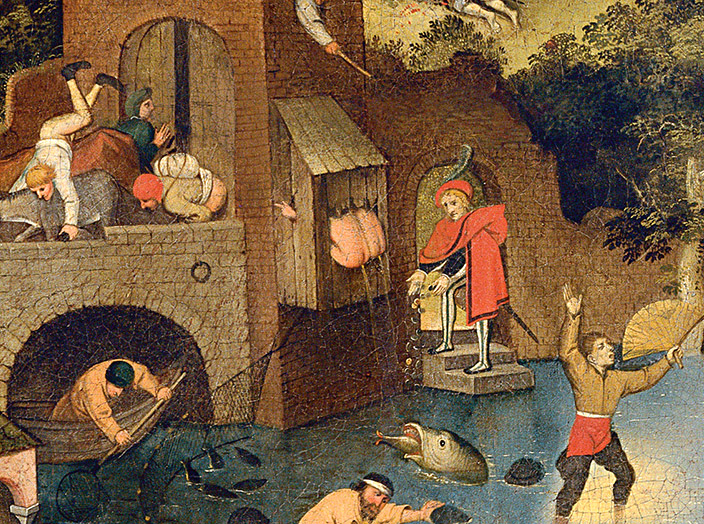
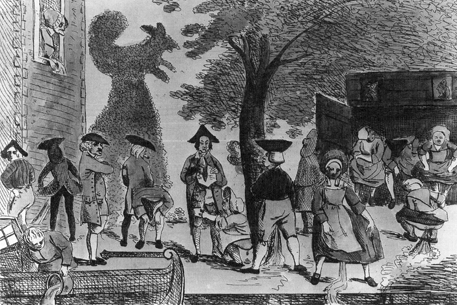
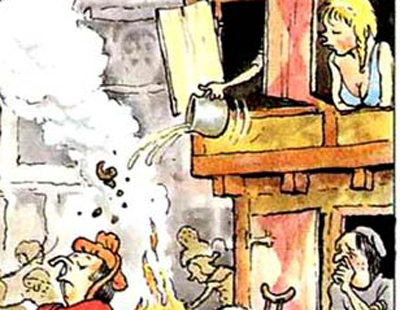
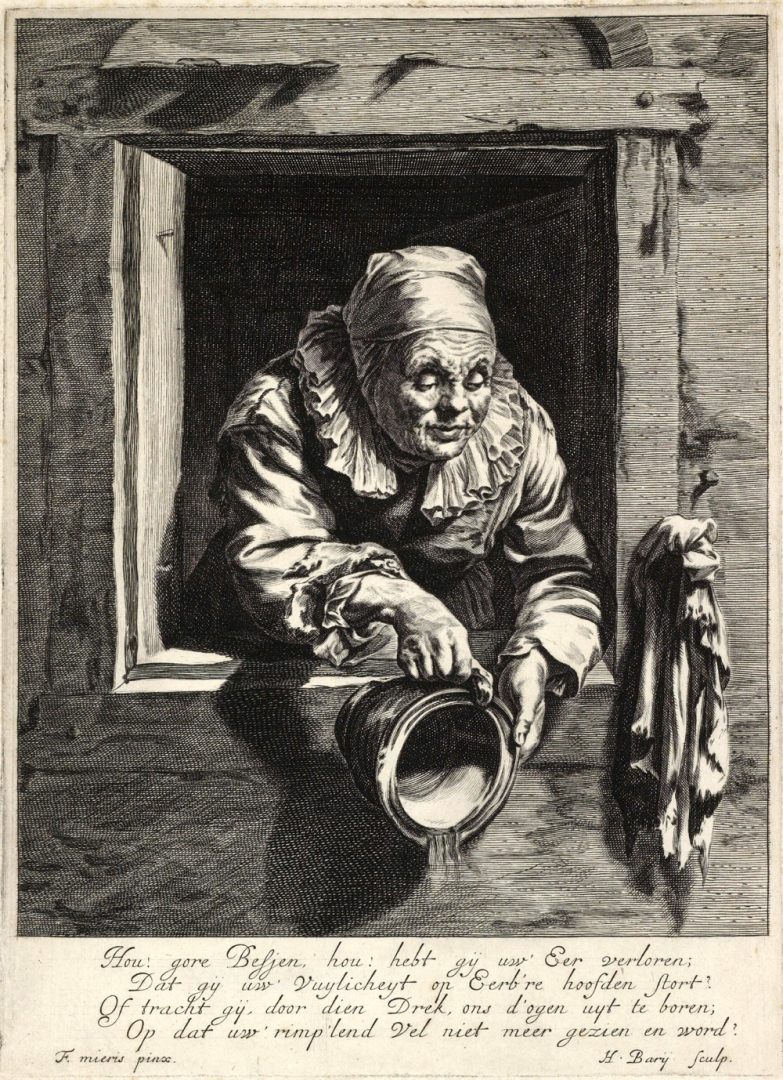
In villages and towns, it was even worse. Residents usually relieved themselves indoors in special pots. The contents were simply thrown out of the window.
This led, in cities such as Paris and London, to special by-laws designed to put an end to this practice.
Every house had to be fitted with a toilet connected by a clay or iron pipe to a cesspit.
♦ Toilet
Of course, this did not solve the problem of odours. The development of the first water closet by the Englishman Sir John Harrington in the sixteenth century marked a first step forward.
He built the toilet in 1596 for his grandmother, Queen Elizabeth I. Only one was ever made.
It took nearly two hundred years before Harrington’s invention was taken up again in 1775 by the London watchmaker Alexander Cumming. He developed the S-bend, a curved pipe in which the water remains and which acts as an odour trap.
Although this invention was a step forward, it did not yet contribute to better hygiene.
The solution came three years later, when the British inventor and engineer Joseph Bramah developed a toilet consisting of two parts: a bowl with an S-pipe and a cistern, which he fitted with a float and a hinged valve. He was granted a patent for his invention, which is still in use today.
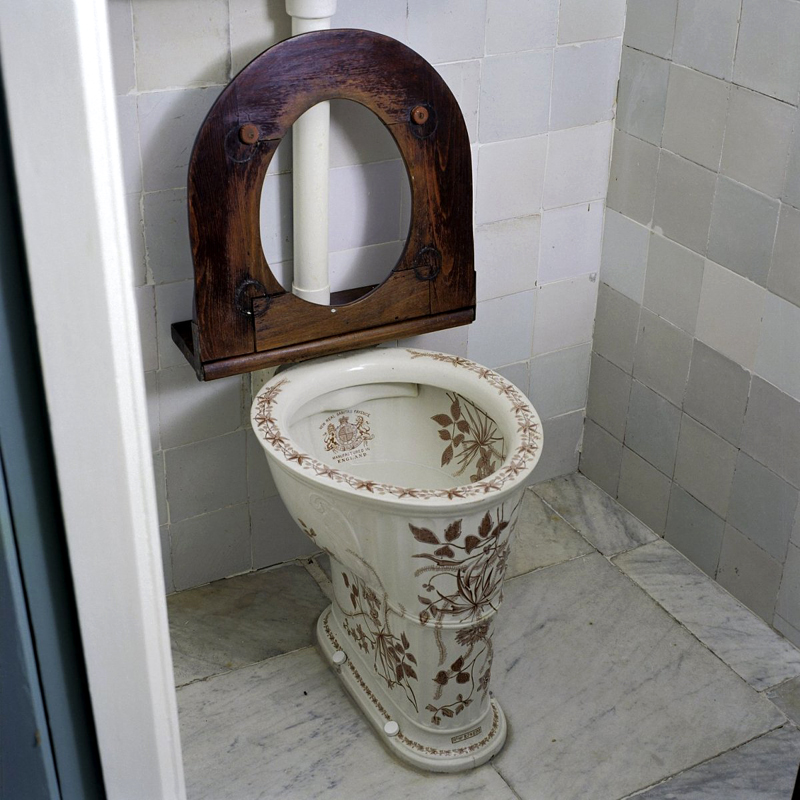
Just over a hundred years later, in 1885, Thomas Twyford designed the first porcelain toilet.
Toilet bowls from earlier years were made of wood or metal. Twyford also made them from a single piece. The cistern formed a single unit with the bowl.
The modern toilet can therefore be seen as a joint invention by Bramah and Twyford.
♦♦ The history of toilet paper ♦
It is thought that people began by cleaning themselves with leaves and twigs. Later, they became more resourceful and all sorts of other objects came into use. Where people lived was a decisive factor in this.
People living in coastal areas, for example, often used mussels or other shells.
In Hawaii, pieces of coconut shell were used, and at the court of Louis XIV, even silk was used.
The Romans built large communal public toilets. Paper was not yet in use, but rather a kind of sponge attached to a stick. Wealthy Romans used wool and rose water.
Wool was also used by the Vikings, whilst in Medieval Europe, grass and hay were the main materials used.
Eskimos used snow and tundra mosses.
In China, large sheets of paper had been in use by the emperors since as early as 1391.
Around 720,000 sheets were produced annually.
In India, Indonesia and a number of Arab countries, the hand is still used today. The left hand, to be precise. That is why we still shake hands with our right hand. After all, the left hand is considered unclean!
Islamic teaching stipulates that one must wipe with stones or clods of earth, then cleanse with water and finally dry with linen.
The true fanatics still carry these items with them, just in case…
In the American countryside, people used maize cobs.
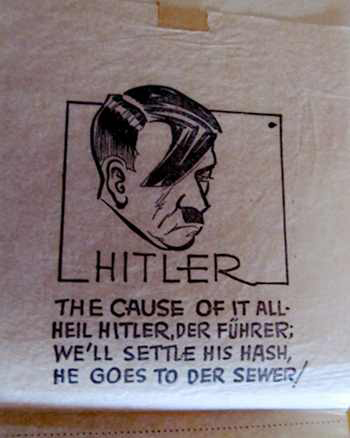
In the eighteenth century, newspapers emerged in America, and newspaper pages were put to good use.
There is a story doing the rounds that a wealthy nobleman instructed his son always to carry a cheap booklet of Latin poems with him. In this way, he had something to read whilst on the loo, and every page he read served a useful purpose!
Another important source of paper was the Sears mail-order catalogue.
This catalogue was printed on uncoated paper and was simply hung on a hook in the toilet as a source of free toilet paper. When Sears switched to glossy paper in 1930, the company was inundated with complaints, as the new paper was neither soft nor absorbent!
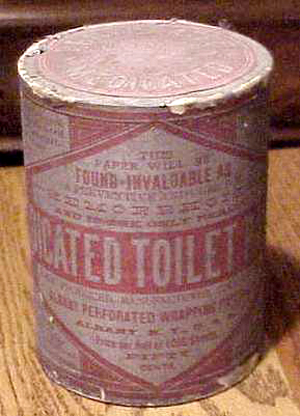
In 1857, the New York businessman Joseph Gayetty produced the first packaged toilet paper. He called it ‘therapeutic paper’ and… had his own name printed on every sheet.
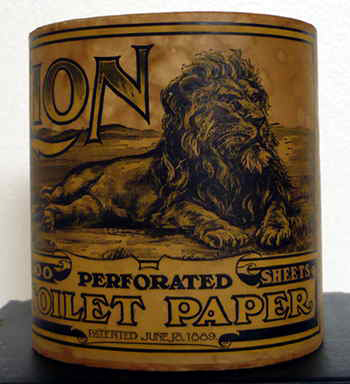
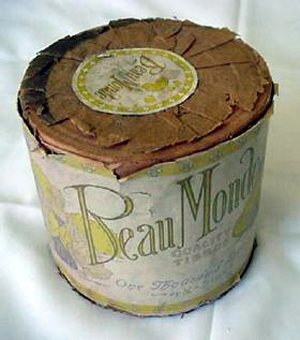
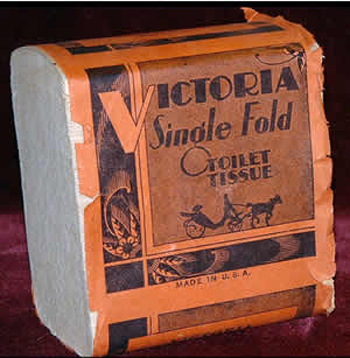
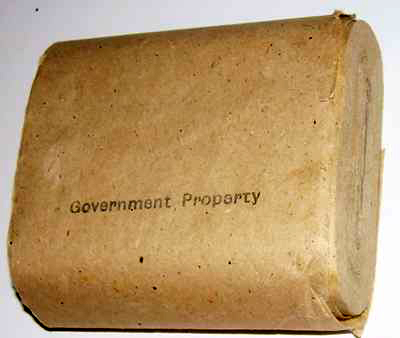
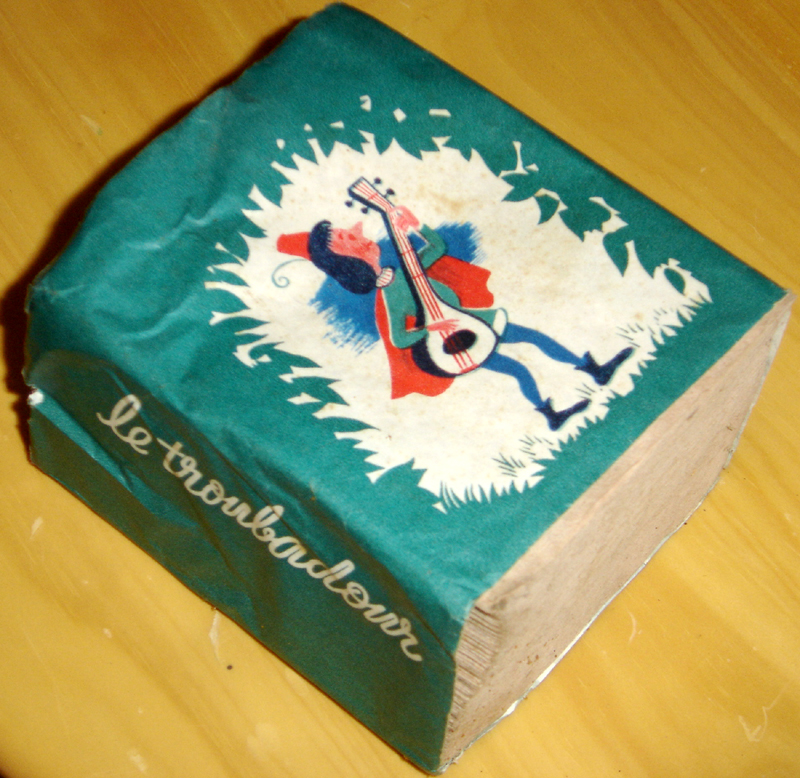
In 1890, the British Perforated Paper Company began production. The toilet paper consisted of individual sheets, packed in a small box.
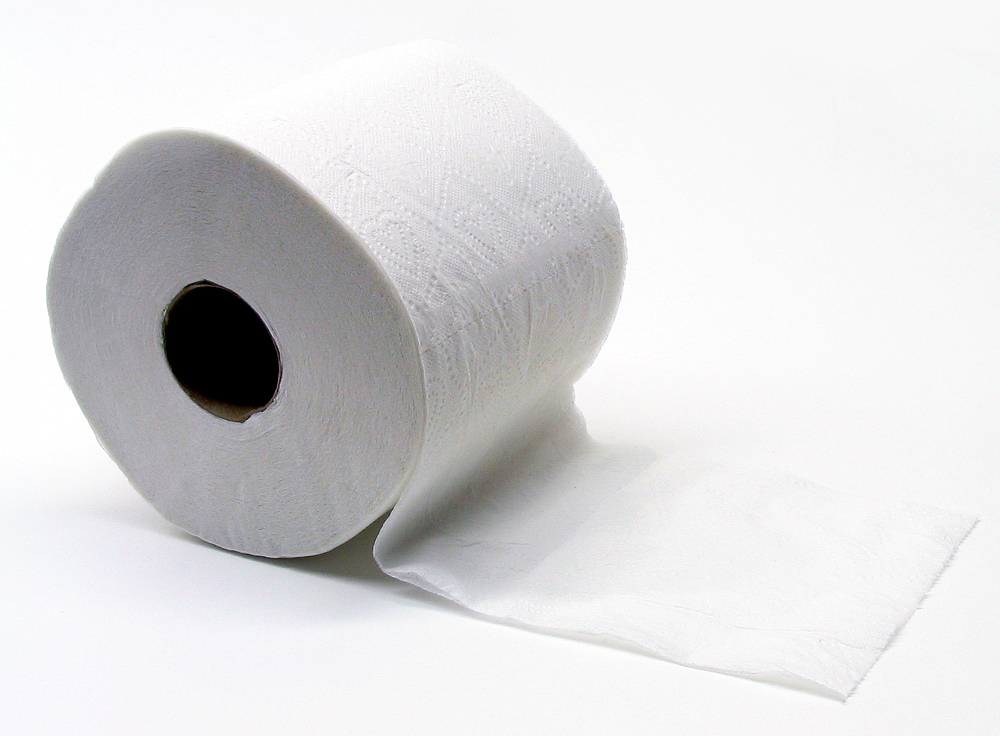
Toilet paper on a roll was invented by The Scott Paper Company in 1890.
Initially, the paper was purchased and wound onto rolls by Scott Paper.
These rolls were sold to grocers and food shops under those shops’ own brand names.
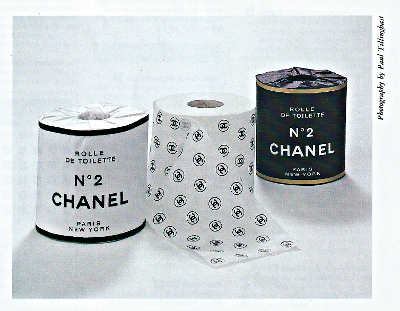
In 1902, the company introduced its first own brand: Waldorf.
Initially, there was not much interest in toilet paper. Moreover, it was not something people talked about easily.
However, with the advent of indoor sewerage systems, the need for hygiene grew and the use of toilet paper began to increase more rapidly.
Following Waldorf, Scott also launched ScotTissues and Sani-tissues onto the market.Advertising copy suggested that 65 per cent of middle-aged Americans suffered from some form of rectal condition.
This was attributed to the use of poor-quality toilet paper. Scott emphasised that their toilet paper met all the requirements set by doctors: absorbency, softness and chemical purity.
Business flourished and by 1925, The Scott Paper Company was the world’s largest manufacturer of toilet paper.
Later, in 1955, the company was taken over by Kimberly Clark, which remains a major manufacturer of toilet paper, known for its Page brand.
Nowadays, more than 80 million rolls of toilet paper are produced worldwide every day.
Modern toilet paper was invented in 1857 by the American Joseph C. Gayetty from New York. Production did not get off to a flying start, due to poor acceptance by his fellow countrymen, who preferred to continue using catalogues or waste paper.
In 1871, he was granted a patent for his ‘clean’ invention, which was also intended to prevent haemorrhoids. Incidentally, the American had no qualms about having his name printed on the sheets. For 50 cents, people could buy 500 sheets of ‘Gayetty’s Medicated Paper’.
In that same year, fellow townsman Seth Wheeler began rolling the sheets of paper onto a roll. Ten years later, it was the British brothers Edward and Clarence Scott who, through perfect marketing – making use of the right distribution channels and setting a reasonable price – supplied England with toilet paper.
Soft toilet paper arrived in our part of the world from America in 1930.
Until then, the new product had a decadent image.
After the Second World War, toilet paper became a regular item on Dutch people’s shopping lists, although it remained a status symbol until the 1950s.
Another clear trend was the ever-increasing need for privacy.
Particularly in the 1960s, people began spending more time in the smallest room in the house.
The amount of money people in the Netherlands spent on soft toilet paper also increased.
In 1965, the average Dutch adult used one roll every two weeks. That figure has now risen to one and a half rolls a week.
they sit on it... or stand next to it
♦ The poo chair
17th-century research into the link between health and hygiene sometimes led to false leads and delusions which, in the end, did yield positive results. For example, foul odours (which were unbearable in densely populated towns) were regarded as a major culprit and the cause of unknown diseases.
In most towns, there were only open sewers, or canals and waterways were used as drainage for human waste.
Houses situated directly on the canals had extensions with open holes, so that waste could be discharged directly through them.
In the countryside, it was customary to have a separate outhouse or pit away from the main house for relieving oneself. Such a cesspit would then be emptied regularly using shovel buckets. People were so accustomed to human waste that faeces were used as fertiliser and urine was collected for the linen industry.
For most town dwellers and for smaller houses in the countryside, there was simply a bucket or a tub for relieving oneself. Such a bucket was covered with a lid.
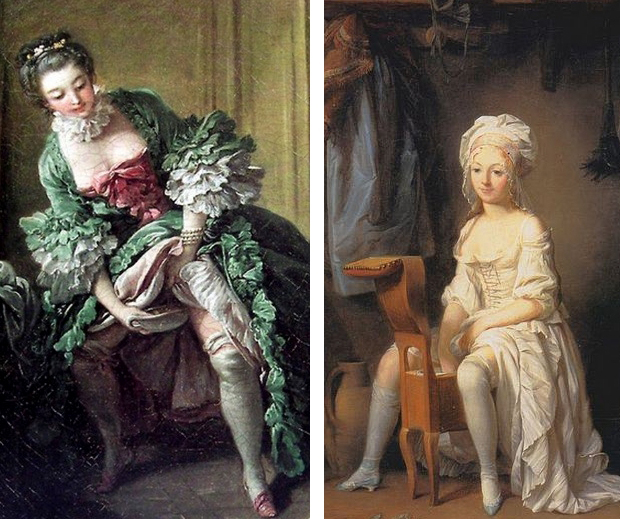
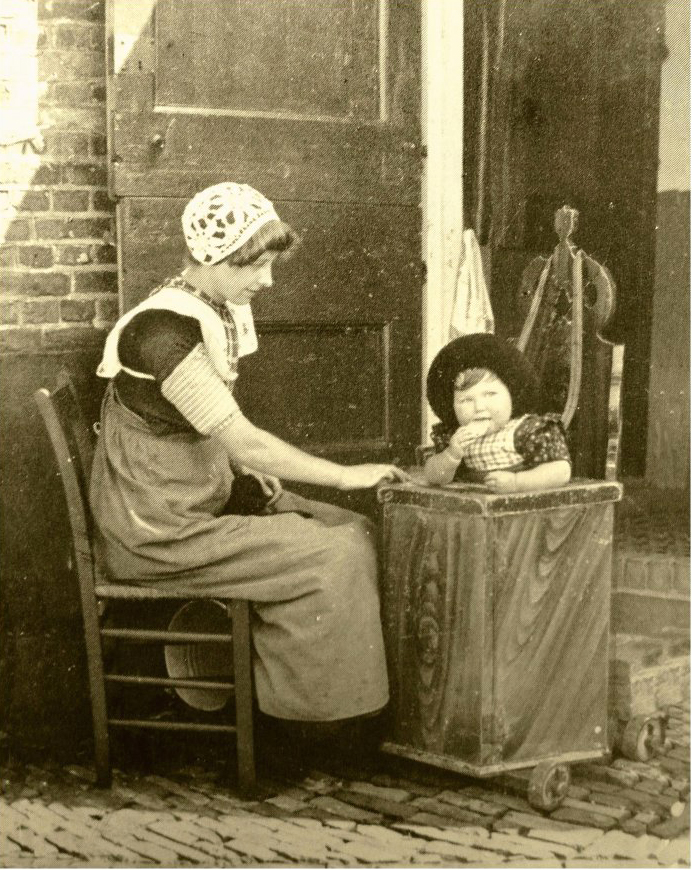
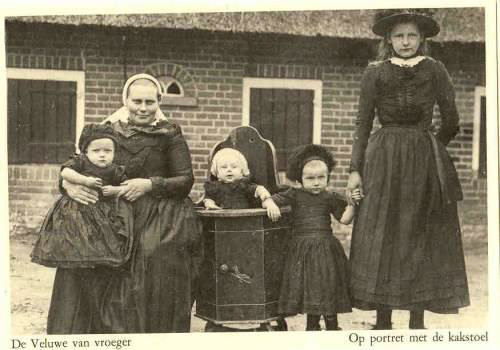
In the 17th and 18th centuries, small pieces of furniture were also available that allowed for a more elegant way of passing stool and urine.
Various types of chamber pots and pots were available for this purpose.
It is interesting to see how different sections of the upper classes sought to distinguish themselves from peasants and commoners through their hygienic practices and, consequently, their toilet accessories.
The lower classes made use of a tin chamber pot, whilst the wealthier classes concealed their chamber pots within small pieces of furniture or owned elaborately decorated chamber pots.