In the late 15th century, European nobles flaunted their syphilis sores until they realized the seriousness of the disease. Then they began to mask hair loss, rashes, and boils with wigs, fake beauty spots, and thick layers of makeup.
Around Christmas 1496, the Italian priest Tommaso di Silvestro fell ill. His knees ached, and in the new year, his shoulders did too. In May, he wrote in his diary that the symptoms had disappeared, but a year later they returned in full force. The cleric also developed pain in his penis, 'so severe that I cannot find any rest'. The back of his head was covered in sores, and the corners of his mouth were so painful that he could barely eat.
Di Silvestro had no idea what was wrong with him. But he was certainly not the only one to contract this new, mysterious disease, which caused not only pain in the limbs but also reddish-brown blisters all over the body and face. The condition, which later came to be known as syphilis, spread throughout Europe, and it soon became clear that it was transmitted through sexual contact.
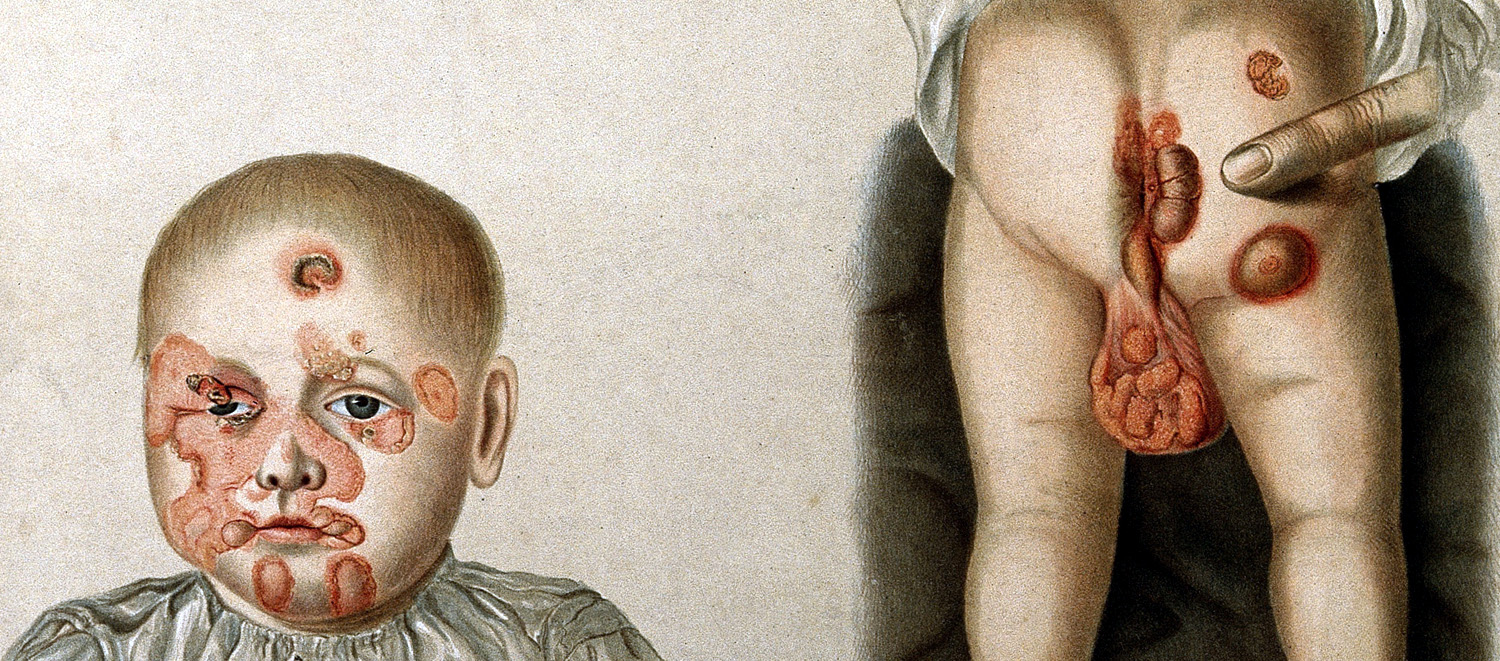
Not everyone was hit as hard as Di Silvestro. For many, the symptoms remained limited to a few painless sores on the genitals and face, which for a time were even a status symbol and indicated that the wearer had had a lot of sexual experience. A sore on the forehead, the 'Crown of Venus', was worn with pride.
This fashion came to an abrupt end when people realized the seriousness of the disease. And soon, the symptoms were hidden rather than emphasized. The craziest inventions to conceal the fact that one had syphilis became wildly popular throughout Europe.
♦ Big bulge in the pants
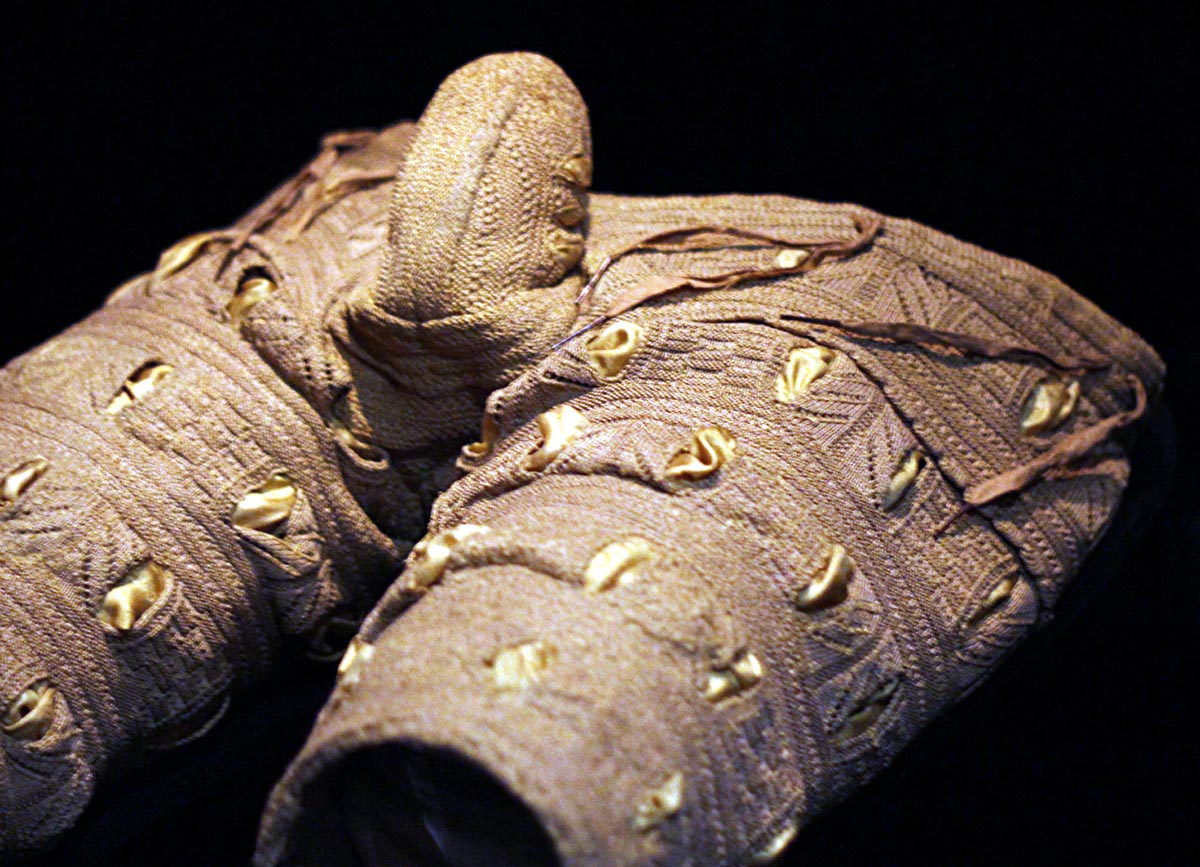
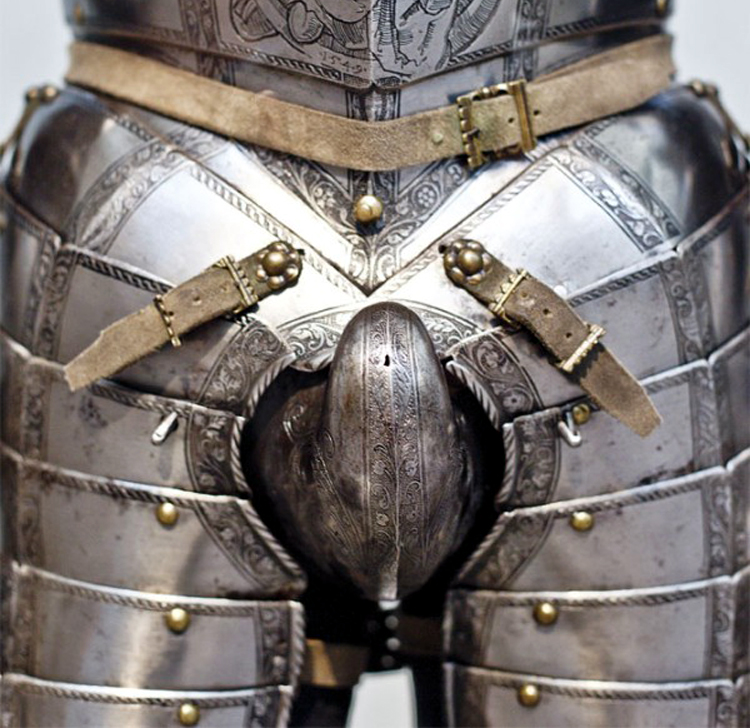
About 100 years before syphilis struck, a new fashion trend had emerged among wealthy men of the Renaissance: the codpiece or loincloth. While the legs
were encased in tight trousers, the genitals sat in a beautifully decorated fabric pouch that was tied to the trousers.
Syphilis made the codpiece even more popular, and larger, for patients bandaged their penises and hid the bandages in the pouch. Healthy men also began wearing codpieces.
The English King Henry VIII likely suffered from syphilis, as descriptions of court life in his time indicate that he had sores on his penis. This, too, was bandaged and placed in an enormous loincloth.
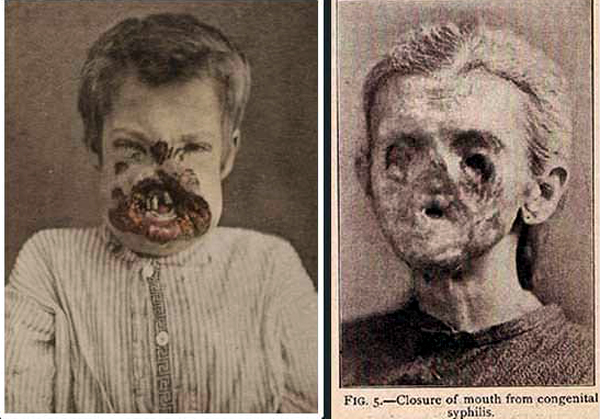
The disease also manifested itself in places that were less easy to conceal. For instance, the nose could become disfigured as the bacteria ate away at the flesh of the face and the nasal bridge collapsed. A so-called saddle nose was a clear characteristic of syphilis and therefore became a symbol of depravity, although many were born with it because their mothers were infected with the disease.
The best physicians tried to relieve patients of their shame by operating on their noses, for example by cutting a piece of forehead skin and laying it over the bridge of the nose, although this resulted in a large scar on the forehead.
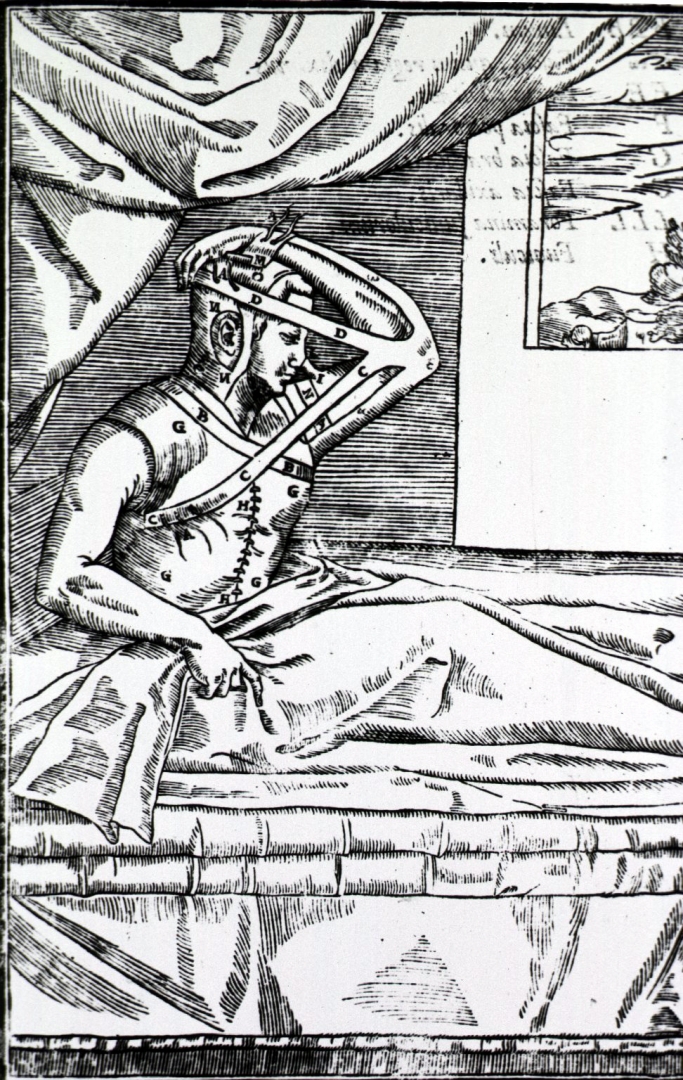
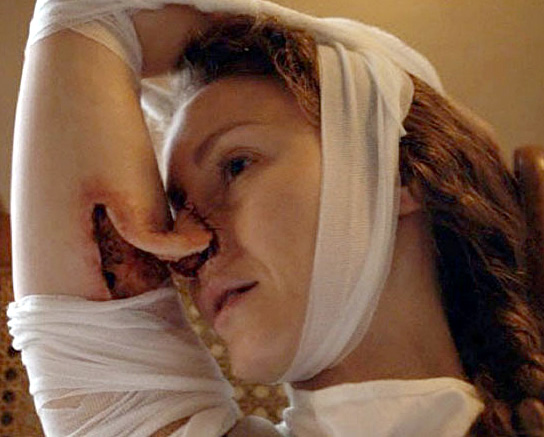
In the 16th century, the Italian physician Caspare Tagliacozzi conducted experiments with transplantation of skin from the upper arm. He sewed the skin onto the nose while it remained attached to the arm so as not to cut off the blood supply. After such an operation, the patient had to walk around for weeks with his arm raised in a tripod while the skin grew onto the nose.
♦ Sex brings wealth and prestige
Syphilis primarily affected those who were most sexually active: prostitutes, soldiers, and the upper class. Many nobles at European courts used sex to their advantage. For instance, an affair could yield noble titles, property, or well-paid jobs. However, sexually transmitted diseases such as syphilis were also a consequence of these relationships, and these were not only harmful to the carrier but were also passed down from mother to child. Children born with syphilis were infertile and therefore unable to reproduce.
According to modern historians, syphilis was one of the causes of the near extinction of the French and English royal houses in the 16th and 17th centuries. Sick queens bore infertile children. To curb the disease, brothels and hospices closed their doors. Previously, these bathhouses were havens for all kinds of social activities for both sexes, but now, like the brothels, they were branded as places of sin.
Paris combated the disease by expelling patients from the city. Around 1580, syphilis had grown into the worst epidemic in Europe since the Black Death, but unlike plague victims, syphilis patients could live with their disease for decades. Until the third stage set in and the body's organs were slowly broken down. The sick therefore had to learn to live with the unpleasant, painful, and very visible symptoms.
♦ The king's little finger sticks out
In 1655, the French monarch Louis XIV began to lose his hair, also one of the many consequences of syphilis. At a time when long hair on men was considered a sign of fertility, a bald head was an unmitigated disaster for the young king. Louis was only 17 at the time, but had been on the throne since he was four and had long since been living an adult life, with syphilis as a consequence. The king therefore began to wear a wig. And naturally, it had to be as large and impressive as possible. Soon, the monarch who would later become known as the Sun King had more than 40 wigmakers in his employ.
Meanwhile, his hairstyle spread just as rapidly as the disease he sought to conceal with it. Even healthy people spent fortunes on artificial, powdered locks of hair.
The wigs were made from the hair of poor people, or that of goats or horses. If they started to smell, this was masked with perfume. These hairstyles led to practical problems. For instance, women often wore wigs so high that they touched the chandeliers with burning candles. Additionally, wigs attracted mice because grease was smeared on them and they were sprinkled with flour.
The Sun King's syphilis is also said to have led to another fashion trend: refined people began drinking tea with their little finger raised. The disease causes stiff joints, and the fingers are the first to be affected. And if Louis drank his tea with his little finger in the air, the entire court had to follow his example.
♦ The powder was full of lead and arsenic.
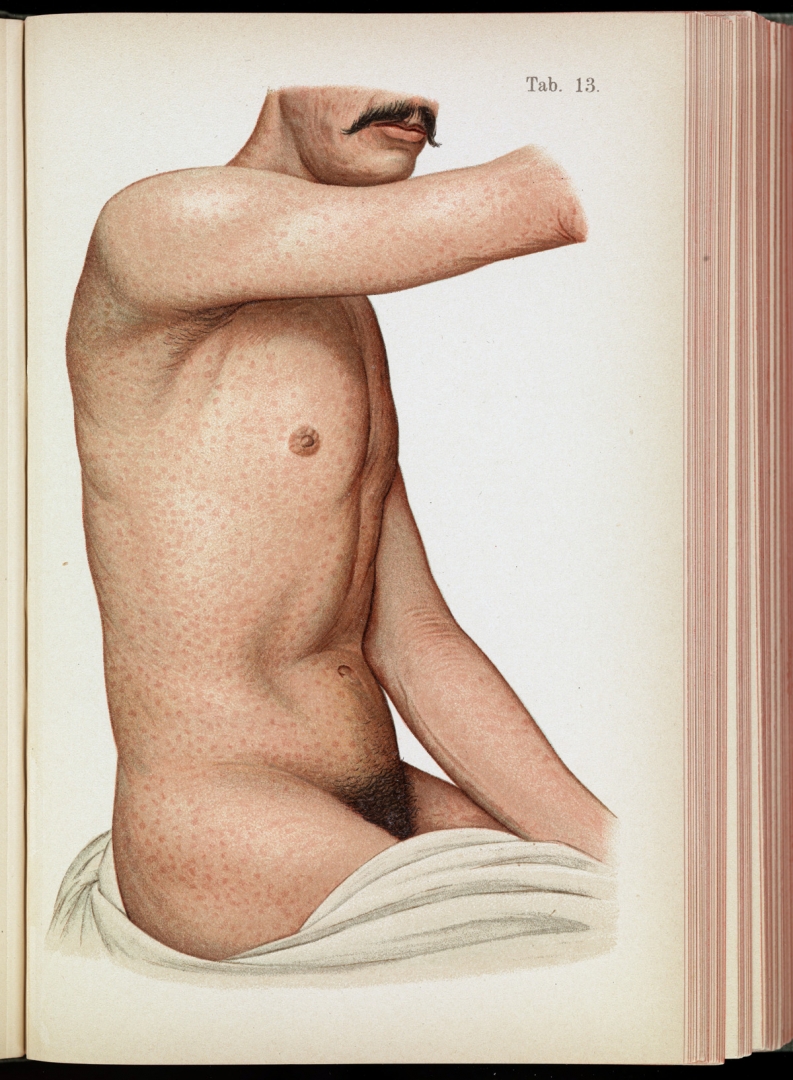
Syphilis was insidious. Sometimes the disease seemed to have disappeared completely, only to rear its head again, ten times worse. In the second phase, wart-like bumps appeared on the skin, which led to fake beauty spots becoming fashionable. These were made of mouse skin or cloth and stuck to the skin with grease to cover the sores. Powder also became hip. Even Louis XIV, who felt there was enough powder in his wig and did not want it on his face, abandoned his resistance towards the end of his reign.
With a thick layer of powder, you not only achieved a desirable pale complexion but could also cover up the reddish-brown blisters caused by syphilis.
But the 'mask of youth', as Queen Elizabeth I of England called the powder, was not harmless. It was full of lead and sometimes even contained arsenic. The mixture could be so corrosive that cracks formed in the skin, allowing the heavy metals and poison to penetrate the body, which was already weakened by years of syphilis infection.
♦ Condemnation of the church
The biggest problem, of course, was that no one knew exactly how one contracted syphilis, only that it had something to do with sex. There was no shortage of theories. Clergymen were quick to warn against infidelity, extramarital sex, and prostitution.
Because of the church's condemnation, syphilis sufferers were even more determined to hide the symptoms, and doctors searched with all their might for a cure.
♦ Penicillin
It was not until well into the 20th century that doctors found a cure for syphilis in the form of the miracle drug penicillin.
By that time, the disease had plagued Europe for 450 years, resulting in bizarre fashion trends.
Source: Historia
Treponema pallidum
Syphilis is a sexually transmitted infection (STI) caused by the spirochete Treponema pallidum. The disease occurs only in humans.
Worldwide, millions (10-12 million) of people still contract the disease annually. Congenital syphilis is a cause of perinatal mortality in underdeveloped countries.
There are different stages of the infection
1: A painless sore at the site of an initial infection, e.g., the genitals or near the mouth, several weeks (10-90 days) after contact; usually, a painless swelling of the surrounding lymph nodes also develops.
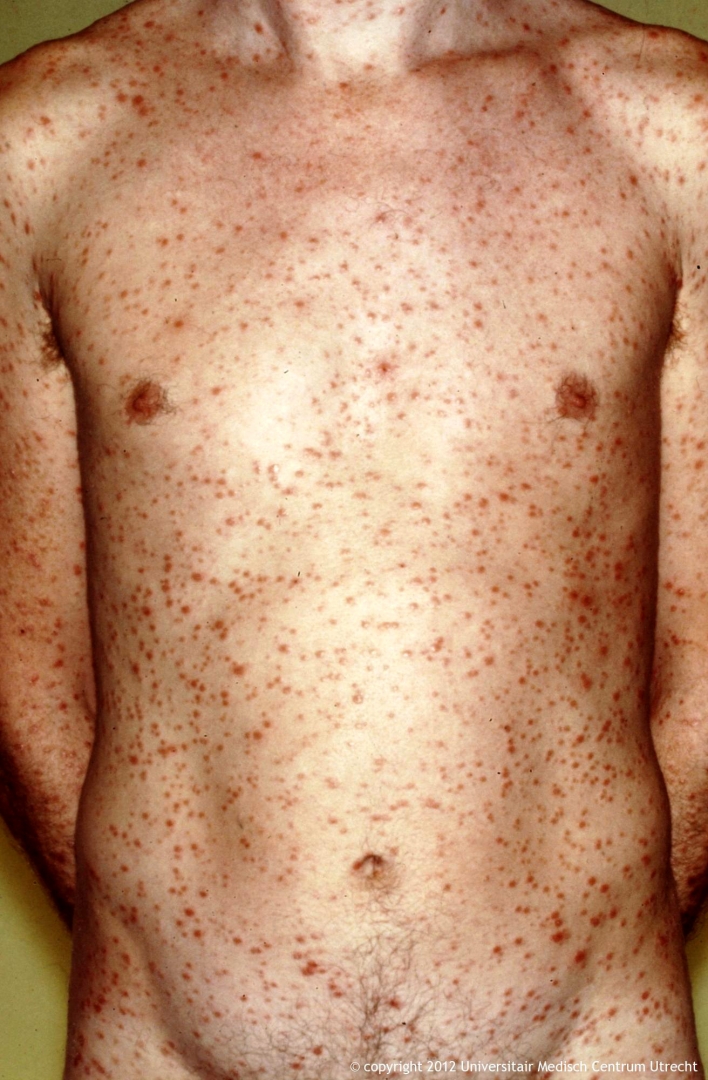
2: A stage with non-itchy skin lesions (the soles of the feet and palms of the hands are often affected), flu-like symptoms (fever, headache, sore throat, muscle pain, malaise), and other
abnormalities several months later.
3: Neurosyphilis affecting the central nervous system with severe neurological and psychiatric symptoms.
It took a very long time before this disease, which usually occurs years after infection, was recognized as a late consequence of syphilis. Eventually, stage 3 can develop into
cardiovascular syphilis, in which the heart and major blood vessels are affected.
This makes the disease very insidious, as one recovers from the first and second stages and is therefore inclined to think one is 'rid of it'. The third stage, however, can be fatal, and moreover, one can infect other sexual partners.
The disease can manifest in very many forms, which often resemble other diseases, and is sometimes missed because it is currently rare in the Netherlands, which is a pity because it is very treatable with antibiotics, particularly benzylpenicillin, especially in the early stages. An older drug for syphilis, Salvarsan, was discovered by Paul Ehrlich. This drug has not been used for many decades; it is very toxic and has many side effects.
Diagnosis
As a result of infection with Treponema pallidum, antibodies are formed by the host's immune system, and these are detected in the blood in a syphilis infection.

-

-
-

-

-
-
-
-
-
-
 ">
">
-

-

-
-

and the powder was full of lead and arsenic">

Syphilis was in fashion
References
Historia
Photos
Historianet
Wikipedia
Wikipedia.org
WikimediaCommons
-
-
-
-
-
-
-
-
-
">
-
-
-
-
and the powder was full of lead and arsenic">