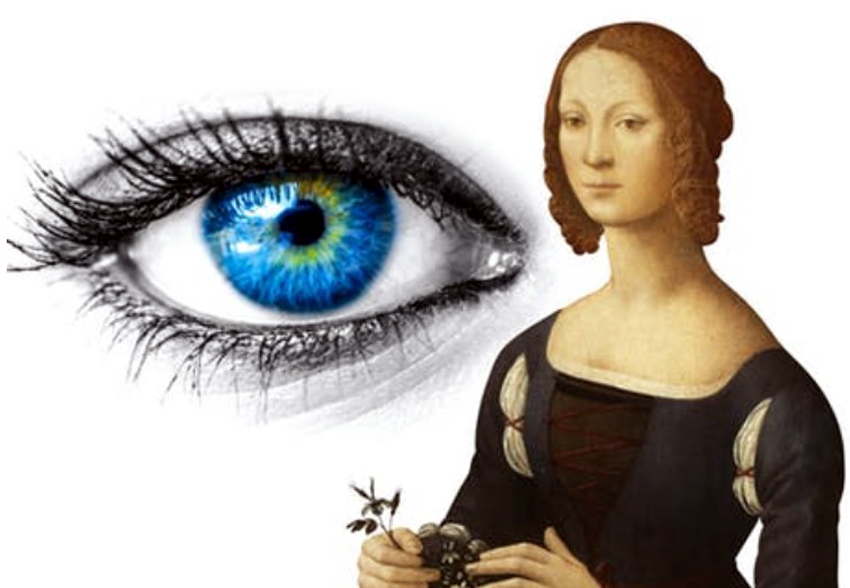

Women in the Middle Ages were advised not to look men in the eye, as a single glance was enough to arouse his lust.
Strictly celibate priests and a population living in mortal fear of purgatory – that is a common image of the Middle Ages. But a quickie in church and risqué jokes were also part of the picture.
♦ The church was used for sinful activities
Houses were shared by entire families, and private bedrooms were found only in the homes of the nobility. It was therefore difficult for married couples to find a place where they could make love undisturbed. Many lovers sought refuge in the church, which was empty for much of the day.
According to the American media historian Ruth Mazo Karras, the church was even the equivalent of the back seat of a car, where millions of her compatriots had their first sexual experience. Naturally, priests cracked down hard on couples making out in church. When a couple was caught, the man and woman were tied together ‘like dogs’ and mocked, according to one report.
♦ Housewives want sex
The common perception is that medieval women were chaste and diligent housewives, whilst the men were brimming with carnal desires. But that image needs to be revised. For example, a 12th-century French fable tells the story of a fisherman’s wife who is so demanding in bed that her husband exclaims in despair:
‘I force myself to do what I have to do, for you. Clothes aren’t enough to win a woman’s love; it’s all about loving her.’
♦ Exotic spices were the Viagra of the Middle Ages
Although, according to medieval thinking, men were born with an insatiable lust, some still needed a little help. Scholars therefore devised all manner of aphrodisiacs. A recommendation by the respected 10th-century Arab scientist Ahmed Ibn al-Jazzar read as follows:
‘Grind half a dirham (approx. one and a half grams, ed.) of cloves and drink the powder mixed with cow’s milk. Or place a small piece of galangal root (a type of ginger) on your tongue, and you will experience a powerful erection.’ Through the Moors, al-Jazzar’s work *Provisions for the Traveller and Food for the Local* found its way to Europe, where the book was translated and became a bestseller.
The Arab scholar’s work was full of tips and recipes for arousing sexual desire. Key ingredients included ginger, cinnamon, pepper and other spices. According to al-Jazzar’s writings, spices alone were not enough for a fulfilling sex life – romance was at least as important:
‘Sweet words, showing passion, kissing on the cheeks, intertwining fingers, licking, taking joy in the sight of one’s beloved, and showing one’s feelings to one’s beloved’ were the secret to a healthy love life, al-Jazzar believed.
♦ The letter of the law
According to the clergy, carnal desires were part of original sin, and in books on penance they described in detail what was forbidden:
• ‘Sex must not be practised during the day or whilst naked.’
• ‘Sex is intended solely for the purpose of conceiving children and must only be practised in the missionary position.’
• ‘If a man masturbates, he must abstain from sexual intercourse for four days. If a boy does so frequently, he must fast for 20 days or receive a beating.’
• ‘Anyone who commits fornication with an effeminate man, other men or an animal must fast for ten years.’
• ‘Anyone who ejaculates into someone’s mouth has committed the gravest sin and must do penance for the rest of his life.’
• On Sunday, the Lord’s Day, sex is strictly forbidden.
• During Lent, sexual intercourse was forbidden for 47 to 62 days.
• In the month leading up to Christmas, sexual relations were not permitted.
• Abstinence was required for 40 to 60 days around Easter.
• Sex was not permitted on many saints’ days
♦ The slanted displays attracted a lot of attention
The play *Le chevalier qui fist les cons parler* (The Knight Who Made Vaginas Talk) was a huge hit in 13th-century France. The fabliau was a risqué form of theatre performed by travelling actors in medieval France. These popular plays invariably contained a generous dose of bawdy humour. A fabliau about a knight who could talk to women’s genitals begins with a poor knight who sees three naked nymphs bathing. A rogue has stolen their clothes, and the knight catches the scoundrel. As a token of their gratitude, the elves bestow a gift upon the hero: he can make vaginas talk. And if the vagina has nothing to say, the bum takes over. The knight spends the night at a castle and the lady sends a naked maid to his room. The hero decides to try out his new trick, and it works.
When the shocked maid recounts what the knight is capable of, the lady of the castle offers a reward of 40 silver coins if he can make her private parts talk. She secretly stuffs a piece of cloth inside, but to the audience’s great amusement, her bottom replies: ‘The vagina can’t talk, because the mouth and throat are full. I think there’s a piece of cotton cloth in there.’
♦ The books were full of naughty drawings
The Church tried to curb lust through laws and punishments, but the priests had no control over the world of the imagination. Books were full of sex: psalters, novels and even the Bible were illustrated with risqué pictures. Before the invention of the printing press, monks copied books by hand. Apparently, they were so bored doing this that they regularly embellished the margins. For example, they drew naked priests and penis-shaped animals and fruits in them.
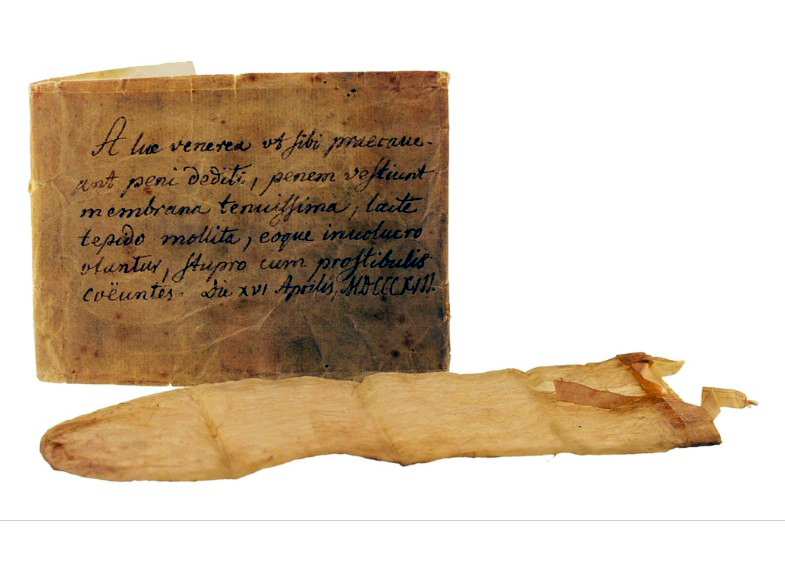
♦ Condom was intended to protect priests
In the early 16th century, a syphilis epidemic raged, painfully exposing the hypocrisy of the Catholic Church. Officially, all clergy were supposed to live a celibate life, but the pink rash on their hands made it crystal clear that priests, cardinals and even Pope Julius II were sinners.
The Italian physician Gabriele Falloppio (1523–1562) developed a condom to put a stop to the revealing disease amongst Catholic clergy.
• A linen sleeve served as the condom.
• To keep it in place, the condom was tied to the penis with a ribbon.
• The fabric was soaked in chemicals and had to be left to dry before use.
♦ A noblewoman knows what to do: ‘This is how you become a virgin again’
In the Middle Ages, a woman was expected to remain a virgin until her wedding night, but many girls did not live up to the Church’s ideal of chastity. And those who had lost their virginity before becoming engaged need not despair. In her book *Experiments*, the Duchess of the Italian cities of Forlì and Imola revealed how a woman could restore her virginity:
distil water and sage and apply this liquid repeatedly to the vagina. ‘You will see that it becomes so tight that you will admire it yourself,’ wrote the Italian noblewoman.
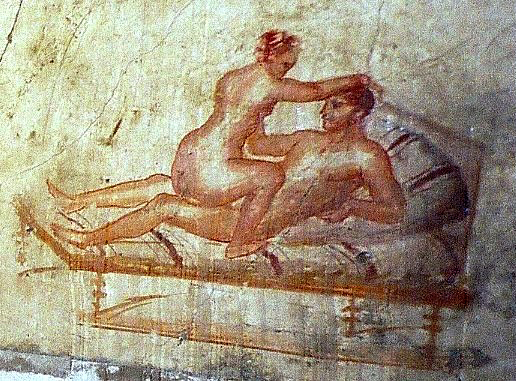
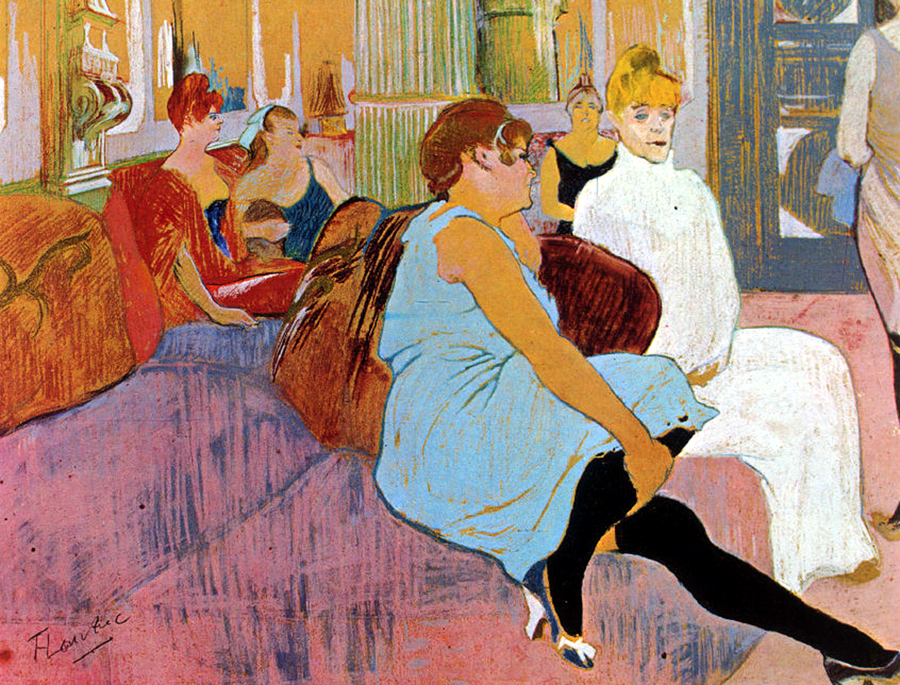
Prostitutes were treated with respect. In many parts of Europe, prostitution was a legal and regulated business. Although the Church regarded paid sex as a sin, a man could release his sexual energy in a brothel, thereby preventing worse sins such as masturbation and homosexuality. Many brothels were run by the city council.
Copenhagen, Denmark
► In 1496, King John decreed that prostitutes had to wear a red cap as a distinguishing mark. Furthermore, they were only allowed to live in certain neighbourhoods.
Nuremberg, Germany
► Brothels were required to provide the women with ‘two meals consisting of two dishes each per day’, and the prostitutes had to bathe every week.
London, England
► In 1393, the city council authorised brothels in the many bathhouses on Cokkes Lane. Unregulated prostitution, which did not generate revenue, was banned.
Languedoc, France
► In the province of Languedoc, prostitutes were permitted to work all year round, except on public holidays and during Holy Week.
♦ Sex scandals are the monks’ undoing
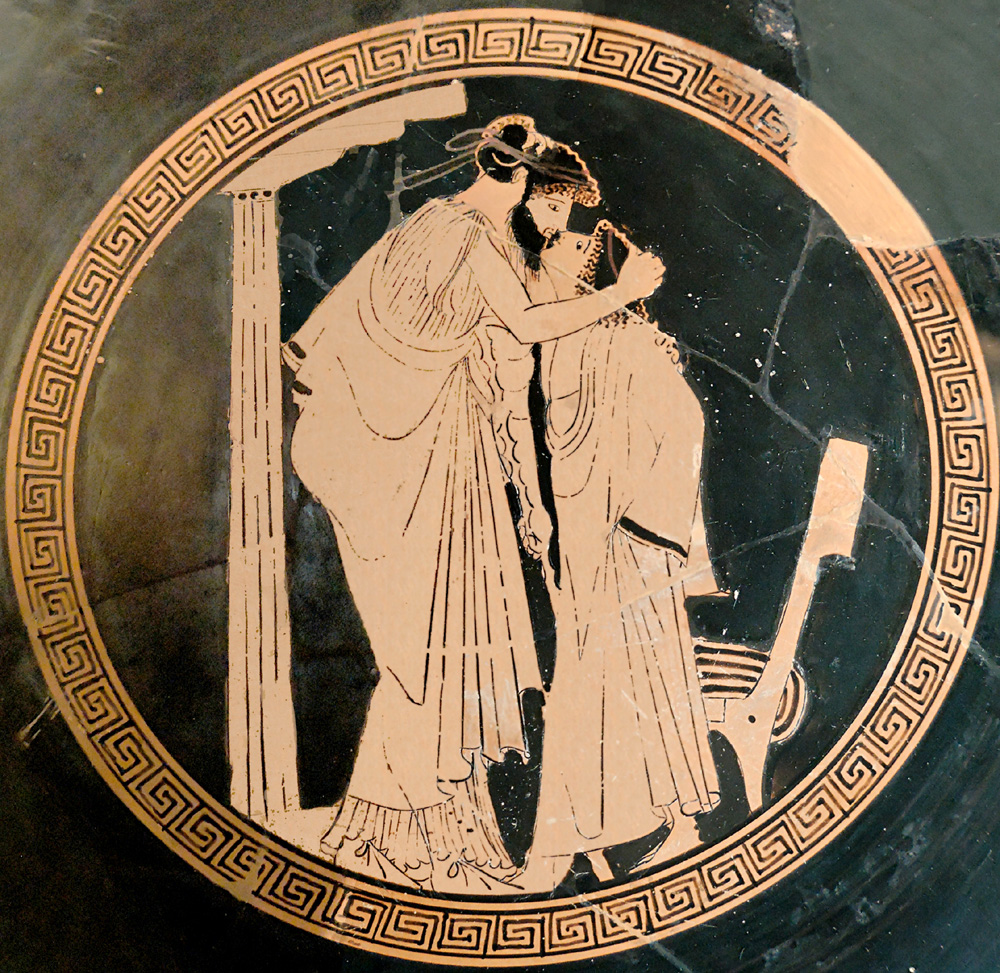
Monks and nuns had taken a vow of chastity, but forbidden lusts remained a problem for the Church throughout the Middle Ages. In a fit of lust, monks, priests and nuns would sometimes give in to carnal activities. Priests would have relations with female parishioners or colleagues, or molest young boys.
Nuns had affairs with nuns – or with monks disguised as nuns, with a suspicious bulge in their habits.
At the monastery in Missenden, north-west of London, bishops carried out no fewer than 315 inspections between 1430 and 1531 to track down sinners. 76 monks and nuns were ultimately convicted, mostly for breaching their vow of celibacy.
In 1531, the monks themselves summoned the bishop’s inspector because they were concerned about the priest John Slyhurst. He was alleged to have molested a local boy. The inspector sentenced the depraved priest to life imprisonment, and from then on, boys were no longer allowed to visit the monks’ dormitories and private cells.
♦ Priests are better paid
When the prostitute John Rykener was caught in the act in 1395, he did not have his trousers around his knees, but his skirt draped over them. Dressed as a woman, the Englishman was serving a male client in London. During the ensuing trial, Rykener stated that, as a woman, he ‘served priests more often than other men, because they pay more for it’.
As a man, Rykener also had several nuns as clients.
Source: Historia
13 december 2017
by Mette Iversen

Middle Ages were rife with sex
References
Historia / 13 december 2017
by Mette Iversen
Photos
wikipedia
© DEA/C. Balossini/De Agostini/Getty Images
© GFDL/Creative Commons