
Mighty queen poisoned by skin cream
Scientists have discovered traces of a 3,500-year-old skin cream that may have caused cancer in Egypt’s most famous female pharaoh. They found dangerous substances in the cream, which the pharaoh may have used frequently, and which may have led to the death of the powerful Egyptian queen Hatshepsut (1473–1458 BC).
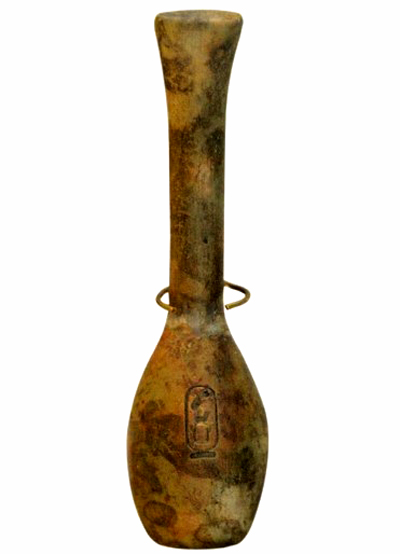
German researchers found traces of the cream in a 3,500-year-old vial, which, according to an inscription, belonged to the female pharaoh. It was initially thought to be a perfume bottle, but analysis of the residues revealed traces of the substances creosote and asphalt. These substances were used in Egypt to treat chronic skin conditions, but we now know that they are carcinogenic.
Researchers have found carcinogenic substances in a small bottle that belonged to Queen Hatshepsut. For a long time, scientists thought it was a perfume bottle. But an analysis has now revealed otherwise.
“After two years of research, it is now clear that the bottle contained some sort of skin lotion or possibly even medication for a queen who suffered from eczema,” the researchers state in a press release.
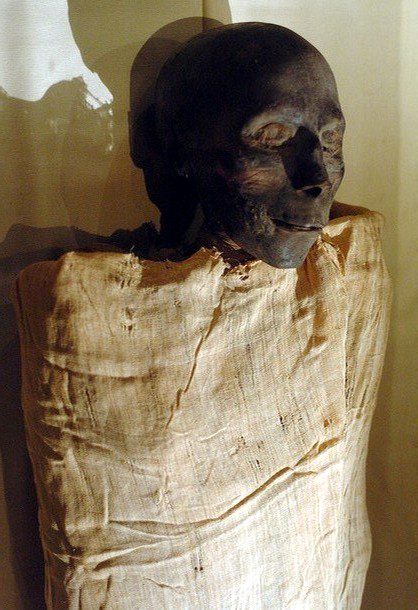
‘It has long been known that Hatshepsut had cancer and may have died from it. Now we may also know why,’ says Michael Höveler-Müller, curator of the Egyptian collection at the University of Bonn in Germany.
If Hatshepsut suffered from a chronic skin condition and used the cream for several years to relieve the itching, this could have proved fatal, according to Höveler-Müller. The lotion contained various fats that could soothe skin conditions. However, the researchers also found benzopyrene in it – a carcinogenic substance.
“Benzopyrene is one of the most dangerous substances we know of,” says expert Helmut Wiedenfield.
Although the substance is no longer permitted for use in cosmetics, it can still be found in burnt food, for example. The lotion brings the pieces of the puzzle together. “We have long known that Hatshepsut had cancer and may even have died of it,” says expert Michael Höveler-Müller. “We may now know the cause.”
It is certainly not inconceivable that Hatshepsut used the cream frequently: it is known that members of her family suffered from skin conditions with a genetic cause.
Source:HISTORIA
Hatshepsut: the female pharaoh
3,500 years ago, Queen Hatshepsut ascended the throne of Egypt. She broke with all conventions by ruling as a pharaoh, in the guise of a man. Her defiance cost her dearly: Hatshepsut was erased from history.
Princess Hatshepsut was fortunate enough to be the daughter of the most powerful man in the wider region, perhaps even in the world. Her father was Pharaoh Thutmose, ruler of Upper and Lower Egypt. Unity in the country had only been restored a few decades earlier. Previously, it had fallen prey to nomads who invaded by force and established small kingdoms. That tumultuous period was still fresh in everyone’s memory.
This recent past represented a painful break with the glorious heyday of yesteryear, when pharaohs ruled their vast lands with a firm hand.
♦♦ She had herself portrayed as a man, complete with a false beard ♦
The nomadic raids had made it clear that the divine order had been seriously disrupted. Thutmose was faced with the task of restoring stability. A key prerequisite for this was dynastic continuity, and Thutmose had made provision for this. He had fathered a son and heir to the throne, Thutmose II, with one of his wives.
With his principal wife, the Great Queen, he had a daughter, Hatshepsut. As a princess of pure royal blood, she was the most suitable marriage partner for the intended heir to the throne.
At around the age of twelve, she married her half-brother. Together, they ruled Upper and Lower Egypt following their father’s death.
♦ The duties of the pharaoh
The royal couple bore a heavy responsibility. As Pharaoh of Egypt, Thutmose II was an absolute ruler who held the fate of his country and his people in his hands. He was the head of the civil service, the judiciary and the army. He had to ensure that taxes were collected, food supplies were stored and fairly redistributed, that irrigation systems functioned properly and that the country was adequately defended.
But even more important was the religious role that both the king and the queen were required to fulfil. The pharaoh represented the sun god Horus; the queen was the embodiment of Hathor, the mother and sky goddess. Together, they symbolised divine power on earth and acted as a link between humanity and the gods, for only they could communicate with the gods.
♦ Stability
It was therefore of the utmost importance that Egypt had a king who fulfilled his royal religious duties. If there were no king, the divine order would be disrupted and the gods would become enraged. That is why a successor was appointed immediately following the death of a pharaoh. And once he had been appointed, his appointment was indisputable. Egyptian society would not tolerate instability.
Whether Hatshepsut had already been toying with the idea of claiming the throne whilst her husband was still alive, we shall never know. For the time being, she fulfilled her duties as Great Queen at her husband’s side. She thus wielded the sceptre in the palace and presided over the harem. During major rituals and important religious festivals, such as the annual Opet festival, she carried out her royal duties in the temple and implored the goddesses – who could be dangerously capricious – to remain calm.
♦♦ Once a successor to the king had been appointed, his appointment was indisputable ♦
The first major change began when her half-brother and husband died; he had always been a sickly man. He had a son by one of the women in the harem, who was designated to succeed him as pharaoh. But this Thutmose III was still far too young to rule. Who was better equipped to act as regent and bear the responsibility for the throne than Queen Hatshepsut?
♦ The new pharaoh
It was not unusual for a Great Queen to act as regent for a minor child. What was remarkable, however, was that Hatshepsut’s protégé was not her own child. Perhaps this was the seed for her next move, which defied all the laws and customs of conservative Egypt. For a few years after her husband’s death, Hatshepsut proclaimed herself pharaoh.
It was not a sudden coup. Rather, it was a carefully prepared and extremely slow-moving political manoeuvre. Did she foresee a dynastic disaster? Was there a crisis she wished to avert? Was there a threat of a harem uprising? Or was she manipulative and power-hungry, seizing her chance before the young Thutmose III was strong enough to oust her? The fact is that Hatshepsut would remain in power for almost 22 years, with Thutmose III as her co-regent at her side.
There had been previous instances in Egyptian history where a woman had held the sceptre, but that aberration had heralded the beginning of a period of calamity and decline. Under Hatshepsut’s reign, however, a golden age dawned for Egypt. Like her predecessors, the new pharaoh launched a number of military campaigns to consolidate the country’s external borders.
♦♦ Under Hatshepsut’s reign, a golden age dawned for Egypt ♦
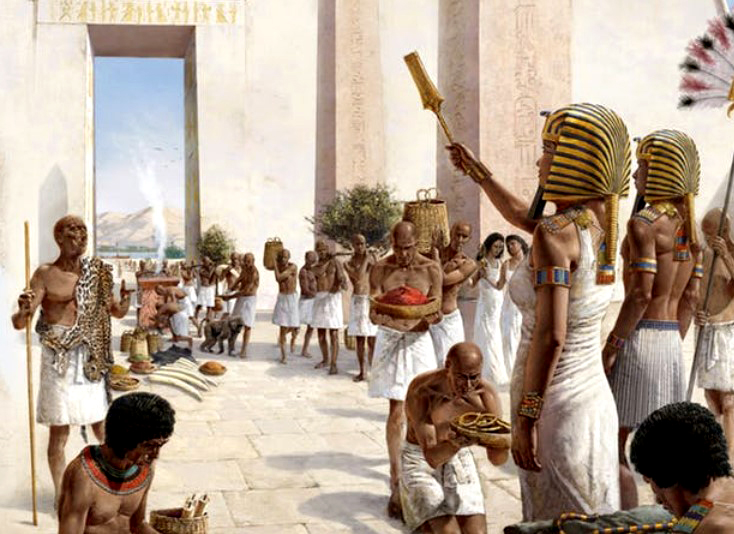
But she invested far more in trade missions than other pharaohs. She sourced timber from Phoenicia to build ships, and had copper and turquoise purchased in the Sinai. She even traded with the deformed but powerful queen of the distant Land of Punt (in present-day Somalia), ensuring that luxury goods such as frankincense, myrrh, ebony, ivory and gold reached Egypt.
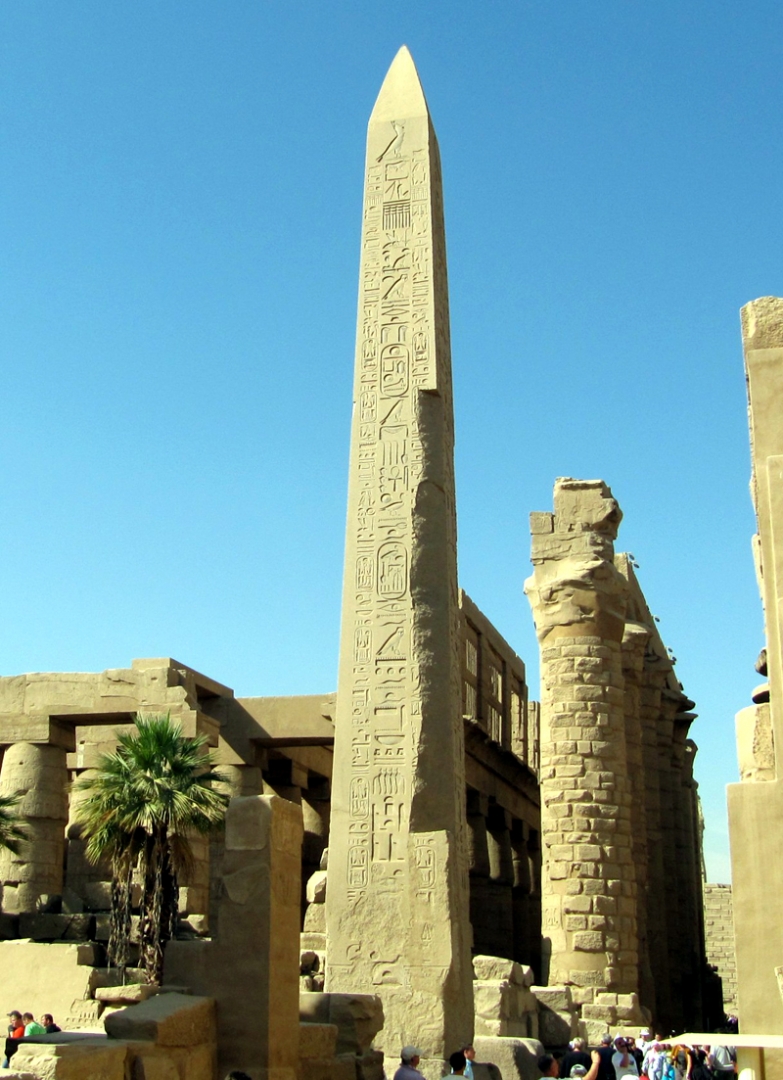
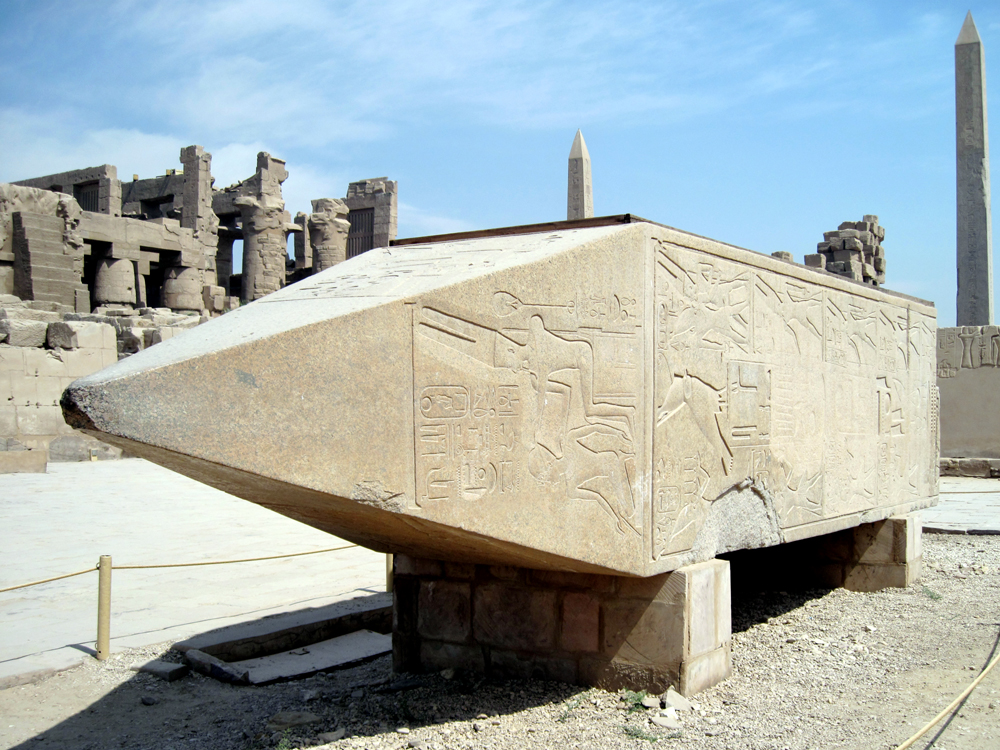
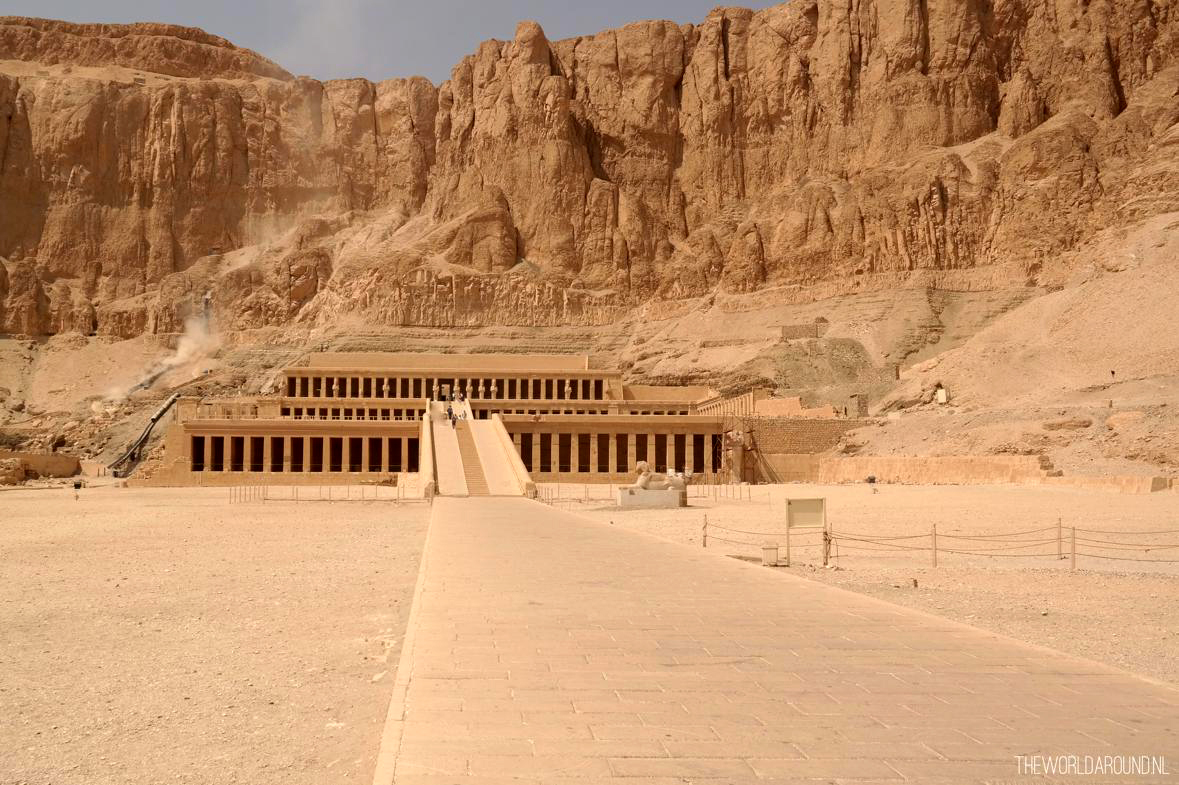
Like every king, Hatshepsut had monumental temples built, but her building frenzy surpassed even that of her most illustrious predecessors. Her own mortuary temple, Deir el-Bahri, was of unprecedented scale and dazzling beauty. In the heart of the Karnak temple complex, Egypt’s holiest sanctuary, she had two obelisks erected, each nearly thirty metres high. Like petrified sunbeams with gilded tops, they reached up to the realm of the gods and honoured the sun god Amun-Re in a manner never seen before.
♦ Conservative people
The obelisks marked the high point of Pharaoh Hatshepsut’s long reign. The logistical operation involved in quarrying the two colossal stones from a quarry in Aswan, in the south, and transporting them hundreds of kilometres northwards was exceptional. The fact that she was capable of such a feat not only demonstrated her power and wealth, but also served as a reminder to everyone that the gods were favouring her.
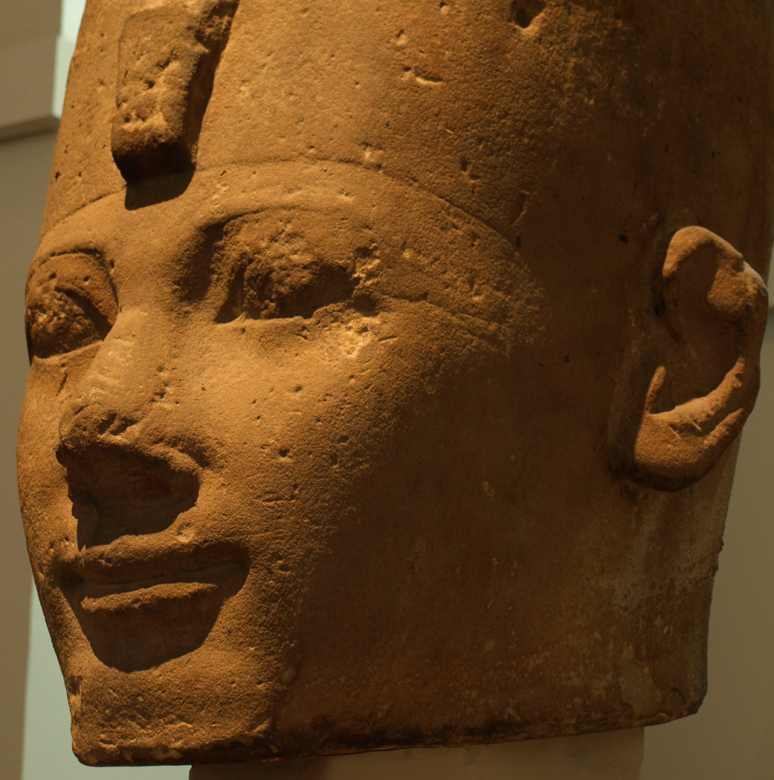
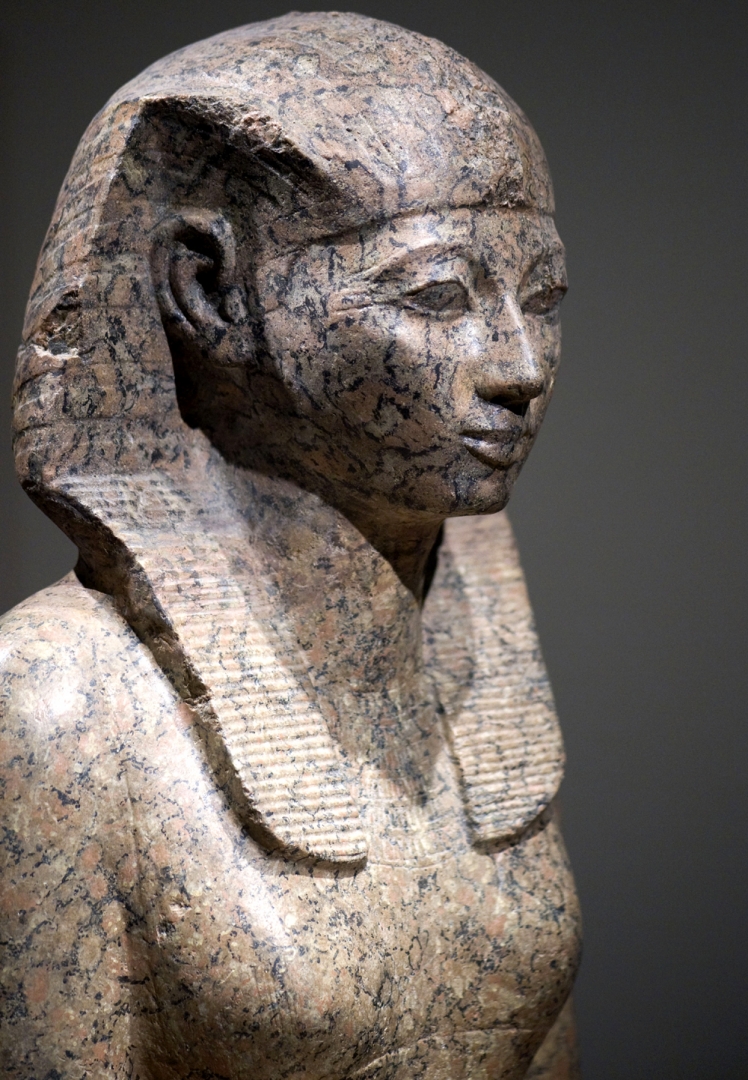
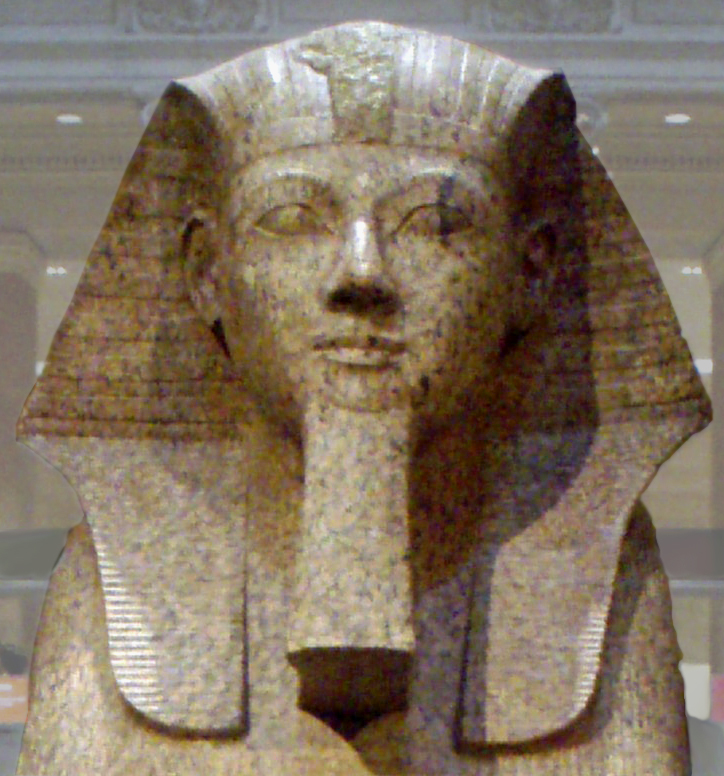
Nevertheless, Hatshepsut had to prove her legitimacy as king time and again. The Egyptians were a particularly conservative people, who viewed their glorious past as a blueprint for the present. More so than other pharaohs, Hatshepsut therefore emphasised the link with her predecessors in every possible way and placed herself within the tradition of illustrious pharaohs. She had herself depicted as a man, wearing the attire of a king, complete with a false beard, as was customary for Egyptian kings.
♦♦ Hatshepsut rewrote her own birth story, giving rise to the doctrine that the pharaoh is the child of the sun god ♦
She even went so far as to rewrite her own birth story. She suggested that she was not merely a king’s daughter, but the child of Amun-Re himself. He, she claimed, had cunningly taken the form of her father to seduce her mother and thus father Hatshepsut. The pharaohs who followed her adopted this story, giving rise to the doctrine – established since Hatshepsut’s time – that the pharaoh is a child of the sun god himself.
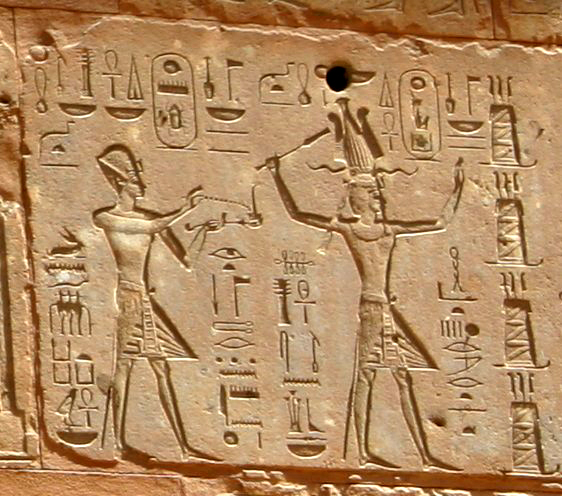
Throughout the many years that Hatshepsut reigned, Thutmose was her co-regent. He had always stood in the shadow of his illustrious aunt – depicted beside or behind Hatshepsut, smaller in stature and clearly in second place.
When she finally died, aged around fifty, the time came for him to rule alone. Might Thutmose have hated his aunt?
♦ Systematic destruction
Be that as it may, more than twenty years after Hatshepsut’s death, a campaign was launched to erase all visual traces of her reign. Images depicting her as a young woman and as queen were spared, but almost all cartouches, reliefs, statues and documents showing Hatshepsut as king were systematically destroyed.
Sometimes they were ruthlessly destroyed, sometimes subtly chiselled away, and on the odd occasion merely superficially erased. Her temples and monuments were desecrated, her name replaced by that of Thutmose I, II and III.
Damnatio memoriae, the erasure of memory is the cruellest punishment in history. And so the story of the pharaoh, who was without equal, came to a dramatic end.
More than thirty centuries later, archaeologists were faced with a mystery. The famous French philologist Jean-François Champollion, the man who succeeded in deciphering hieroglyphics, was baffled in 1828 when he visited the mortuary temple at Deir el-Bahri. Who was this bearded king, who clearly depicted a man but was referred to as a woman? On many other fragments, too, archaeologists found references to an unknown but prominent pharaoh who was referred to using feminine forms. It took several more decades before scholars realised who this person was and restored the memory of Hatshepsut’s glorious reign.
♦ How was the riddle solved?
Despite attempts by her contemporaries to erase all memory of Hatshepsut, archaeologists have been able to prove her existence. This is because not all the inscriptions, sculptures, reliefs and documents had been destroyed.
And in a number of places where her name had been replaced by that of a male pharaoh, they managed to recover the original text. It also transpired that some broken pieces of stone had been used as ‘filler’ in later structures and could thus serve as a source. Finally, one of her obelisks still stands there.
All this information, combined with the decipherment of hieroglyphic script, led to the realisation that there must have been a previously unknown pharaoh who did not appear on the ‘official’ lists of pharaohs compiled by the ancient Greeks. And that this pharaoh was a woman. Eventually, they discovered that it was Hatshepsut.