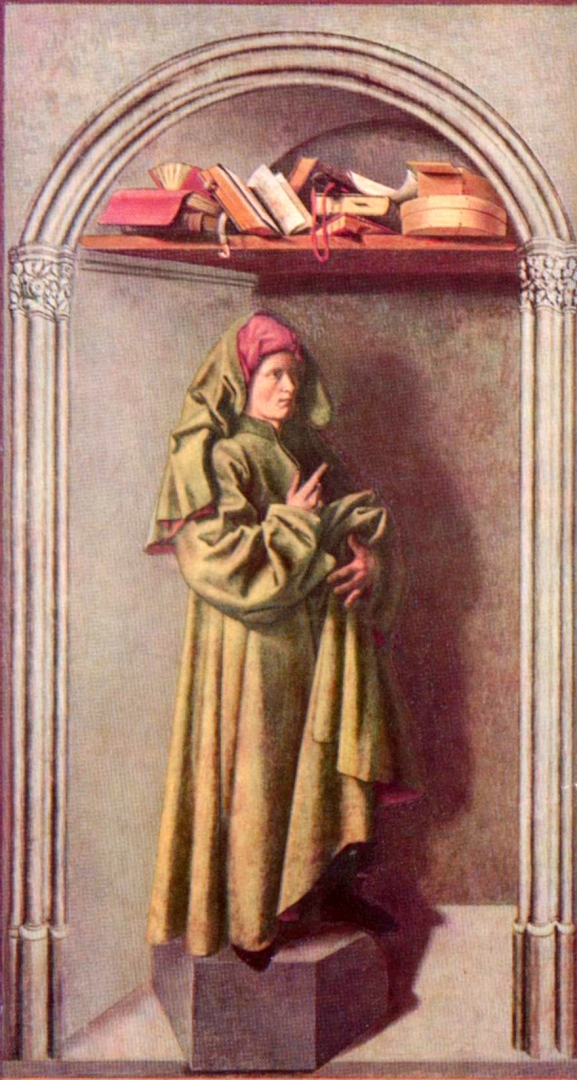
Stilleven met boeken & de profeet Jesaja
Barthélemy van Eyck, 1420-1470
ca.1445 / Boijmans van Beuningen
♦ Beschrijving
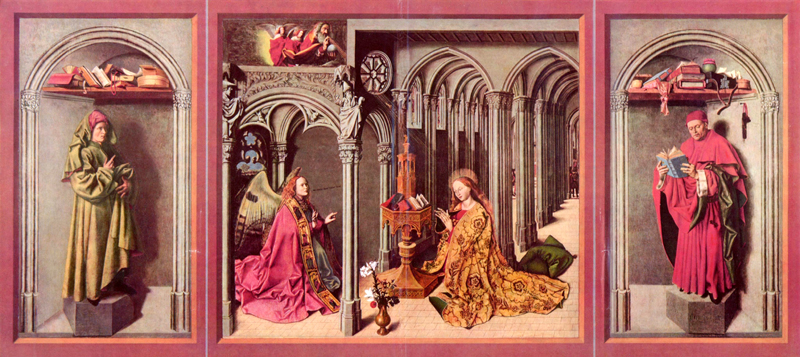
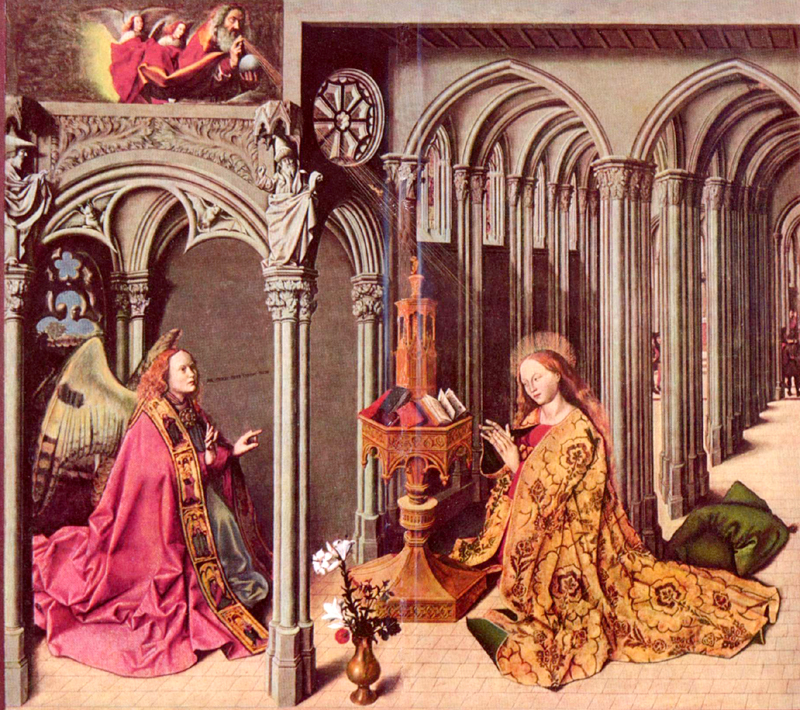
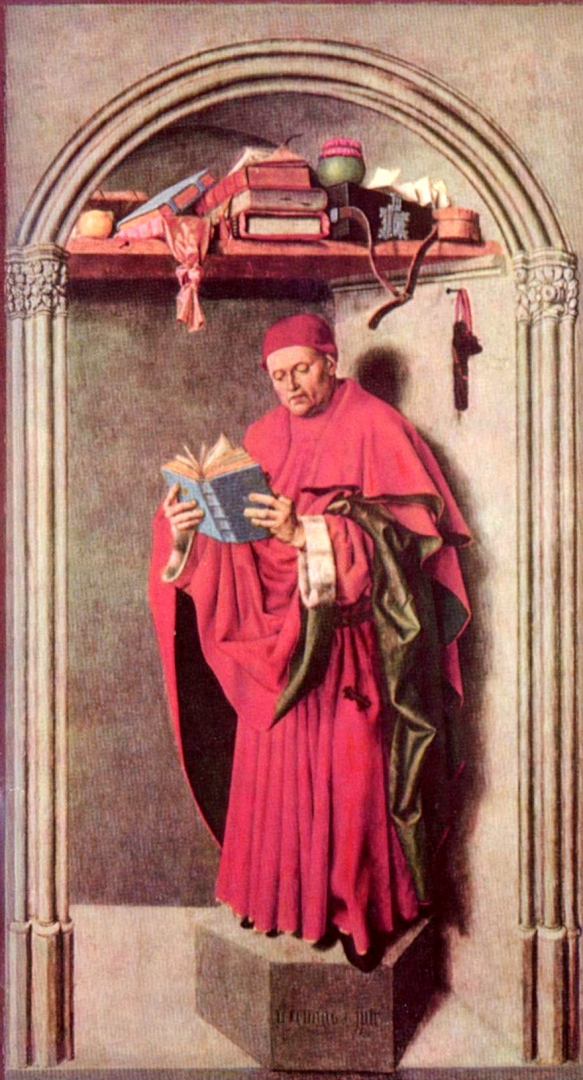
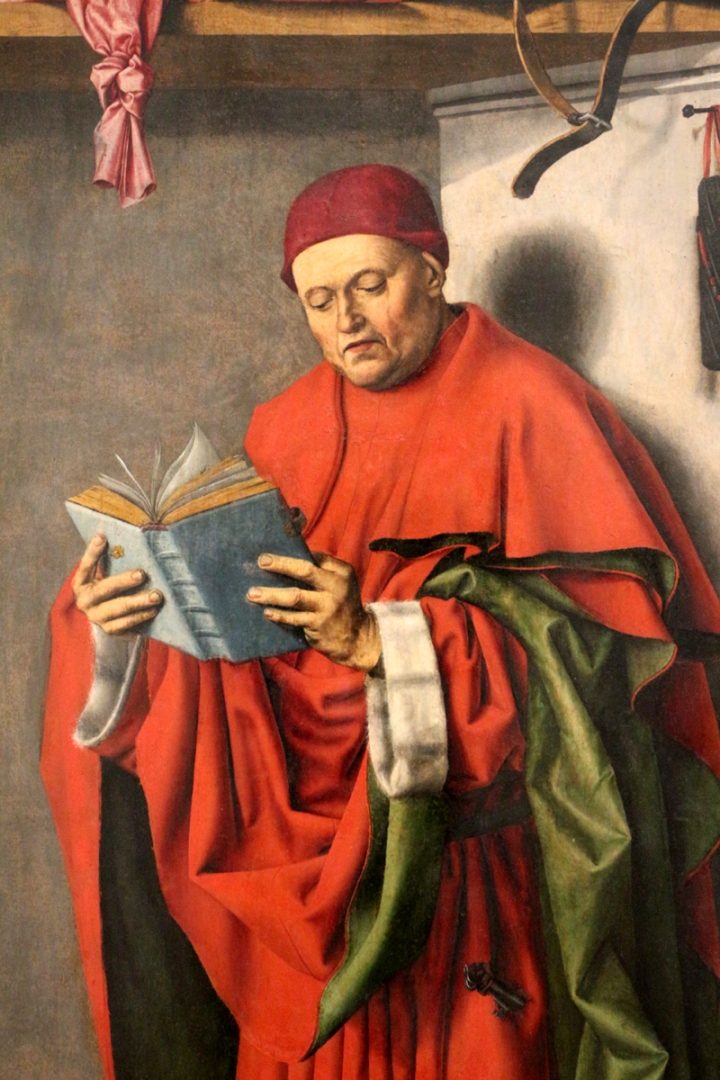
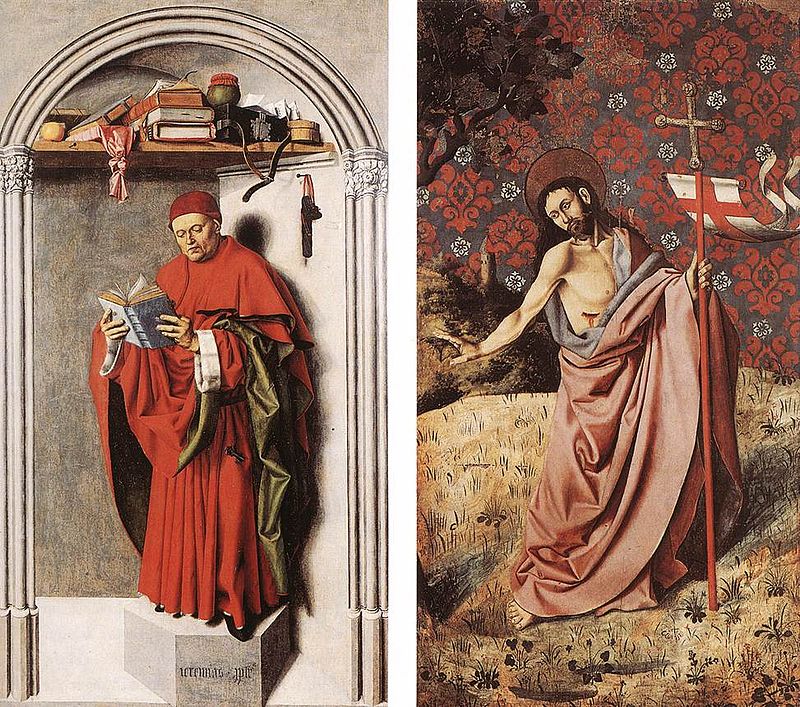
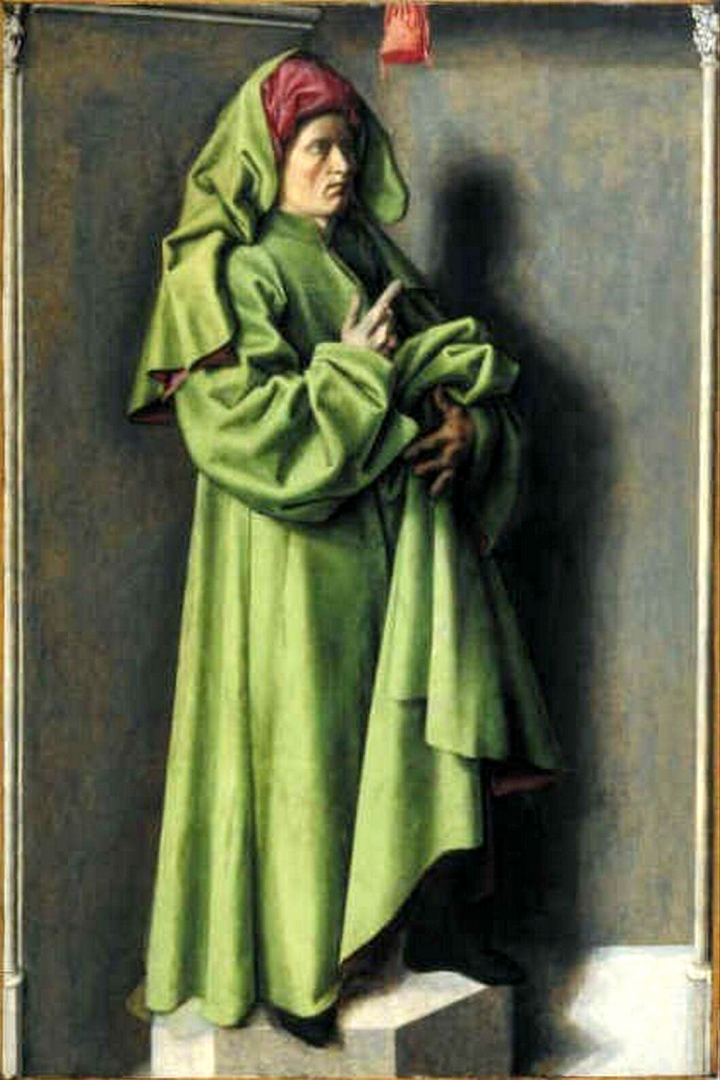
Deze voorstelling van de profeet Jesaja was ooit onderdeel van een drieluik in de kathedraal van de Zuid Franse stad Aix en Provence. Het middenpaneel hangt daar nog steeds in de kerk.
Het rechterluik, met de profeet Jeremiah, is in het Brusselse Museum voor Schone Kunsten.
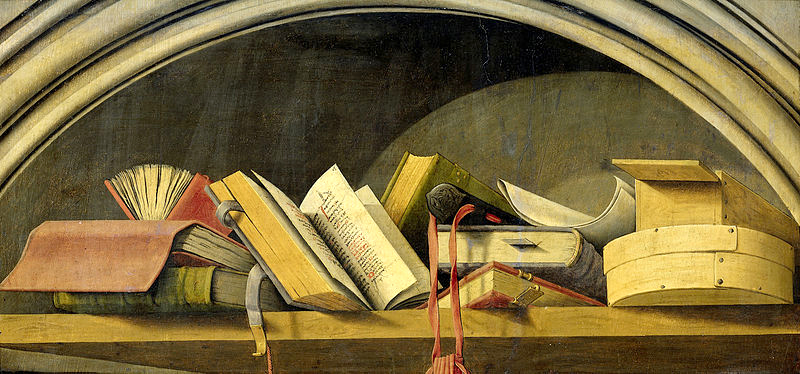
Het stilleven met boeken en spanen dozen werd in de 19de eeuw door een kunsthandelaar van de bovenkant van deze Jesaja voorstelling afgezaagd. Dit stilleven is nu van het Rijksmuseum.
Schilderijen zijn in de loop der eeuwen vaak weinig zorgvuldig behandeld. Beeldenstormen, revoluties, maar ook de steeds veranderende smaak of stomweg nonchalance lieten hun sporen na.
Deze twee panelen van Barthélemy d’Eyck, nu beschouwd als een van de hoogtepunten van de 15deeeuwse Franse schilderkunst, zijn hier een goed voorbeeld van. Ze werden tussen 1442 en 1445 geschilderd in opdracht van een rijke lakenhandelaar en maakten deel uit van een groot drieluik in de Saint-Sauveur kathedraal in Aix-en-Provence.
Het altaarstuk werd vermoedelijk tijdens de Franse revolutie uit elkaar gehaald.
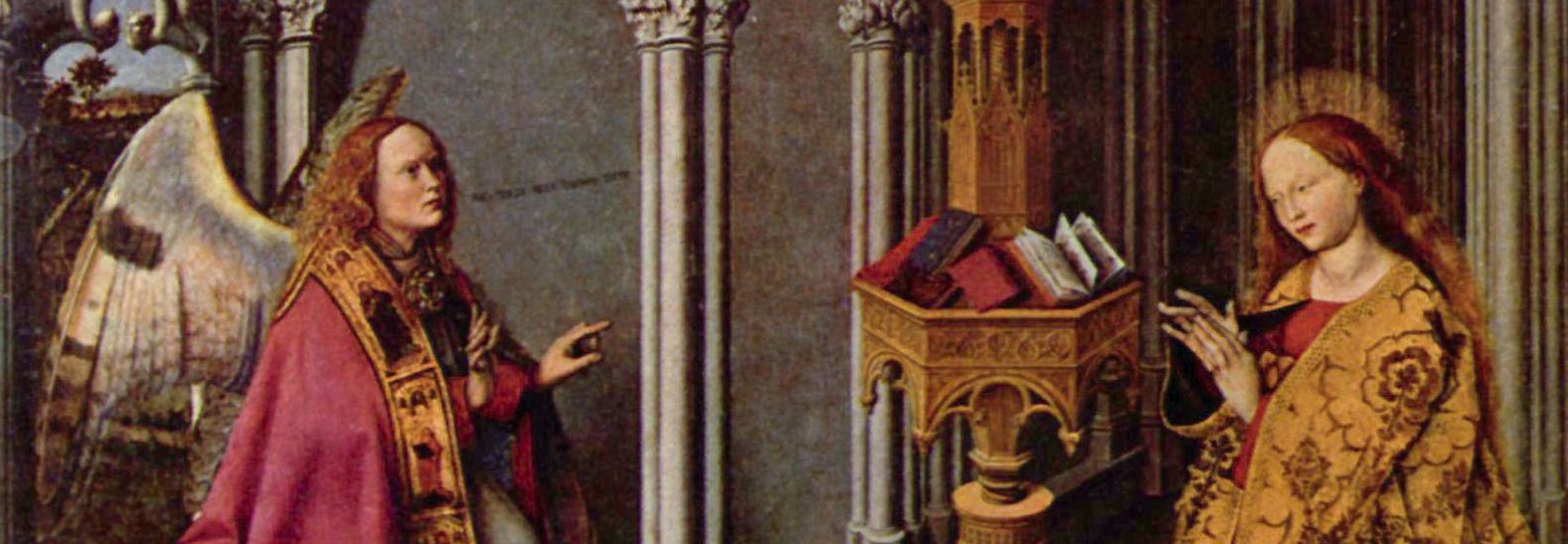
Het middenluik met een Annunciatie hangt nog steeds in de Zuid-Franse stad.
Het rechterluik met de profeet Jeremia is in de Koninklijke Musea voor Schone Kunsten te Brussel. Nog weer later heeft een onverlaat het prachtige boekenstilleven, dat oorspronkelijk in een nis boven Jesaja was geschilderd, er afgezaagd en afzonderlijk verkocht. Het stilleven kwam uiteindelijk in het Rijksmuseum terecht, dat het in langdurig bruikleen aan Museum Boijmans van Beuningen gaf, zodat onder- en bovenkant van het linkerpaneel nu weer samen zijn.
De schilder was mogelijk familie van Jan van Eyck. Voor René d’Anjou, koning van Napels en graaf van de Provence, maakte hij een aantal verluchte handschriften. Het drieluik is het enige schilderij dat met zekerheid aan hem kan worden toegeschreven.
Erik Beenker / Boijmans van Beuningen
De Collectie
Barthélemy van Eyck
Was een miniaturist en kunstschilder afkomstig uit het Nederlandstalige gedeelte van het prinsbisdom Luik die vooral werkzaam was in Frankrijk in Anjou en in de Provence in dienst van René I van Anjou.
Hij was actief tussen 1444 en 1470. Er zijn geen werken van hem gedocumenteerd maar de kunsthistorici hebben verscheidene werken van voorheen anonieme meesters aan hem toegeschreven.
♦ Biografie
Er is weinig of geen biografische informatie over deze kunstenaar bekend, maar we weten dat Barthélemy een zoon was van Ydria Exters, afkomstig van Maaseik, wiens tweede echtgenoot Pierre du Billant werd genoemd, een verfransing van ‘Van Bylant’. Billant werkte sedert 1440 in Aix-en-Provence als schilder en borduurwerker voor René d’Anjou.
Vanaf 1447 tot 1467 vindt men in de rekeningen van René d’Anjou regelmatig betalingen aan Barthélemy van Eyck en volgens Smeyers zou hij al eerder tussen 1438 en 1442 met René d’Anjou in Napels hebben verbleven.
Barthélemy moet hoog in de gunst gestaan hebben bij René d’Anjou want de hertog liet in verscheidene van zijn kastelen en residenties ateliers met speciaal meubilair voor Barthélemy installeren, dicht bij zijn eigen appartementen.
Uit het vorige leren we dat hij nog in leven in was in 1472, maar hij moet kort daarna tussen 1475 en 1480 gestorven zijn, want in een brief uit die periode aan Jehanne de la Forest, de weduwe van de schilder, vraagt René om hem de pourtraistures de feu Berthelemy te bezorgen die in haar bezit waren gebleven. Om welke werken het ging is niet geweten, met pourtraistures werden tekeningen bedoeld, maar het getuigt alleszins van werken gemaakt door Barthélemy en geeft aan dat hij toen overleden was.
♦ Stijl
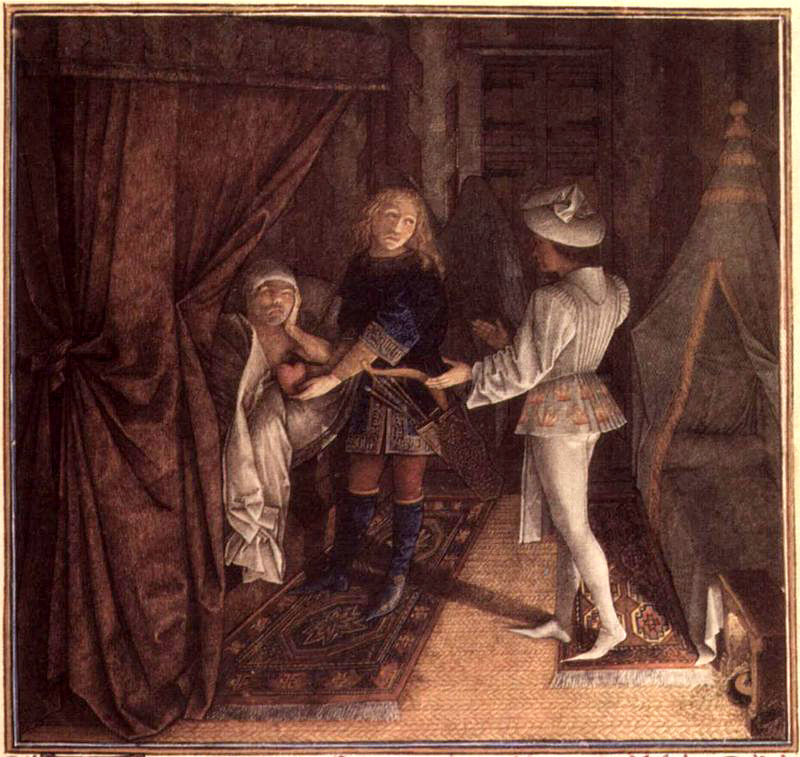
Zoals hoger gezegd kan geen enkel werk via historische documenten aan Barthélemy van Eyck worden toegeschreven, maar sinds de jaren 1980 is er stilaan consensus gegroeid onder de kunsthistorici over de toewijzing van een aantal werken, voordien verbonden met noodnamen aan Barthélemy van Eyck. De namen die men vroeger bezigde waren onder meer de ‘Meester van René van Anjou’, de ‘Meester van de annunciatie van Aix’, de ‘Meester van de schaduwen’ en de ‘Meester van de Coeur d’Amour épris’. Door sommige kunsthistorici werden bepaalde werken toegeschreven aan de hertog zelf, maar daar is men ondertussen van afgestapt.
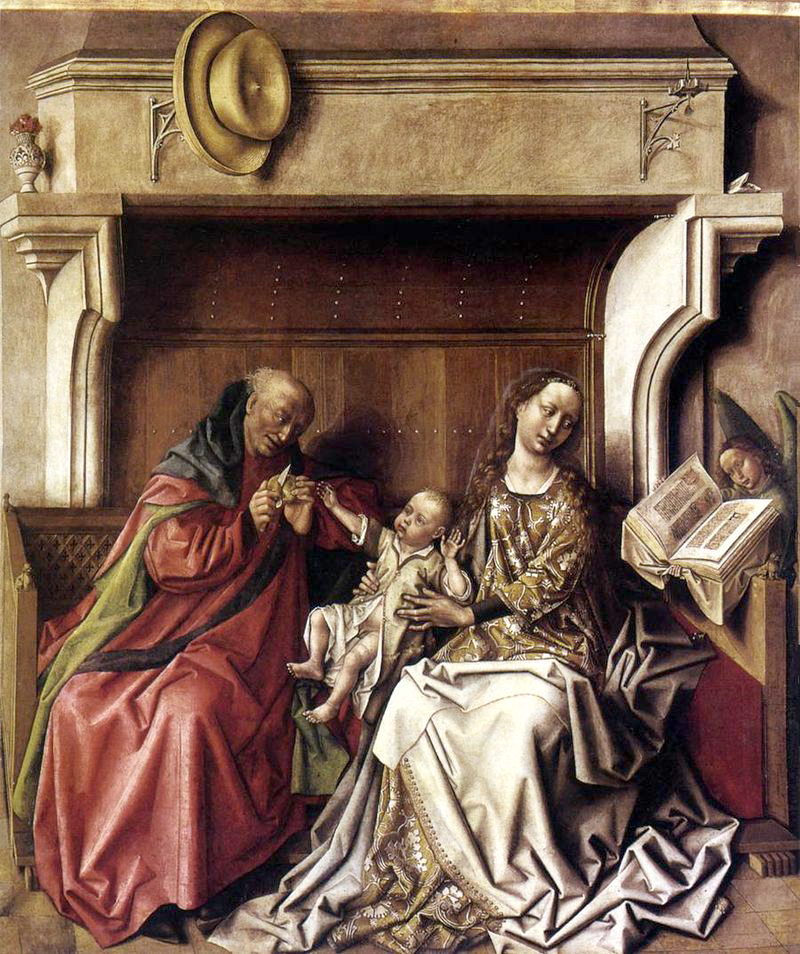
Zijn stijl toont een verband met de schilderstijl van de Vlaamse Primitieven en sommige kunsthistorici menen vooral de invloed van Robert Campin alias de Meester van Flémalle in zijn werk te ontdekken.
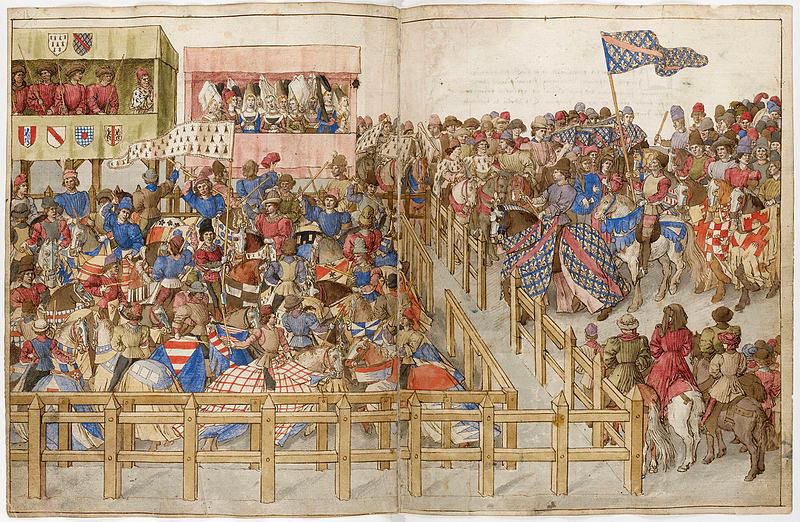
Anderen zien in zijn werk dan weer de invloed van Jan van Eyck en soms worden er familiebanden met de Gebroeders van Eyck gesuggereerd hoewel hiervan niets kan aangetoond worden. Zijn interesse voor lichtinval, clair-obscur en de weergave van schaduwen is typerend voor de meester. Zijn personages zijn gedrongen maar krachtig gebouwd en realistisch in hun houdingen en handelen, karakteristiek is de zijdelingse blik die zeer frequent voorkomt. Hij is een meester in de weergave van de textuur van stoffen en materialen. Zijn stijl is dus zeer zeker verwant met die van de Vlaamse Primitieven, maar hij is ook nog door anderen beïnvloed. Van de Zwitserse schilder Konrad Witz bijvoorbeeld heeft Barthélemy het afbeelden van de plooien in de kleding overgenomen. Barthélemy is de eerste miniaturist die zijn miniaturen spreidt over twee tegenover elkaar liggende pagina’s, wat een doorbraak betekende in de boekverluchting. Met het aan hem toegewezen werk wordt hij alleszins beschouwd als een van de grote kunstenaars van de 15e eeuw.
Bron: wikipedia

Eyck van Barthélemy_Stilleven met boeken
References
Erik Beenker / Boijmans van Beuningen
De Collectie
Foto's
Wikipedia