
.jpg)
Gerard Dou
Gerrit Dou, also known as Gerard Dou, (Leiden, April 7, 1613 – buried there, February 9, 1675), was a Dutch painter.
♦ The quack deceives people, and people want to be deceived.
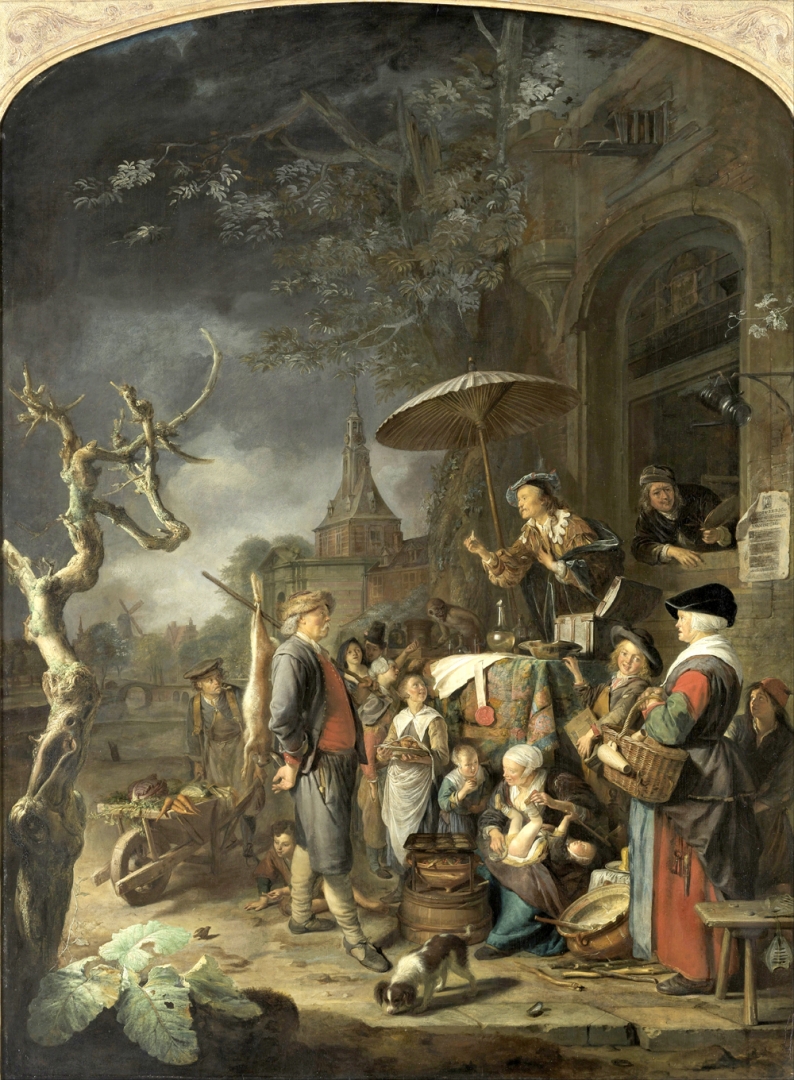
At every fair or annual market in the 17th century, you could find a quack doctor; here you can see one such quack doctor depicted with his audience. Everything has been carefully staged.
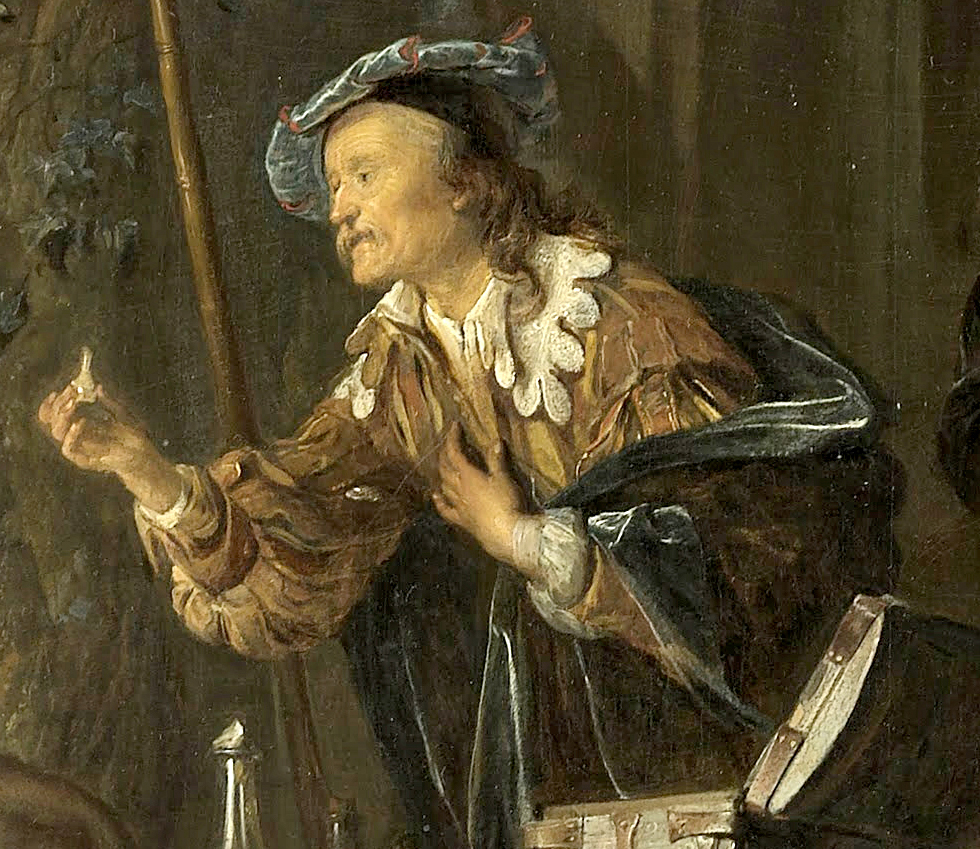
The quack is dressed in a sort of velvet stage costume. He touts his wares—the undoubtedly dubious contents of a small bottle.
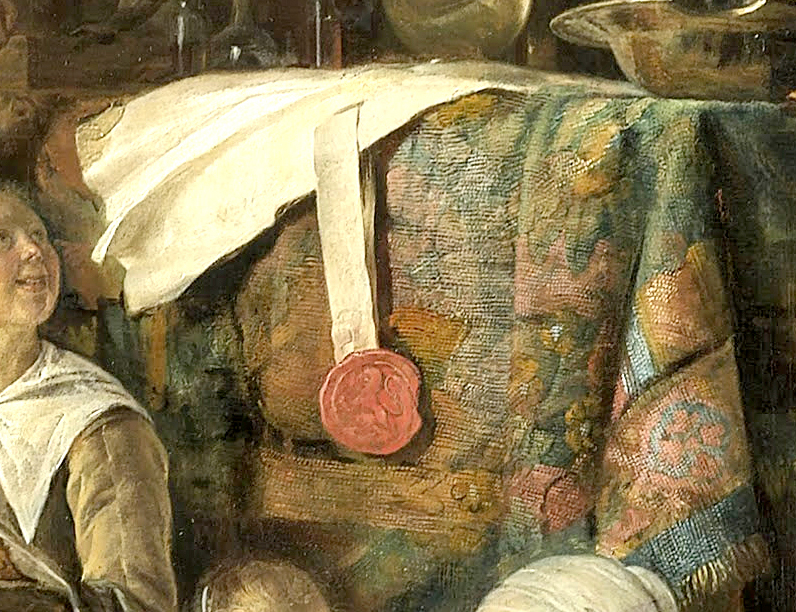
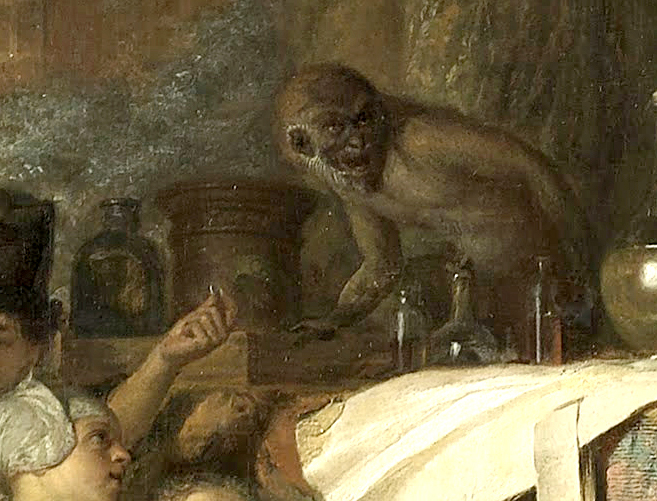
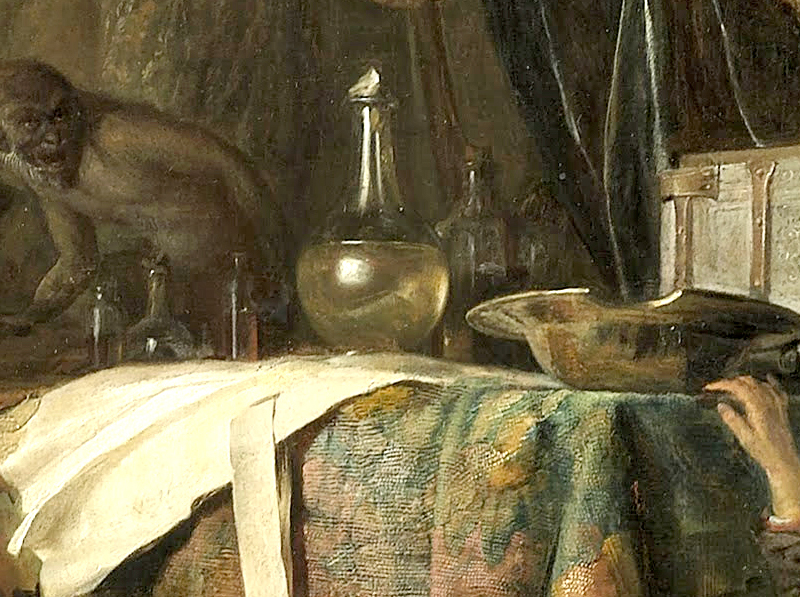
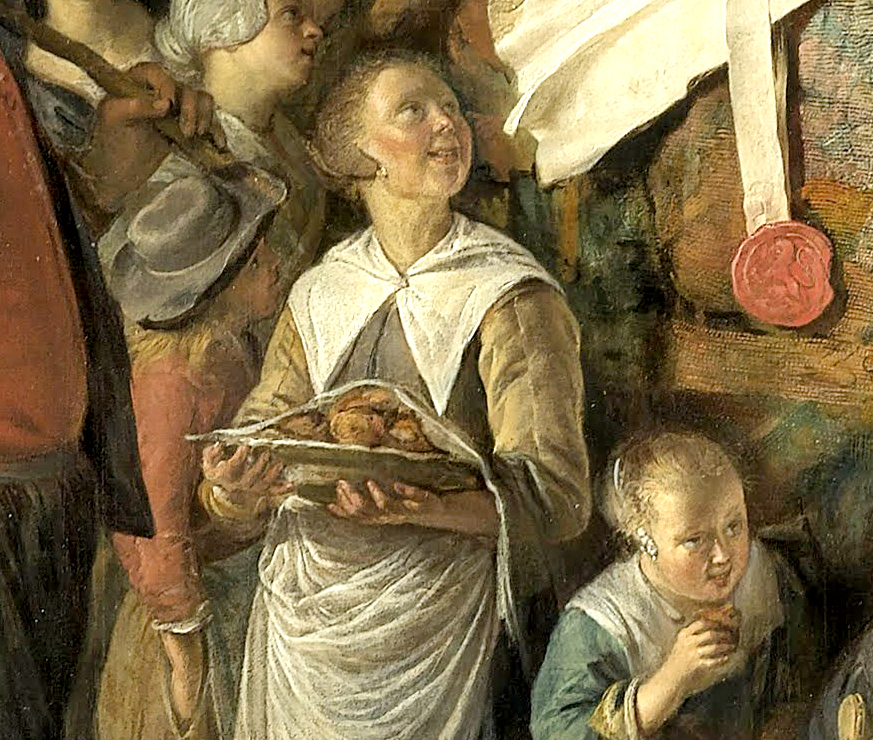
A document bearing a wax seal is meant to convince people of its authenticity. There is also a little monkey on the table. The little monkey symbolizes human folly.
♦ The message is: watch out—the quack is after your money, so don't let him take advantage of you.
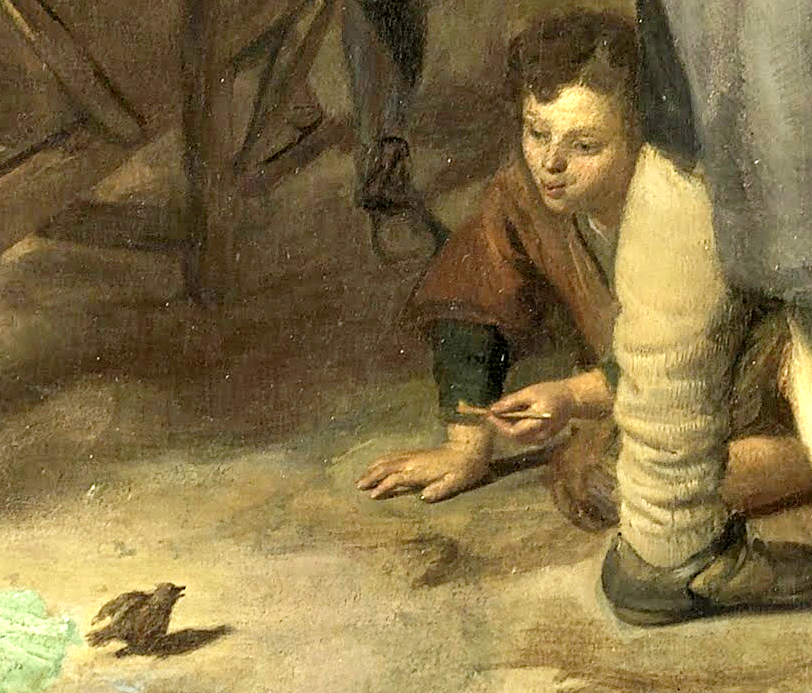
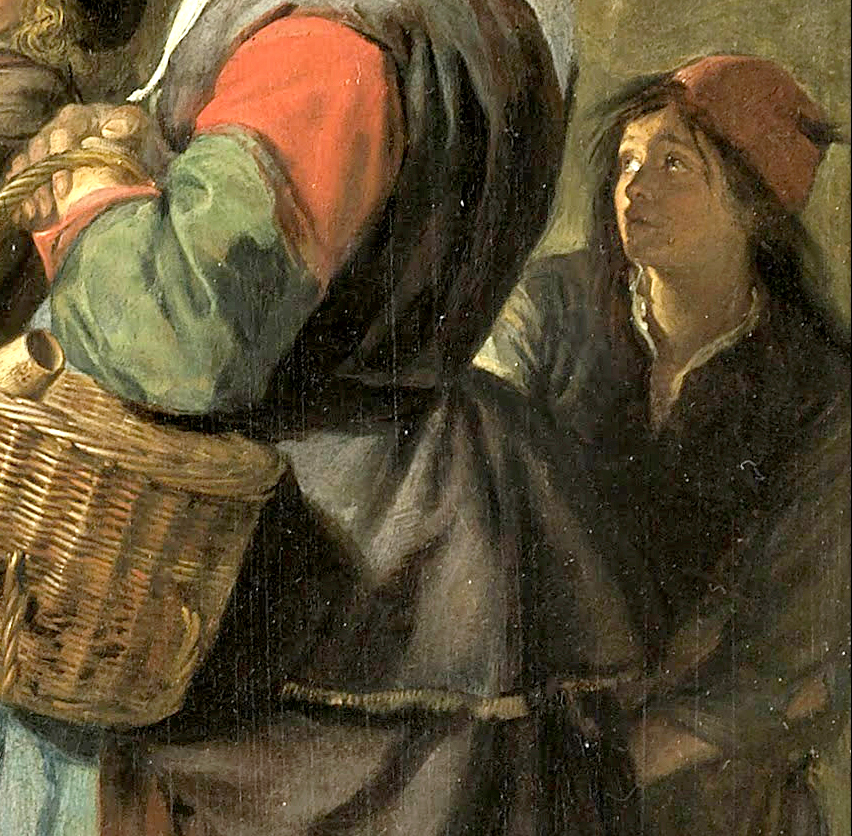
This is also depicted by the little boy luring the bird, which echoes the motif of the quack doctor who deceives the gullible. This is an amusing portrayal of stupidity and deceit, and on the right, another boy with a shifty look is trying to swindle the farmer’s wife out of her purse.
You can also see a bottle on his table, which quacks use to determine whether women are pregnant by examining their urine.
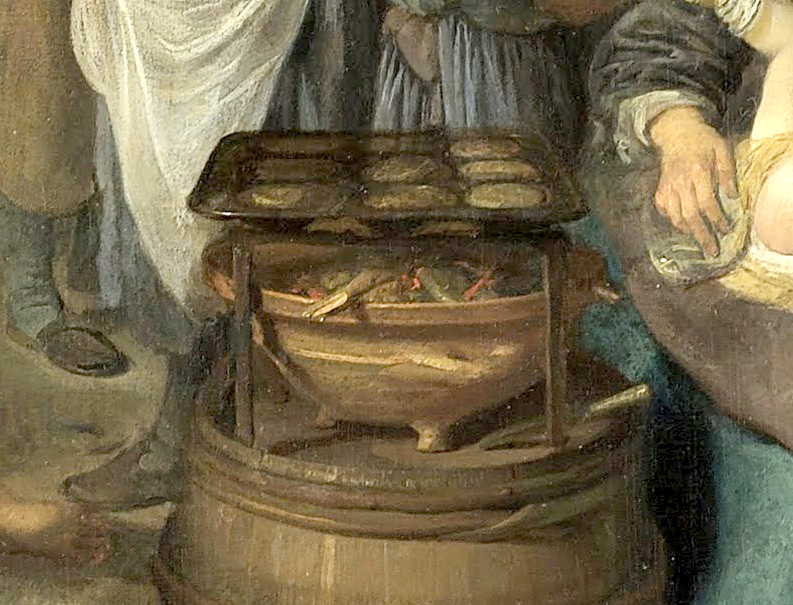
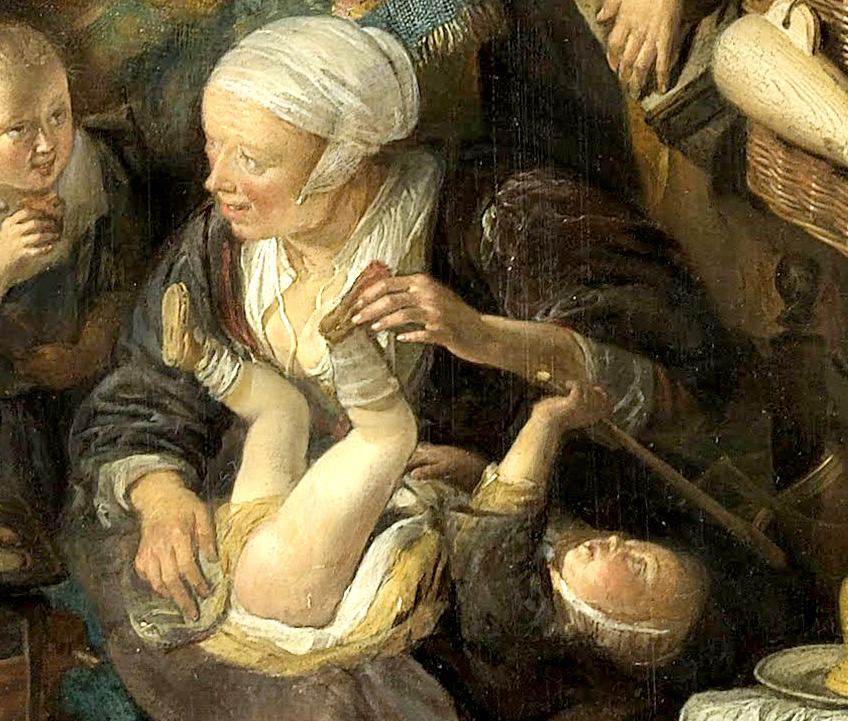
We compare the woman making pancakes to the nonsense spouted by fools and quacks, and their words.
She has paused her work to change her child’s diaper, and in doing so, Dou symbolizes the mundane reality that contrasts with the quack doctor’s pomposity and his words—and for anyone who hasn’t figured it out yet: something’s fishy here.
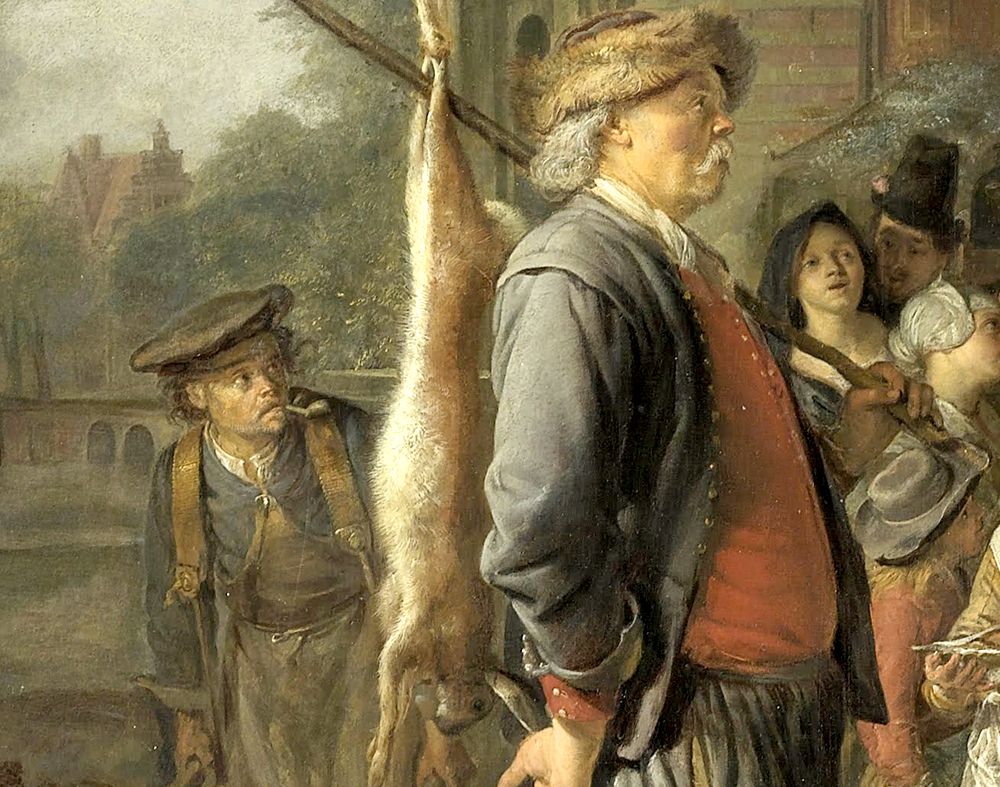
The Hunter and the Hare: Back then, hunters weren’t too particular; a symbol of debauchery and sex, he listens intently, while a girl holding a tray of food looks up at the quack doctor with a smile.
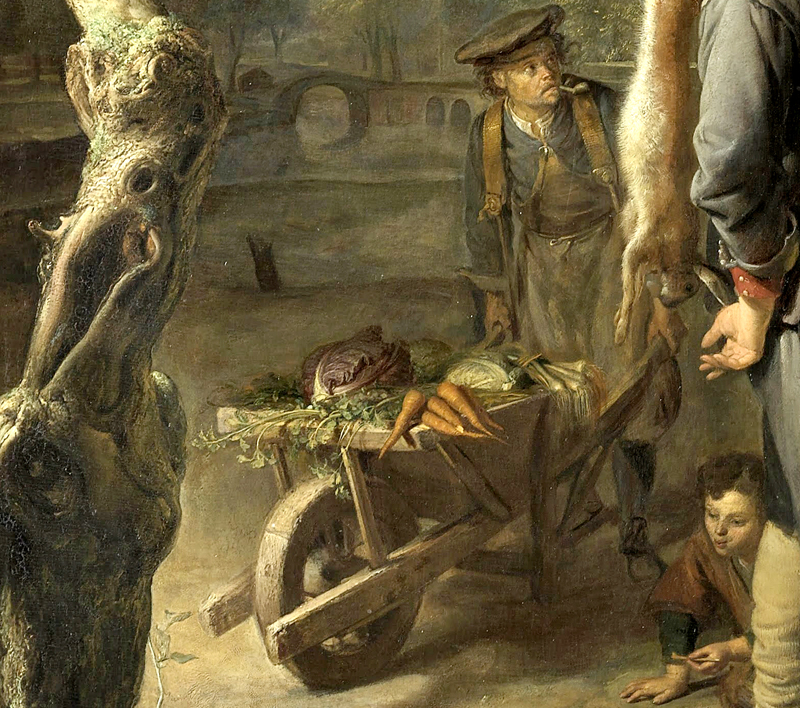
The farmer with the wheelbarrow symbolizes the right attitude toward life—an active life in which hard work yields results. A farmer with a wheelbarrow full of vegetables and a pipe in his mouth looks up at the scene as he passes by.
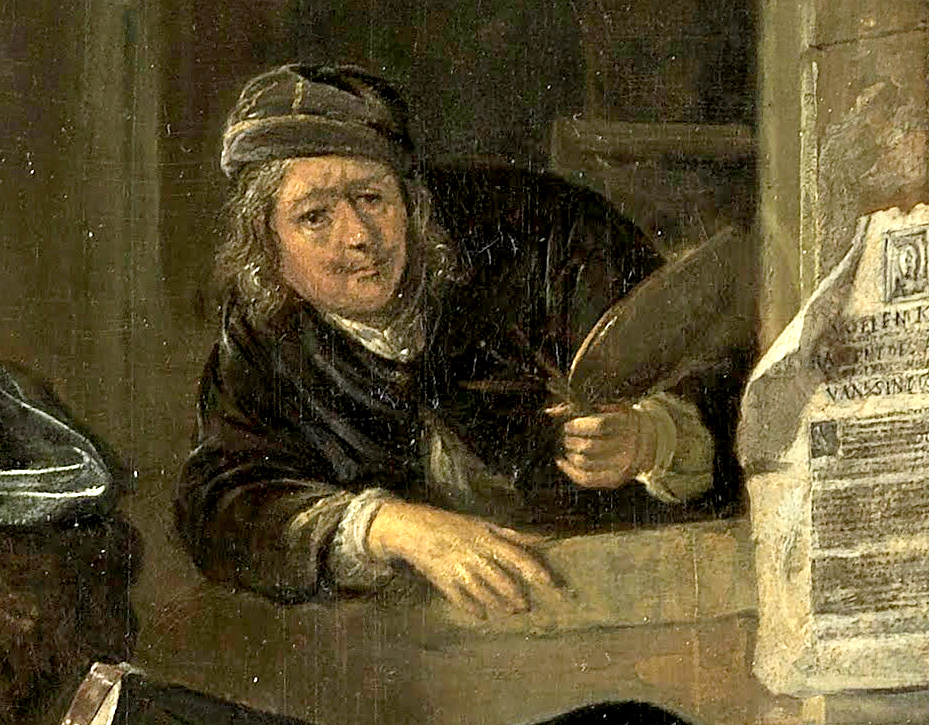
Leaning out of the window of the house, close to the quack doctor, is a painter—Gerard Dou himself—holding a palette in his hand. The painter in the window can be seen as a counterpart to the quack; after all, he “deceives” the viewer by imitating nature.
But unlike the quack’s wares, painting is a deception that is entertaining and, in Dou’s case, can even be called commendable.
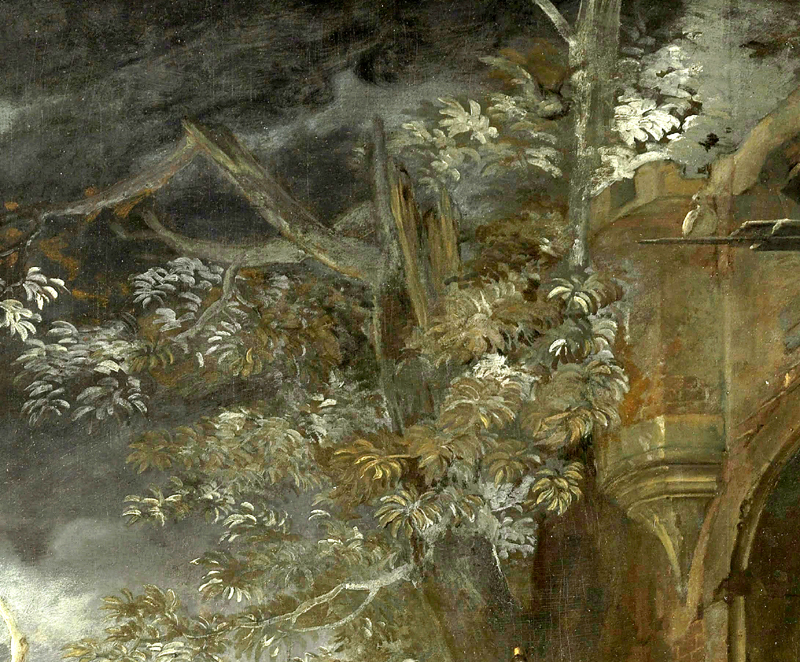
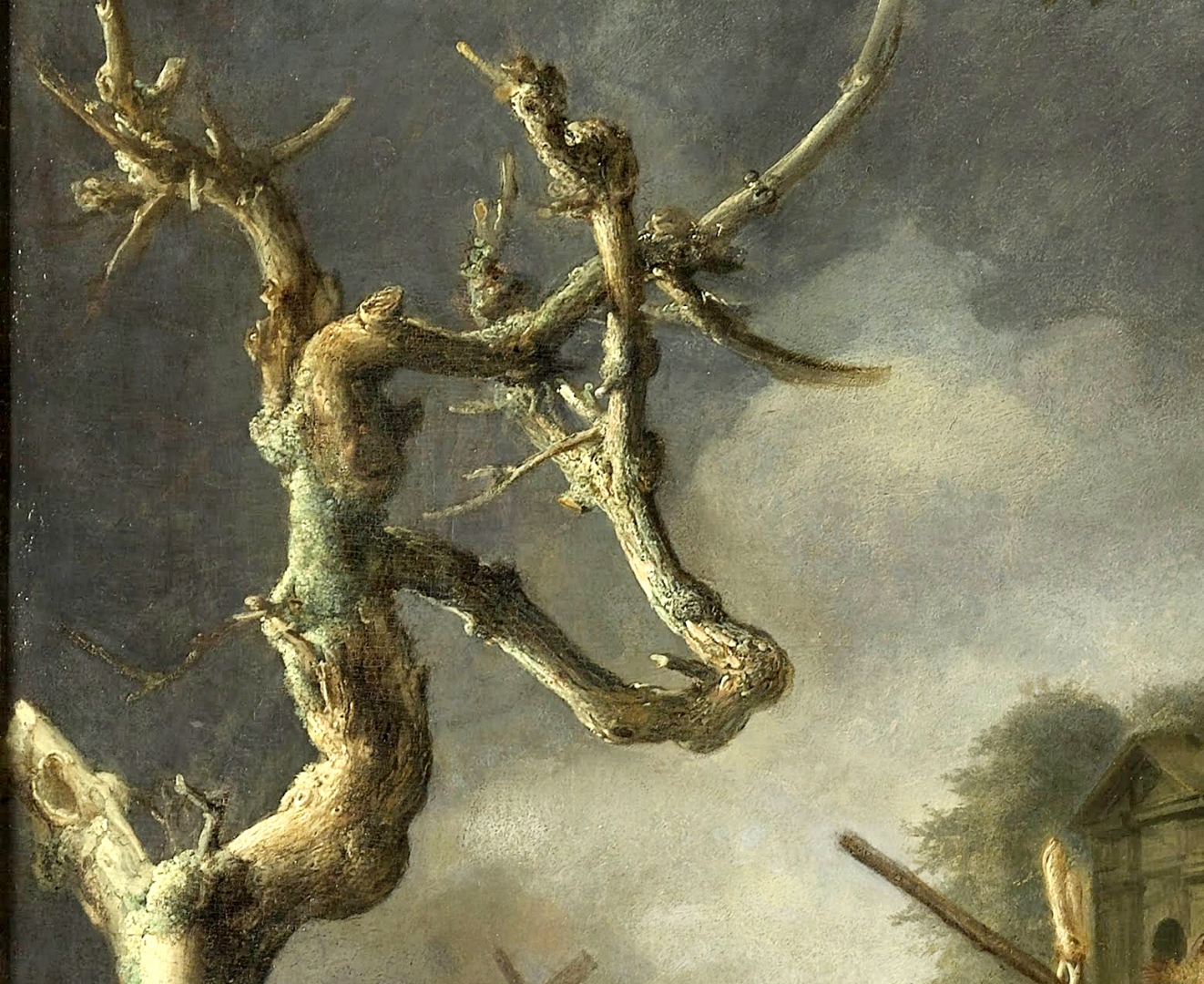
A lush tree grows right up against the house, while a gnarled dead tree stands on the far left.
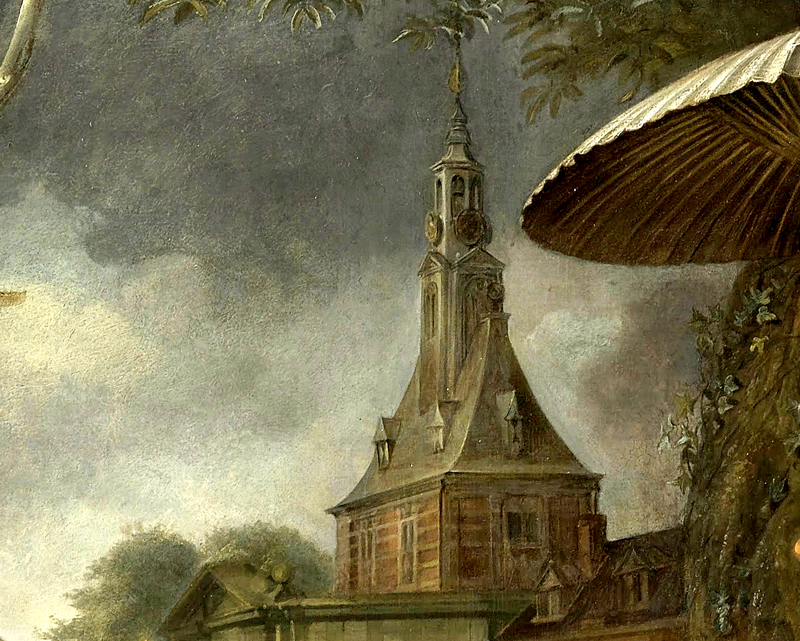
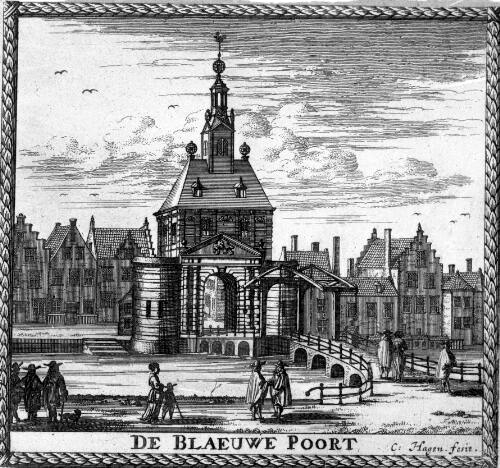
The prominent building on the right in the cityscape in the background is the Blauwpoort in Leiden.
Erik Beenker / Boijmans van Beuningen
De Collectie / The Collection
Blauwpoort Leiden
The Blauwpoort (also known as the (Old) Rijnsburgerpoort) is a former city gate in the city of Leiden. This city gate was located at the beginning of Haarlemmerstraat.
It owes its name to the blue Namur stone from which it was built. The gate was constructed between 1602 and 1610.
It replaced the old Lopsen Gate, which had fallen into disrepair. Shortly after this gate was completed in 1610, the city underwent another expansion. On the north side, the city was expanded to the current canals and the Oude Herengracht. As a result, the new Blauwpoort came to lie within the city limits.
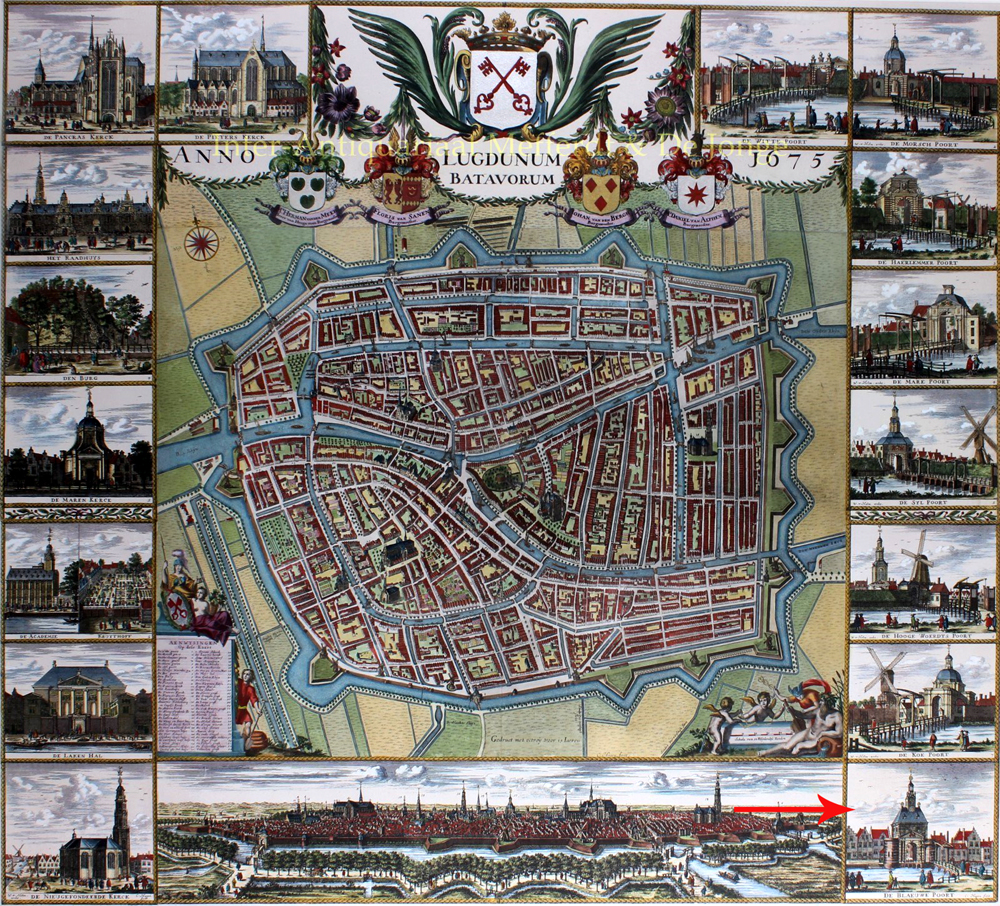
So the gate was still brand-new when it became obsolete. Yet it wasn’t demolished until 1734. Three new wooden gates were erected at the new city limits: the Morspoort, the Rijnsburgerpoort, and the Marepoort.
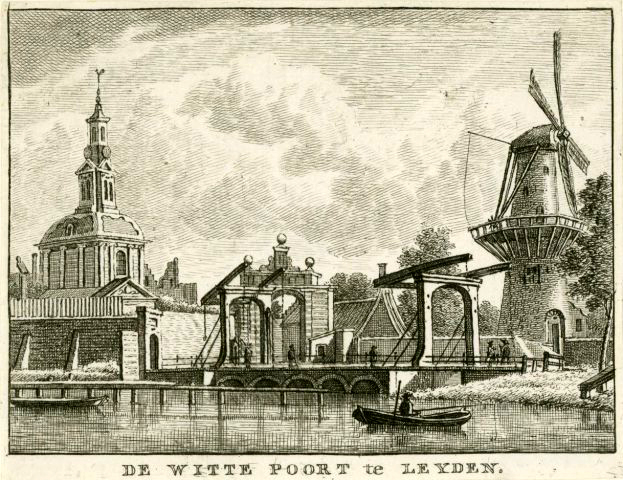
After being dismantled, the clockwork and the bells were installed in the Witte Poort.