
.jpg)
.jpg)
Diego Velazquez (1599-1660)
♦ The first modern painting
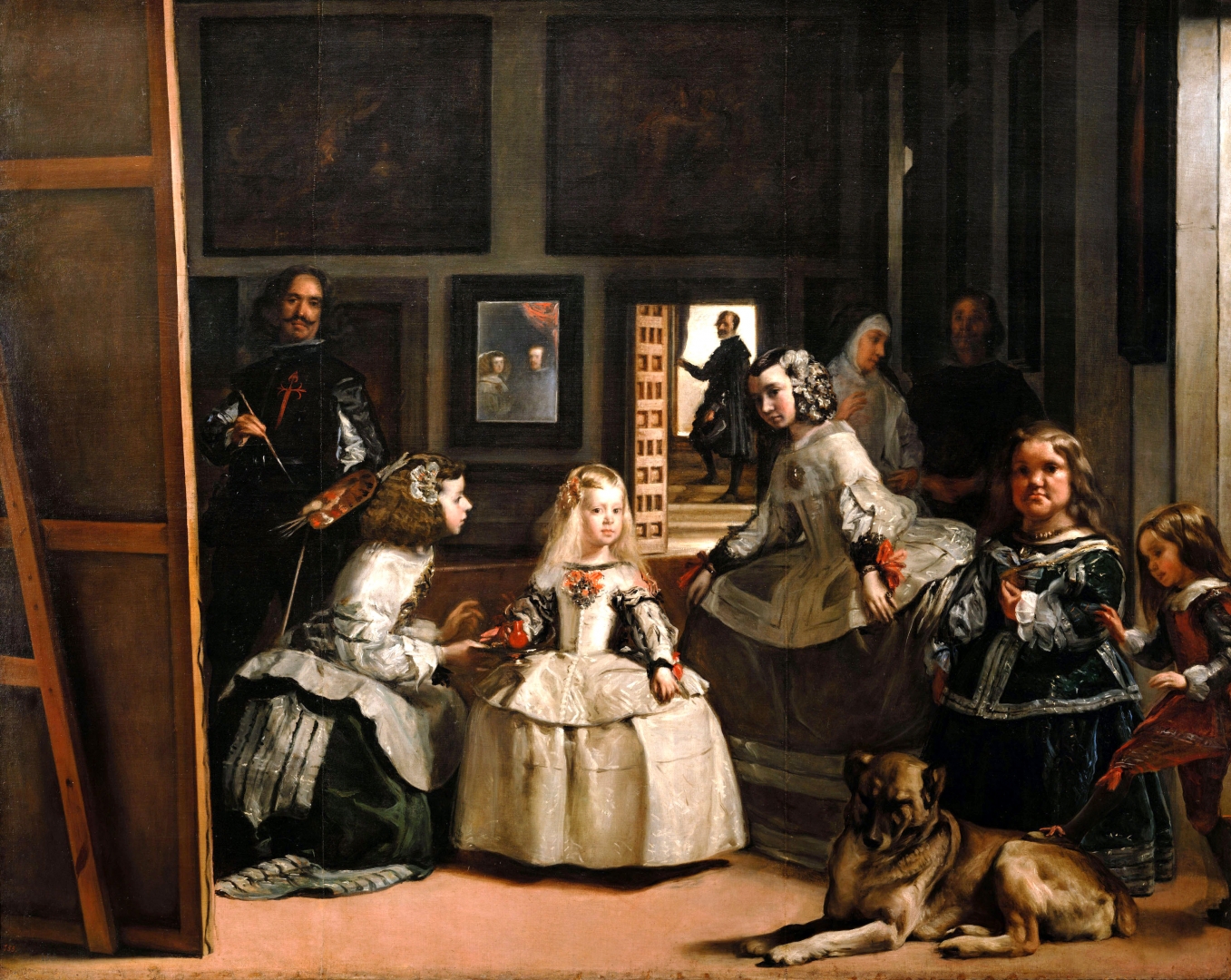
The remarkable and unusual family portrait Las Meninas is the most famous and most widely discussed work by Diego Velázquez.
The painting, created in 1656, depicts a fascinating period of the seventeenth century and is still widely studied today by artists, students, and critics. It is impossible to determine the true meaning behind Las Meninas, and this was probably Velázquez's intention. The painting raises many questions but provides no answers, allowing viewers to decide for themselves what its meaning and purpose are.
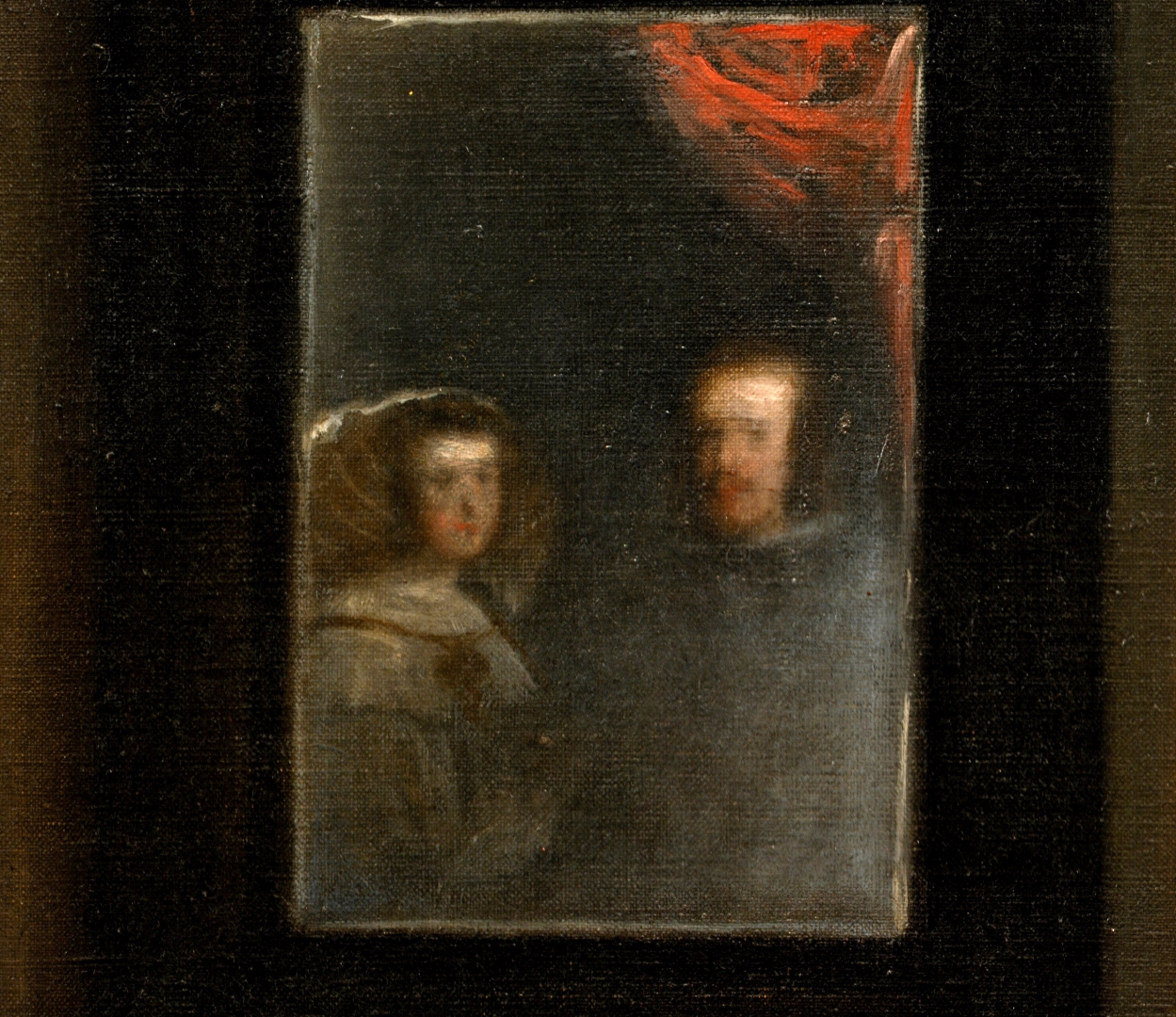
If we nevertheless try to interpret the painting, we begin with the mirror at the back.
- In it, we see the royal couple posing.
- On the left stands the painter, Velázquez himself, working on a gigantic canvas.
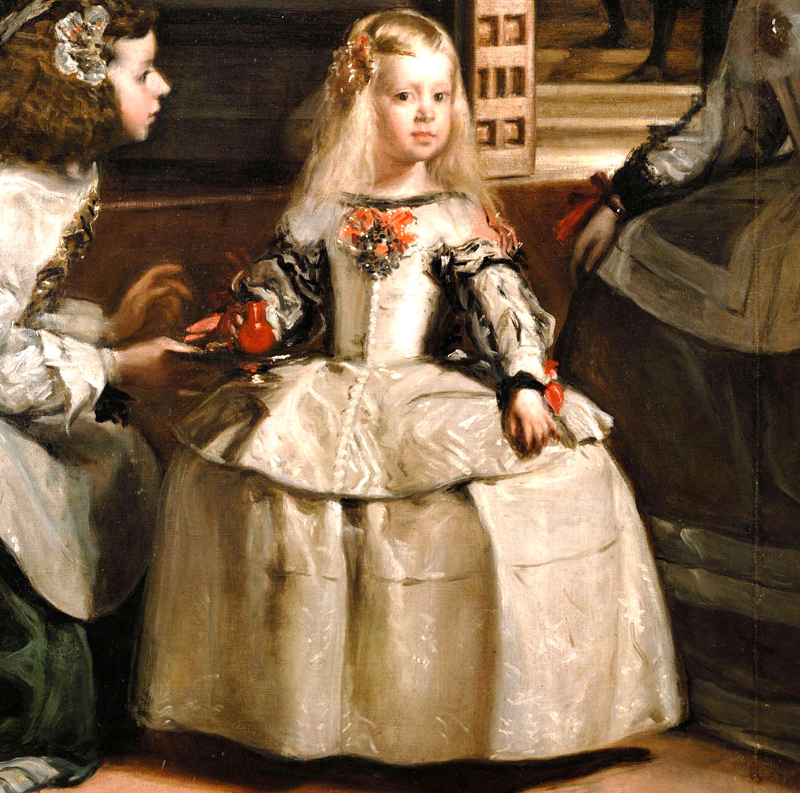
- At the center of the composition stands the five-year-old Infanta Margarita, daughter of Philip IV, dressed in a hoop skirt. She appears to be observing her parents as they pose for the portrait. Margarita is accompanied by two young ladies-in-waiting (las meninas).
The painting's seemingly informal atmosphere was unprecedented in court art, particularly on a canvas of this scale.
♦ Las Meninas ♦
This is a timeless painting because Velázquez chose a subject that continues to fascinate the public. He broke away from the conventions of traditional portraiture and offers us a glimpse “behind the scenes” of the royal court. After all, few people would pass up the opportunity to look inside the private chambers of the royal family.
Royal portraits from that period were usually rather stiff and formal. The subjects wore serious expressions, and the backgrounds were generally plain and monotonous.
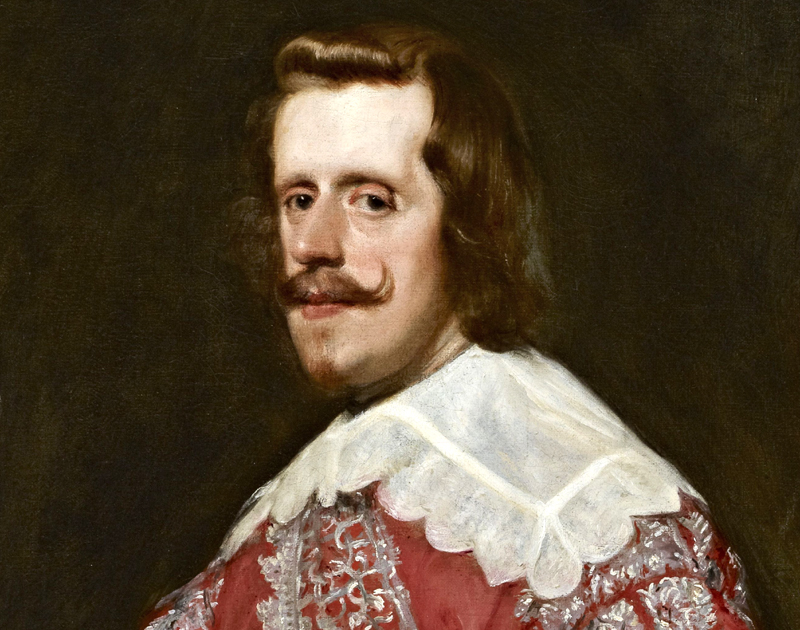
Velázquez, however, broke with this tradition by showing the world everyday life inside the palace of King Philip IV of Spain. He also wanted to portray the royal family in a more human and approachable way, as though they were a family like any other.
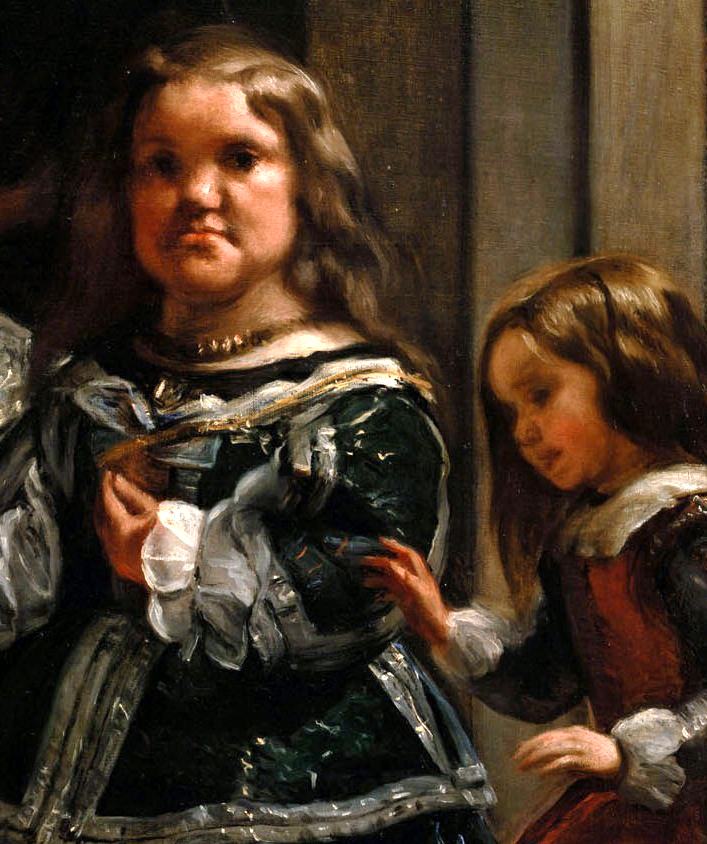
At first glance, the five-year-old Infanta Margarita immediately draws the viewer’s attention. She is surrounded by her ladies-in-waiting, or meninas, the family dog, and two court dwarfs. Although the focus is mainly on Infanta Margarita, Velázquez once again shows that everyone, including those who normally work “behind the scenes,” is worthy of being portrayed. This idea is further emphasized by the title of the painting, Las Meninas.
To Margarita’s left, Velázquez himself stands in front of an enormous canvas, holding a brush and palette. By including himself in the painting in this way, he firmly asserts his status as an artist.
♦ However, there is even more going on in this painting.
One of its most intriguing features is Velázquez’s decision to show the king and queen only as a blurred reflection in the mirror. He skilfully uses perspective to make this part of the scene less distinct. This deliberate ambiguity raises many questions, the most important being: whom is Velázquez painting on the enormous canvas?
Some critics argue that he is painting the scene to his left, with the Infanta Margarita and her meninas, while her parents, the king and queen of Spain, stand at a distance watching their daughter. However, this would mean that Velázquez is painting the young princess from behind, which would be rather unusual for a portrait.
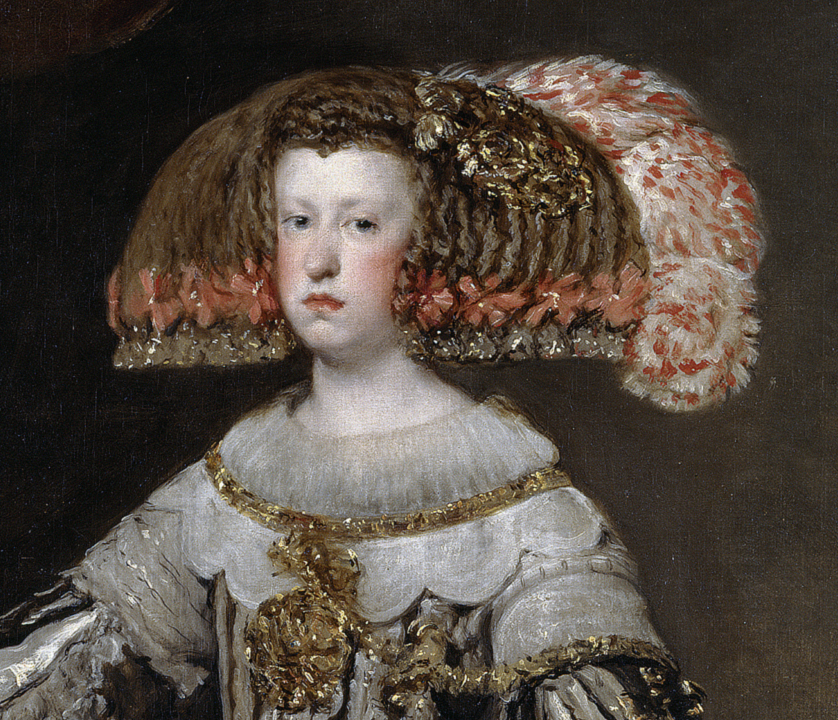
Another possibility is that Velázquez is painting King Philip IV and his wife, Mariana of Austria, since they are standing in front of him. Margarita is simply looking at her parents. Velázquez may have had several reasons for placing the royal couple so far in the background. In his later years, Philip IV was reportedly less fond of having his portrait painted and may even have instructed Velázquez to portray him in this way. Or was Velázquez using his privileged position as chamberlain to engage in a subtle display of power? Was it an expression of vanity to place himself prominently in the foreground while showing the king and queen only as a reflection in a mirror? Or was this yet another attempt to make Philip and Mariana appear more human and to help ordinary viewers relate to them more easily?
These are all questions that viewers may answer for themselves after admiring Las Meninas. This is probably exactly what Velázquez intended, and it is also what makes the painting such a remarkable and impressive work of art..
♦ What exactly is modern art?
This painting helps to illustrate the difference between the classical and the modern era. Art becomes more mature when it begins to reflect on itself, and this kind of thought or self-reflection can be found within the painting.
Modern art reflects on how we see and interpret the world.
Postmodern art, in turn, reflects on modern art: on how we viewed things in the past, how we view them now, and how history shapes the way we see.
Velázquez’s Las Meninas can be regarded as the first modern painting. But why? What exactly is so “modern” about it?
The painting itself expresses one of the defining characteristics of the modern age: the desire to question, examine, and reflect on everything. This idea of reflection, meaning thought and self-examination, is cleverly represented through literal reflections in the mirror.
Moreover, you, the viewer, are drawn into the scene as well. You become part of the painting alongside the figures who are physically present, the king and queen who are only indirectly shown, and the artist himself, who appears twice: once in person and once through the painting he is creating. This is what makes Las Meninas such a fascinating work of art.
♦ Analysis of Las Meninas
The "reflection" within the painting.
[1] The artist looks directly at you, the viewer. Many of the other figures in the painting do the same.
[2] In the mirror, you appear to see “yourself,” but the reflection is not yours. It shows the king and queen.
[3] The image reflected in the mirror is probably also depicted on the canvas on which the artist is working.
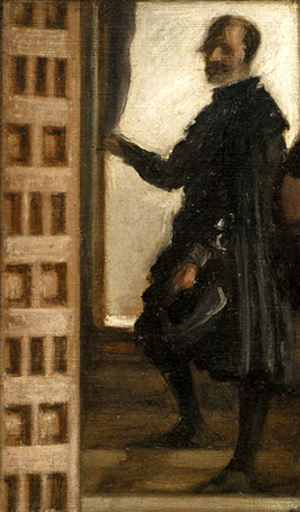
[4] In the doorway, the artist appears once again, this time as the person who is able to oversee the entire scene. Others have identified this figure as José Nieto, or perhaps as a reference to the “lame devil.”
♦ Infanta Marguarita
Detail from the painting. The princess, Infanta Margarita, appears to have just entered the room during the portrait sitting. She looks towards her father and mother as though responding to a cautioning glance from one of them: “Now, make sure you behave.”
In a mirror on the back wall, Velázquez depicted the sitters who were actually standing in front of him. Their clothing identifies them as the king and queen of Spain.
The Art of Looking / De kunst van het kijken
The 14th to the 18th Century
Patrick de Rijnck