

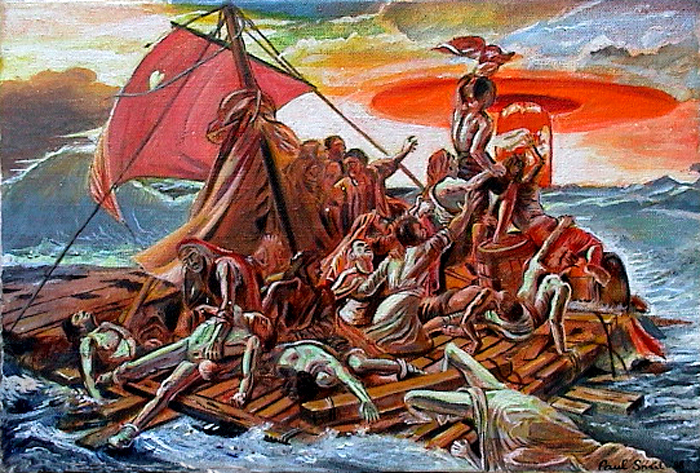
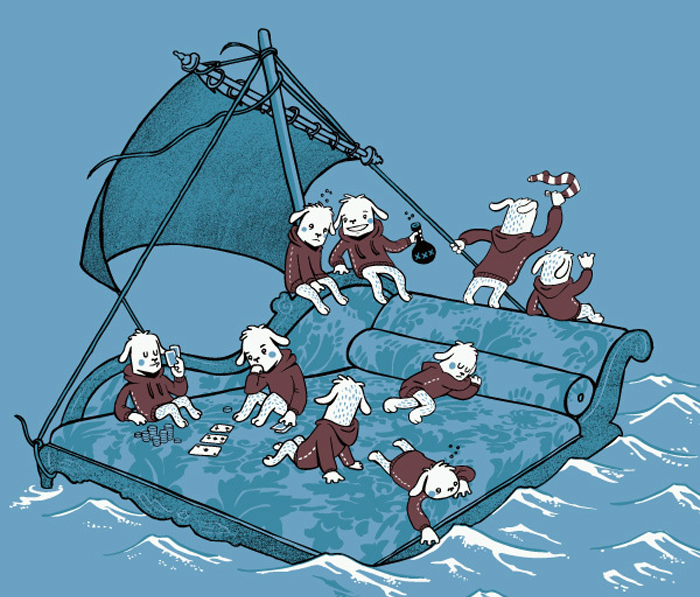
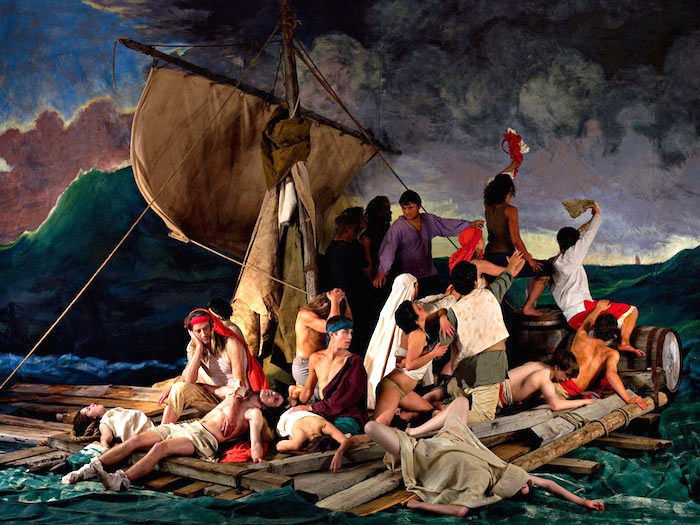
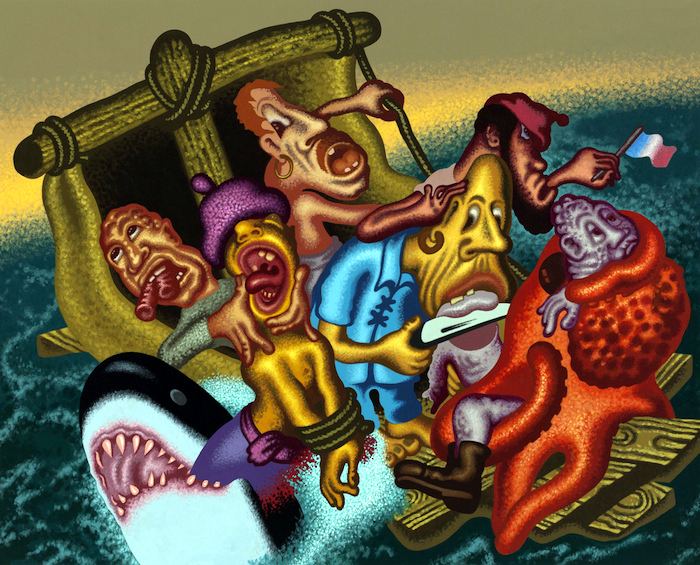
The sad story of a shipwreck served as the inspiration for one of the masterpieces at the Louvre in Paris.
♦ What is *The Raft of the Medusa*? ♦
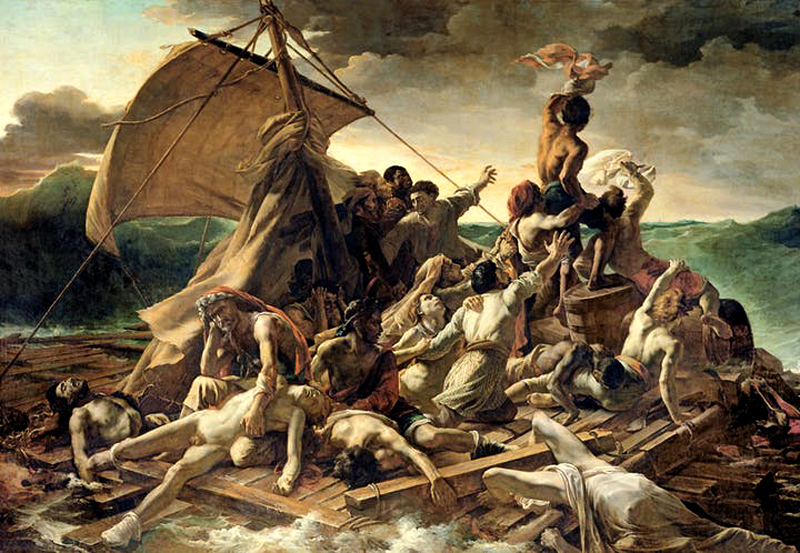
Does the painting *The Raft of the Medusa* in the Louvre depict a real event?
The French artist Théodore Géricault based his masterpiece on a real shipwreck.
In 1816, the frigate *Méduse* ran aground on a sandbar 60 miles off the west coast of Africa.
The disaster, which resulted in the deaths of 140 people on board (crew and passengers), attracted widespread attention throughout Europe due to the survivors’ accounts, which discredited the French government by casting doubt on both the captain’s competence and the organization of the rescue operation. It later became a subject for many prominent painters, including Géricault, who drew inspiration from it for his *The Raft of the Medusa*.
The lifeboats could hold 250 people, and 147 others climbed onto a wooden raft that was being towed. But the captain had the ropes cut because the raft was holding up the lifeboats.
Fighting soon broke out on the raft over the scarce provisions. As early as the first night, 20 people died, some by suicide. The waves pounded the overloaded raft, and only the shipwrecked people in the center were not washed away.
After four days, there were still 67 men left on the raft. Hunger drove some of them to cannibalism. It was a case of survival of the fittest: the dead were eaten and the weak were thrown overboard. On the 12th day, the French ship Argos spotted the raft.
Fifteen people on board were rescued, five of whom later succumbed to their injuries. The captain and the rest of the crew in the lifeboats managed to reach the French colony of Senegal.
♦ History of Origins
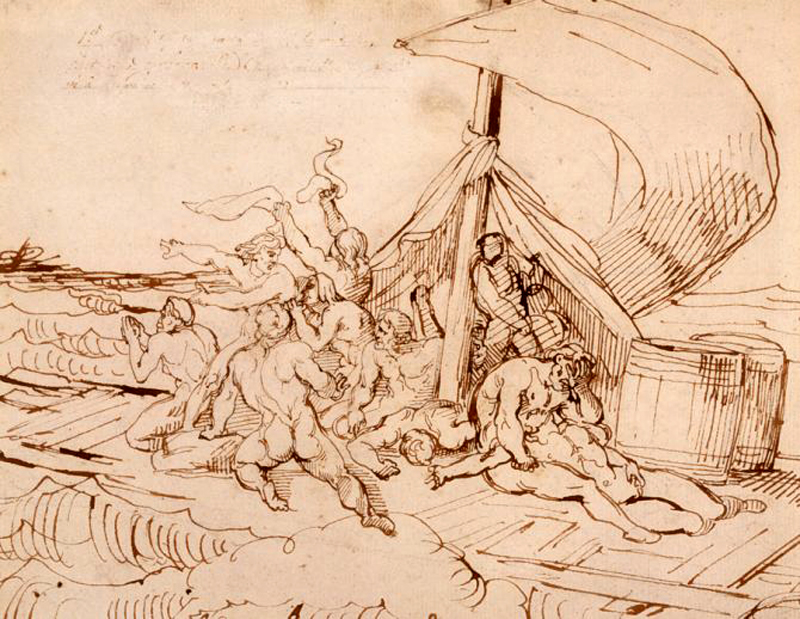
The 27-year-old Géricault found the story fascinating and wanted to immortalize it. The result made him world-famous. In keeping with 19th-century Romanticism, Géricault decided to create a large canvas depicting an event that was not so horrific but emotionally gripping: the first sighting of the Argus. The work embodies hope—freedom within reach—and at the same time an illusion, but only the knowledgeable viewer is aware of this.
♦ Work description
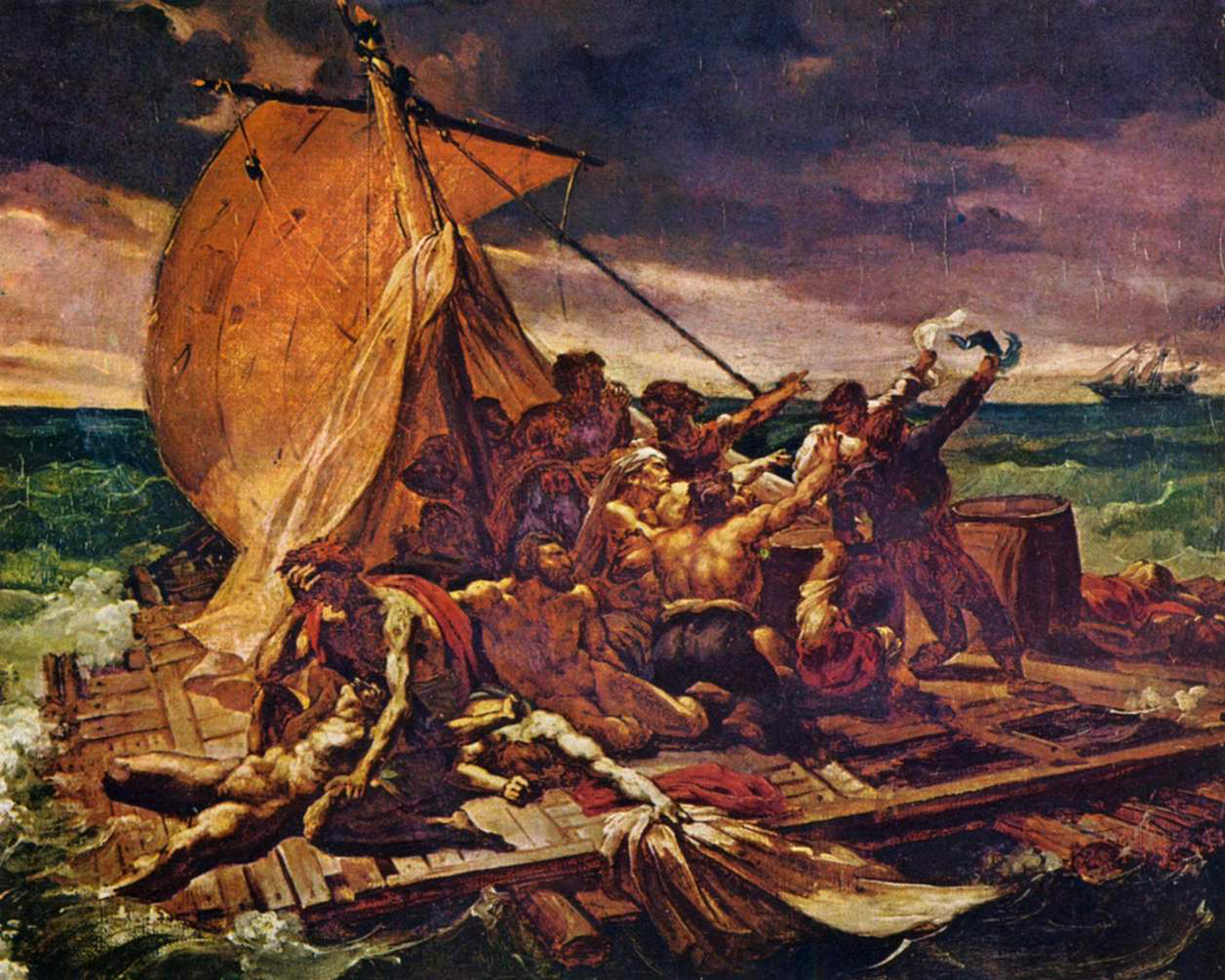
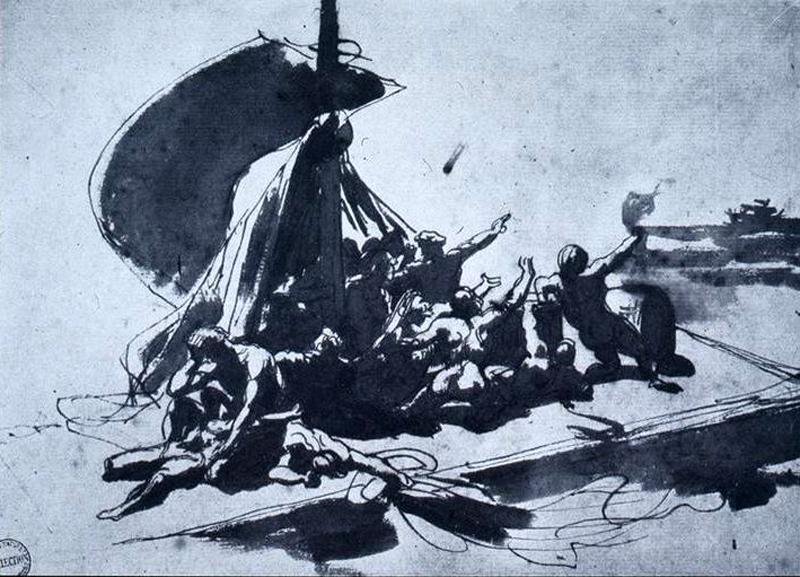
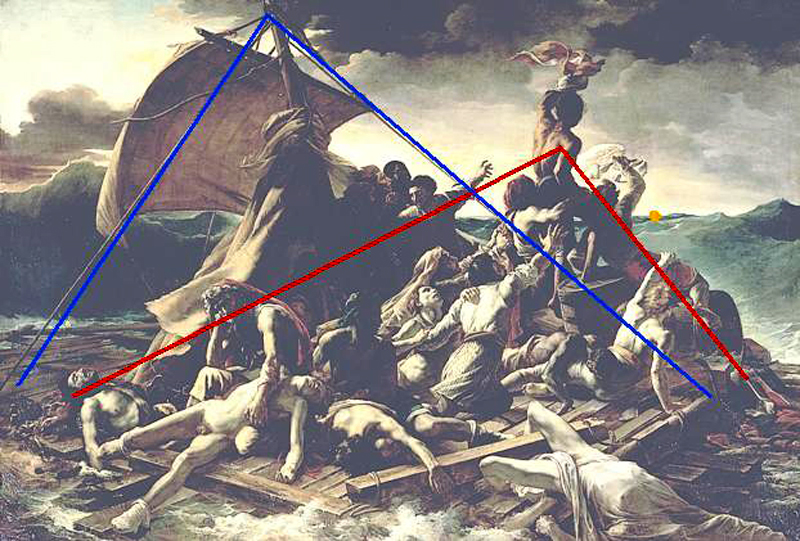
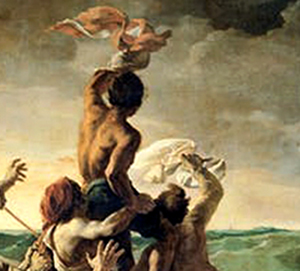
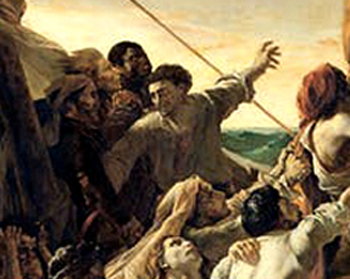
The painting itself depicts a range of emotions: from despair to false hope. The ship itself is barely visible, but the emotions are all the more evident. Some can no longer see it at all and slip back into their stupor. That ebb and flow, that shifting of moods, is rendered with the utmost precision. Everything has been studied and carefully conceived by Géricault, who, in the fall of 1818, was able to transfer the entire composition onto the 5-by-7.5-meter canvas.
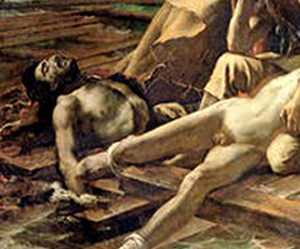
At the center of the story is the tiny speck in the distance that reveals the barely visible sail of the rescue ship. But the viewer first and foremost notices the high waves and the cloudy sky surrounding the raft. Then, through their gestures—which call for attention, point toward the ship, and simultaneously draw the viewer in—the viewer sees the people on board. The hostile natural environment and the dead bodies surrounding the people on the raft make the scene sensational.
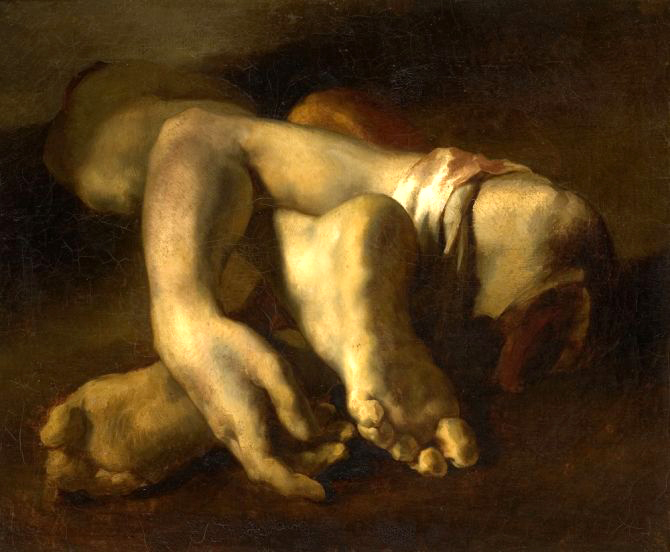
Razor-sharp realism and the ambition to create heroic and monumental works characterize Géricault and this piece. He worked with live models and, as much as possible, preliminary studies of corpses, severed heads, and cut-off limbs. Although his painting pushes the boundaries of perverse, morbid fantasy, it remains, at its core, a realistically painted indictment.
♦ Meaning
On August 25, 1819, *The Raft* was presented under the title *Shipwreck* at the Salon (the 19th-century exhibition of fine arts in Paris, organized annually under state supervision).
In some circles, the work provoked resistance. It was seen as a political indictment of the incompetence of the royalist captain of the Medusa. People were also disturbed by the black figure on the raft and suspected a veiled indictment of slavery. In short, the political significance of the painting overshadowed its artistic value.
Géricault was (whether justifiably or not) disappointed and discouraged. Exhausted and ill (both physically and emotionally), he traveled to London, where his *Raft* made its debut in 1820.
He welcomed more than 50,000 paying visitors. Whether you call it sensationalism or disaster tourism, it turned out to be a definite success after all.
The painting also has a deeper meaning. It refers to the changing role or status of the artist after the Ancien Régime, when traditional patrons such as the nobility, the clergy, and the bourgeoisie disappeared, and the artist no longer painted on commission but had to come up with commissions on his own. The artist finds himself, as it were, on the raft, adrift on the waves without any binding guidelines (style or subject), confronted with total freedom.
Around 1880, this led to the emergence of various “-isms”—such as, in succession, Impressionism, Expressionism, Symbolism, Cubism, etc.—and art came to embody the artist’s inner spiritual struggle.
♦ Trivia
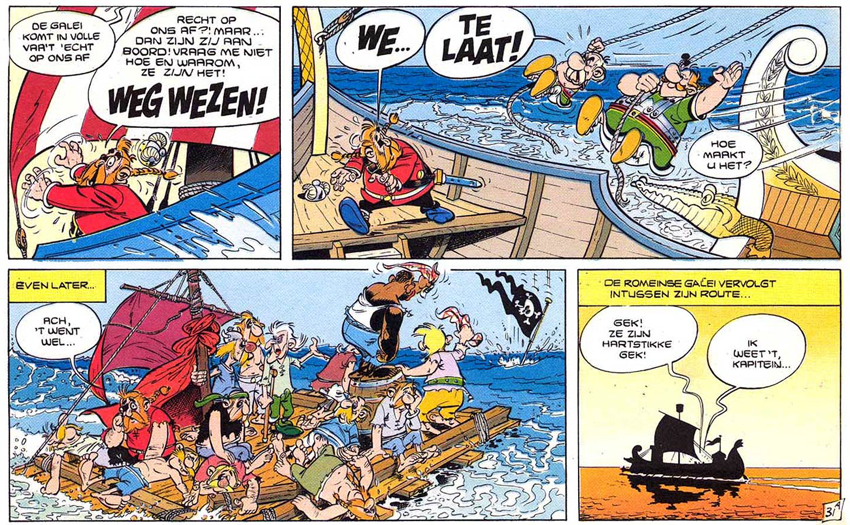
A good illustration of the painting’s popularity can be found in the well-known comic book *Asterix the Legionnaire* (Dutch: *Asterix and the 1st Legion*, 1967), in which the painting is parodied: after a brief naval battle involving the main characters, all that remains of a pirate ship is a raft carrying battered survivors, which bears a striking resemblance to Géricault’s painting.
A bewildered castaway sighs: “Je suis médusé!” (“I’m stunned”). While the Dutch translator either failed to recognize this pun or was unable to translate it as a joke, the exclamation in Derek Hockridge’s English translation reads, “We’ve been framed, by Jericho!”, which, of course, must be read in its secondary meaning as “We’ve been framed by Géricault.”
Source: Historia

Géricault, Théodore_The Raft of the Medusa
References
History
March 2, 2013
Photos
Wikipedia