
.jpg)


♦ CHRISTIAENS, Elsje ♦
(born in Jutland c. 1646 – died in Amsterdam c. 1 May 1664), a servant, sentenced to death for the murder of her landlady.
Around 14 April 1664, Elsje Christiaens, originally from ‘Sprouwen’ (possibly the island of Sprogo) in Jutland and aged eighteen, arrived in Amsterdam. She hoped to find work there as a maid and rented a room from a ‘landlady’. Towards the end of that same month, the landlady demanded a daalder in rent, which she was unable to pay. The landlady then threatened to seize her little chest containing her belongings.
When they got into an argument about it, the landlady struck her with a broomstick. Elsje then grabbed an axe and struck the landlady, causing her to fall down the cellar stairs and lie there as if dead. Elsje Christaens then fled from the neighbours who had come running at the sound of the commotion and jumped into the Damrak. There she was fished out of the water and arrested.
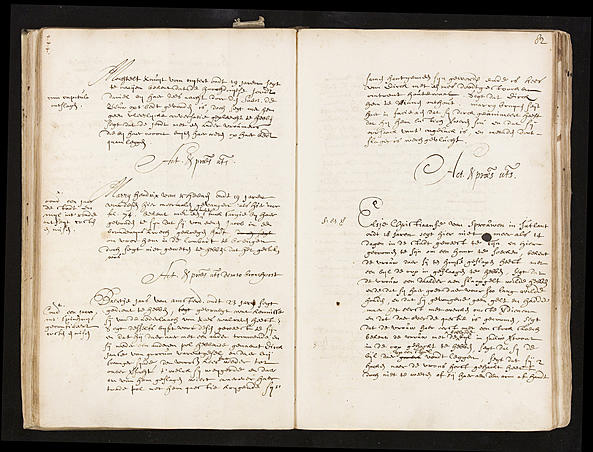
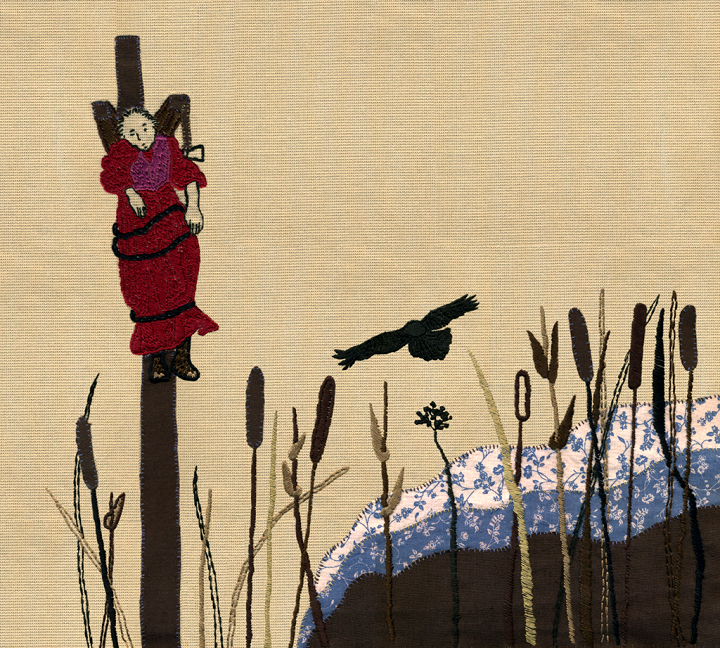
She was interrogated twice, and on 1 May 1664 the sentence was handed down: death by strangulation on the stake, several blows to the head with the murder weapon by the executioner, and the display of her body with the axe above her head at Volewijk to be devoured by the elements and the birds. The sentence was carried out on that same 1 May or a few days later.
♦ Volewijk
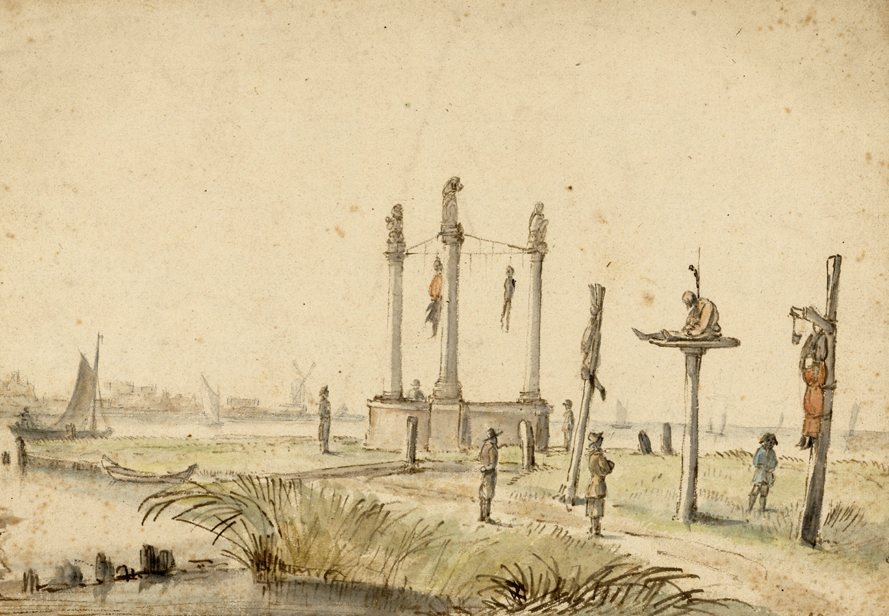
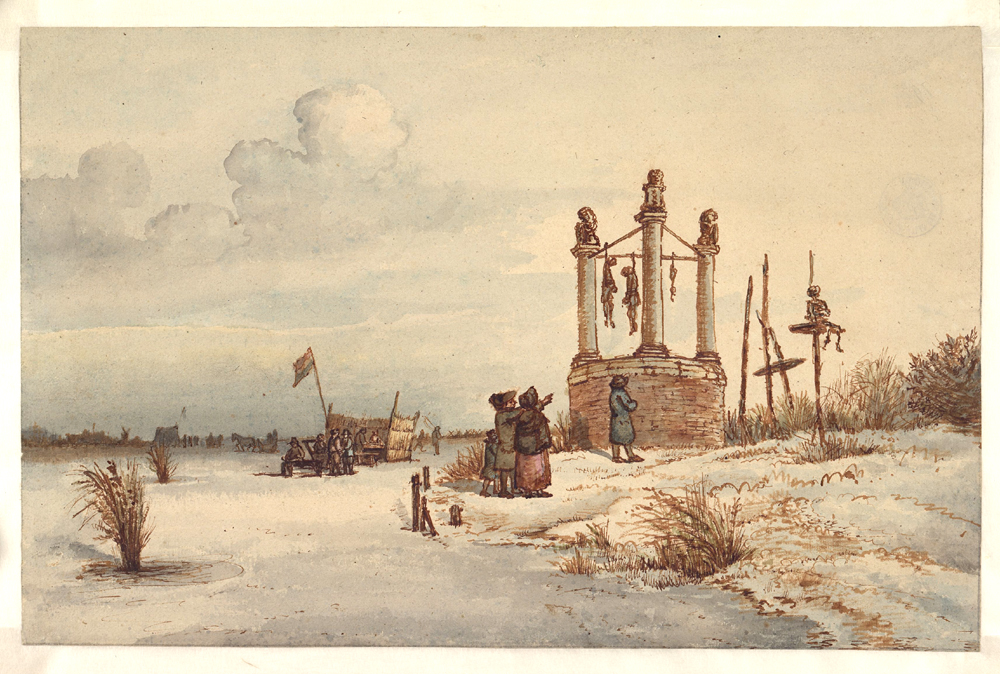
The history of the gallows field at Volewijk dates back to 1360, when this site was already being used to display the bodies of executed criminals. This served as an additional punishment on top of the execution itself.
Denying a proper burial meant that the executed person would not take part in the resurrection of the dead at the end of time, a Biblical concept which no one doubted.
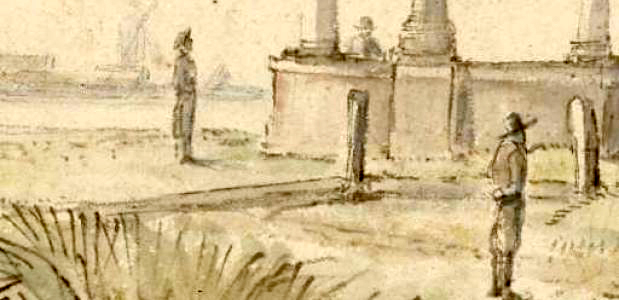
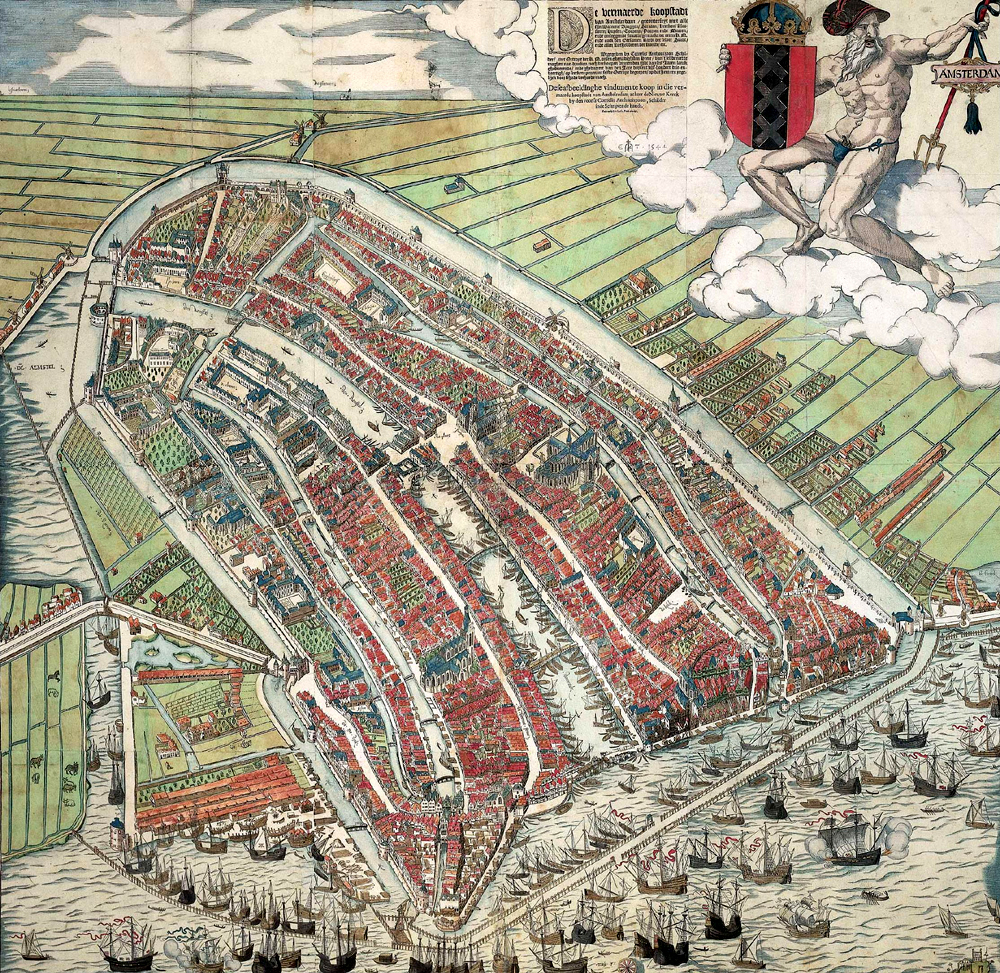
Volewijk in Noord was ideally situated to maximise its impact: ships entering the port of Amsterdam passed by it, and the dangling corpses were clearly visible from the city.
Galgenstraat on Prinseneiland is named after this view; as soon as the residents of that street stepped outside their front doors, they were confronted with the sight of decomposing corpses in the distance. An unsubtle but effective way of making it clear to the people what would happen if they did not abide by the rules.
♦ Tourist attraction
Yet it did not merely serve as a deterrent. Just like the public executions on Dam Square, the gallows field held great entertainment value for the people of Amsterdam. It was a favourite spot for a day out for the whole family; there were even food and drink stalls so that visitors’ appetites were well catered for.
Late medieval Amsterdammers were used to a stinking city with foul-smelling canals, so having a quick sandwich amongst the rotting corpses was no problem at all.
♦ The Children’s Tree
Het The gallows field was not only a place of death, but also of new life. Curious Amsterdam children were kept happy with the story that there was a tree by the gallows pit from which babies came. This ‘children’s tree’ only blossomed at night, and then it was up to the man and woman in love to row a little boat to the gallows field to pick out their little ones.
Het nieuwe Princesse Liedt-Boeck* from 1682, it appears as follows:
The Amsterdam Voolwijcks-Schuyt
Do you not know what that means?
The Schuyt, or Kraeck-wage, is a
The Volewijck, and Well, commonly,
Stands near the Knie-galgh
Where peasant girls go rowing
Right by the well, until they are sure
To find a son or daughter, fresh.
The story of the ‘children’s tree’ was passed down from generation to generation to the children of Amsterdam for centuries, until the stork made its appearance.
De Kinderboom Primary School in Noord is named after this old folk tale.
♦ Rembrandt
In the late summer of 2001, a piece of paper measuring 17 by 9 centimetres travelled from New York to London. The fragile sheet was handled with the utmost care and gentleness during its journey across the ocean.
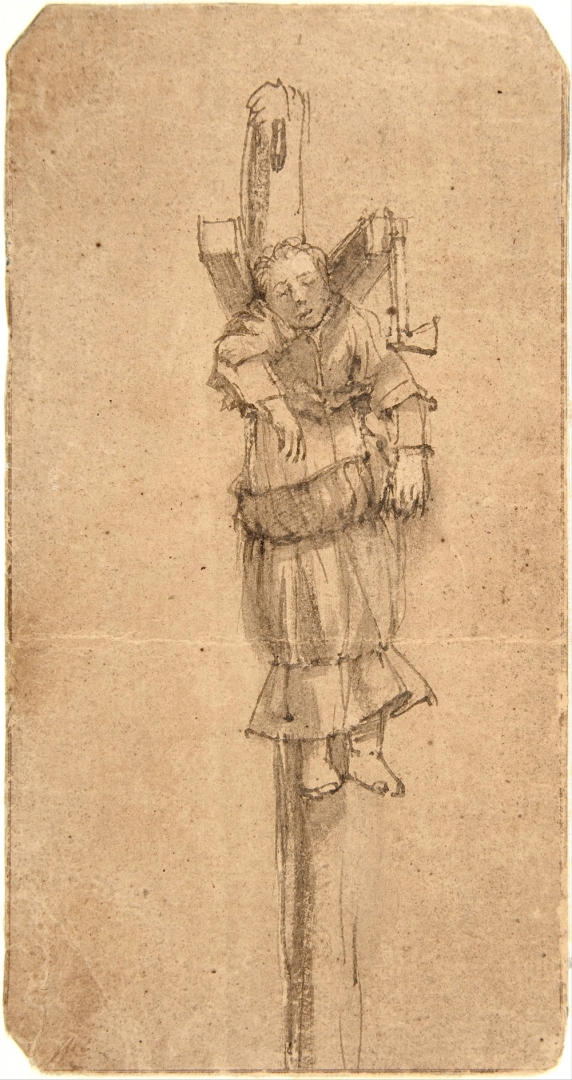
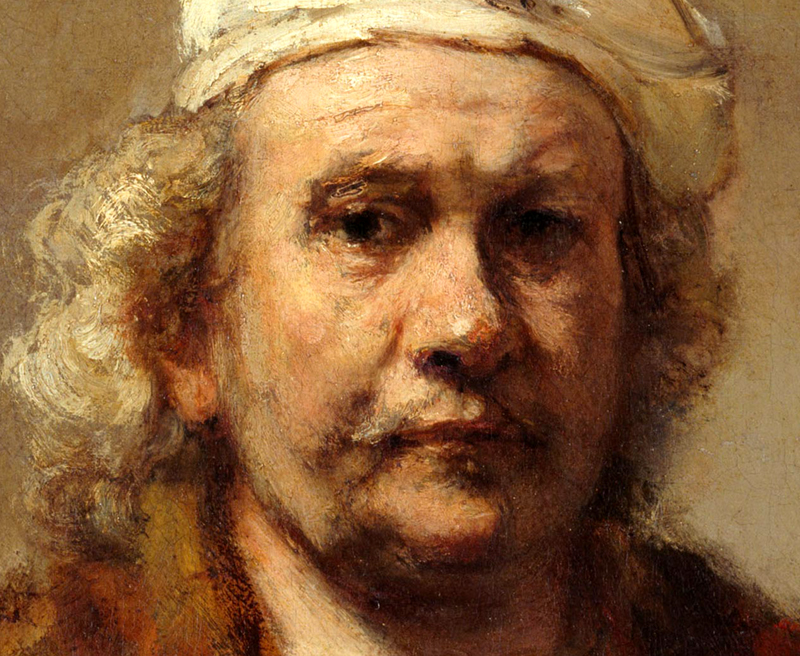
Three centuries earlier, in May 1664, the paper had been carried in a small boat across the IJ to the Volewijck in Amsterdam-Noord. There, the 57-year-old Rembrandt van Rijn had used it to make a drawing of Elsje Christiaens, who was almost forty years his junior. She was hanging there from a pole, so that the birds could feast on her body. Earlier that day, she had been executed on Dam Square, found guilty of murdering her landlady, whose head she had split open with an axe.
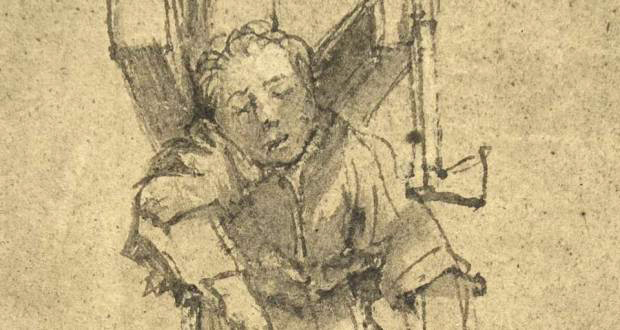
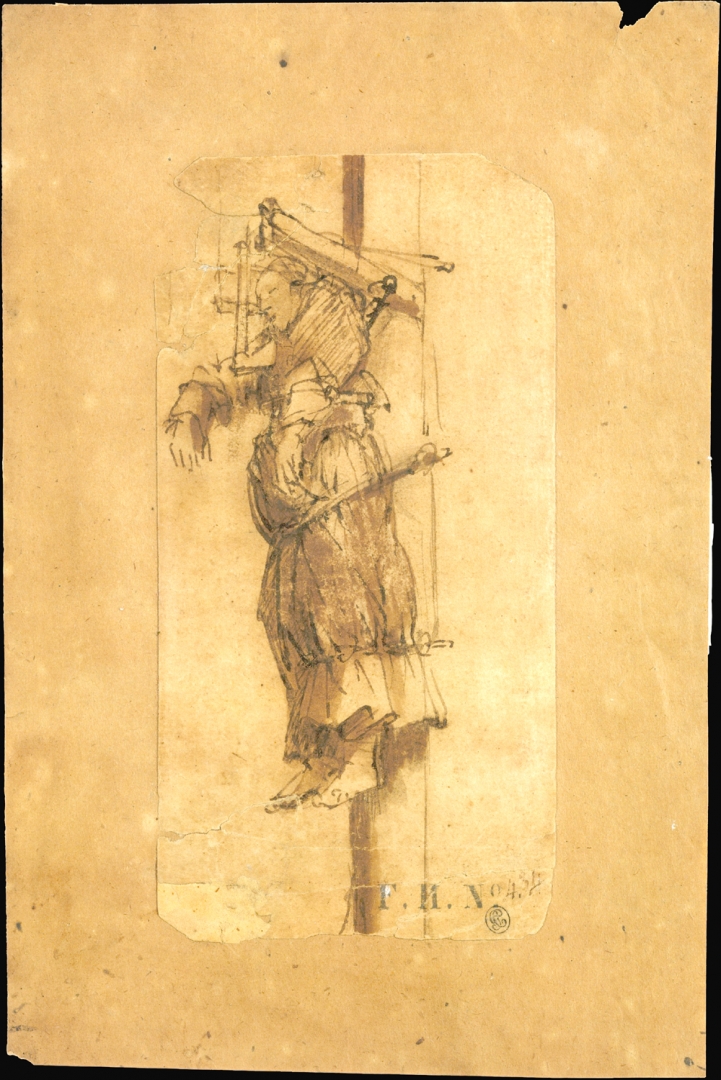
In the drawing – the axe also hangs from the gallows, next to the condemned woman’s head – Elsje Christiaens appears even younger than she actually was; Rembrandt depicted the dead woman flawlessly, with the facial expression of a sleeping child. The drawing has been in the collection of the Metropolitan Museum of Art, New York, since 1929, as has a second sketch of the dead Elsje.
The story of Elsje Christiaens’s gruesome death owes its fame to the archival research carried out by the Amsterdam archivist Miss I.H. van Eeghen, prompted by two drawings by Rembrandt. These depict a condemned woman with an axe raised above her head, tied to a post at Volewijk, Amsterdam’s execution ground.
Based on the drawing technique, Rembrandt experts dated the drawings to around 1655. Van Eeghen was annoyed that they had not taken the trouble to search the judicial archives for the facts.
She spent 25 years poring over confessional records and thus discovered that the only woman sentenced to death who fitted the description must have been the Danish servant Elsje Christiaens. On the basis of this finding, she was then able to date the drawings precisely to early May 1664. Van Eeghen triumphantly concluded that the Rembrandt experts had been off the mark by eight to ten years. She therefore expressed the hope that ‘Elsje Christiaens, who once served as an example to deter others from committing crimes, will now once again serve as an example – this time to art historians – to be cautious when dating works on the basis of stylistic analysis!’ (Van Eeghen, 78).
Nevertheless, some art historians continue to struggle with this. In *Rembrandt’s Women* (2004), Lloyd Williams argues that, based on style, the drawings should actually be dated earlier. Rembrandt only used such fine, somewhat scratchy parallel lines in the 1650s: ‘Intriguingly, it is only the link to Else Christiaens’s execution in 1664 that provides such a late date for both drawings’ (Williams, 239).