
.jpg)
Guerníca
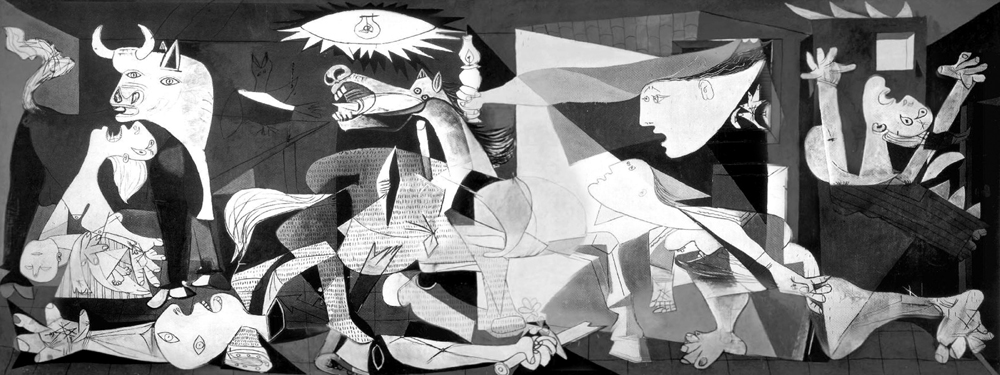
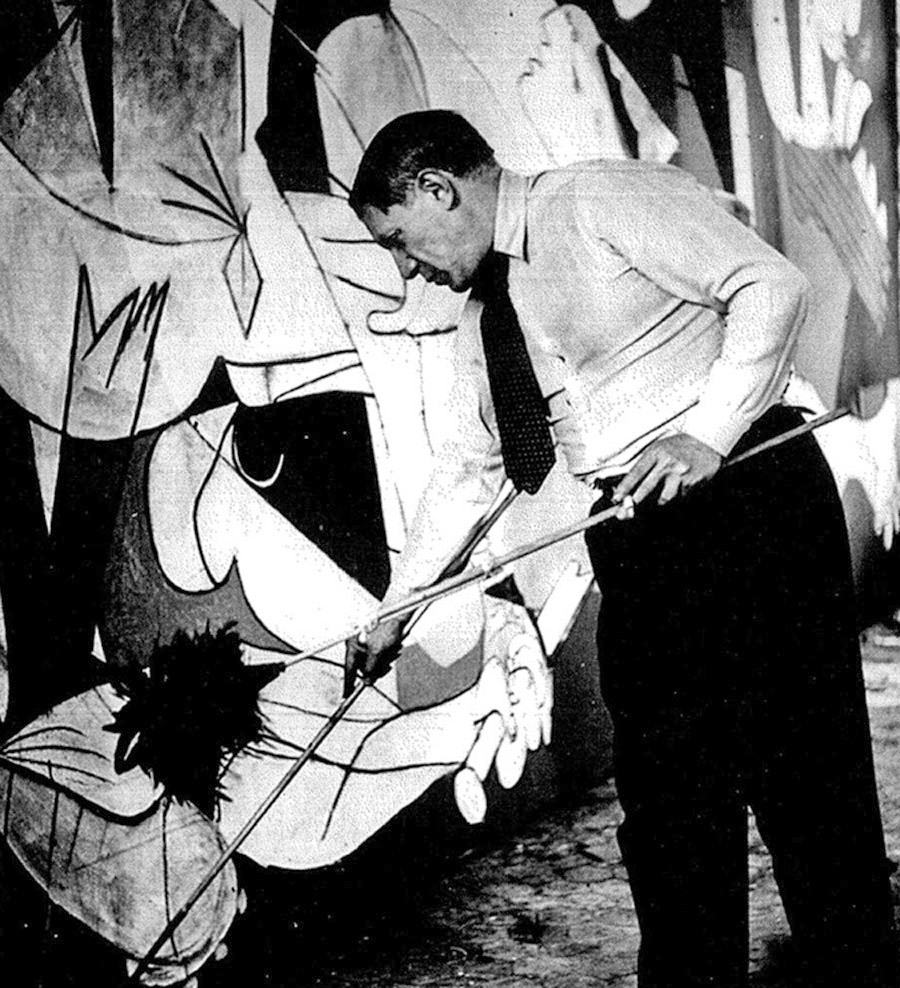
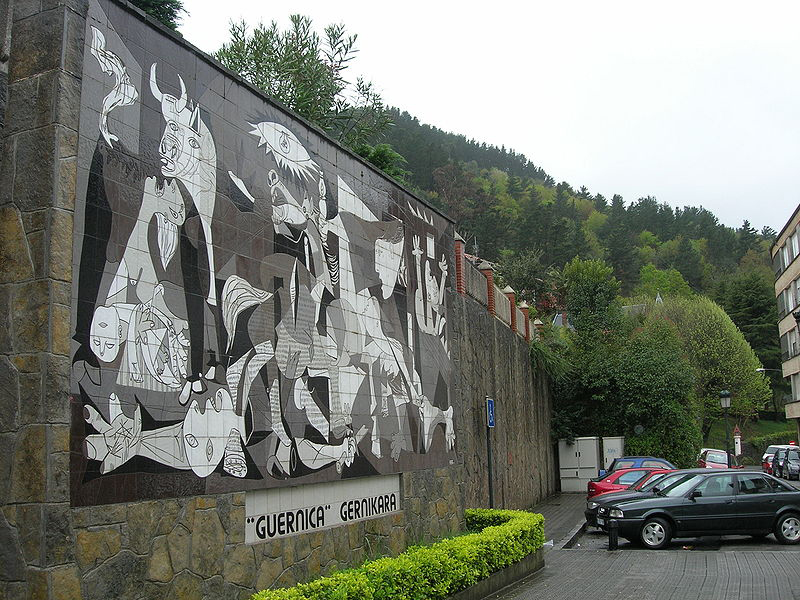
is a painting by Picasso from 1937. The painting, which measures an enormous 3.49 m high and 7.76 m wide, depicts the bombing of Guernica (1937) during the Spanish Civil War.
Guernica is on display at the Museo Reina Sofía in Madrid.
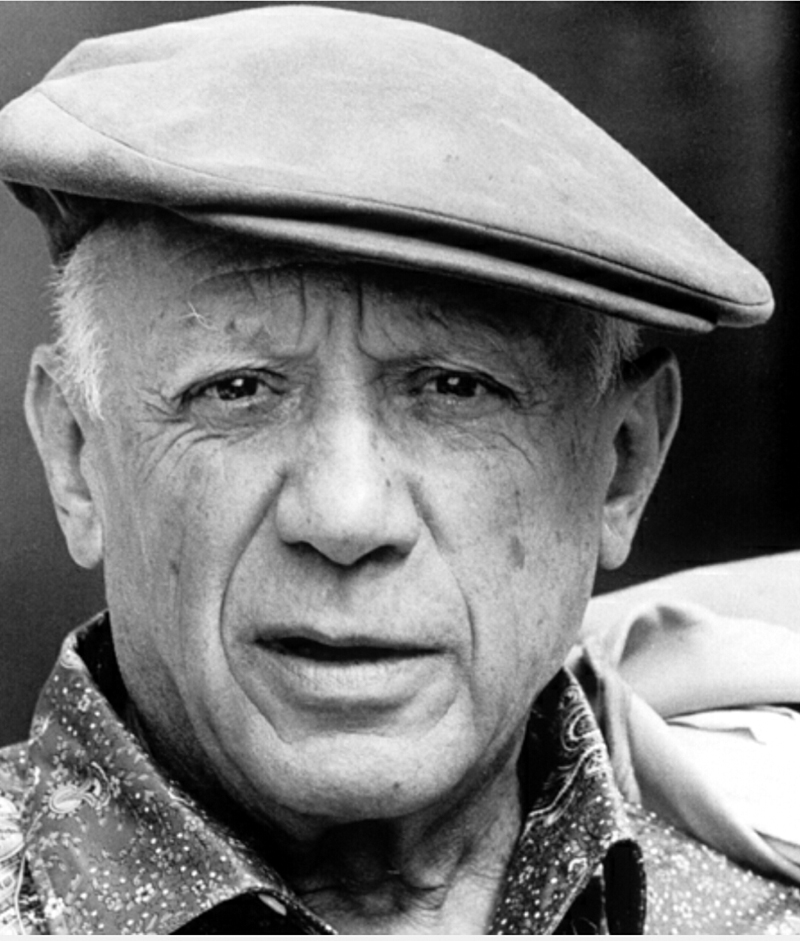
Pablo Picasso (1881-1973)
♦ Past history
In the winter (January) of 1937, Picasso accepted a commission from the Republican government to create a painting for the Paris Exposition. During the first few months, he was rather lacking in inspiration, and so produced no more than a few sketches.
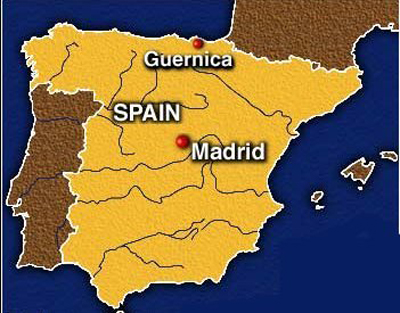
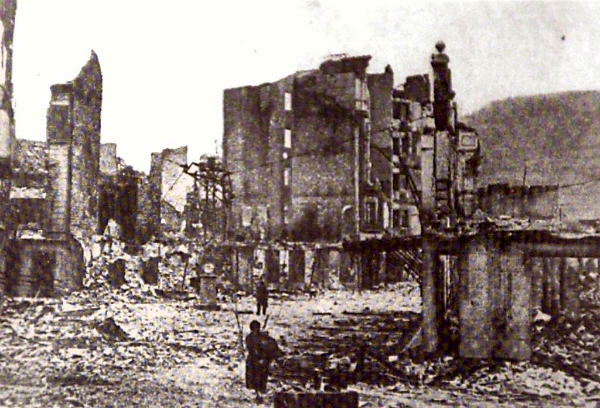
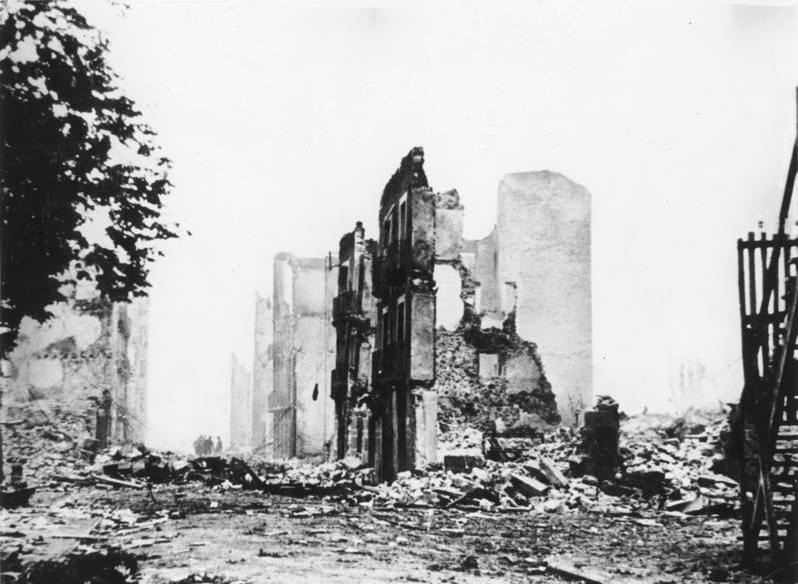
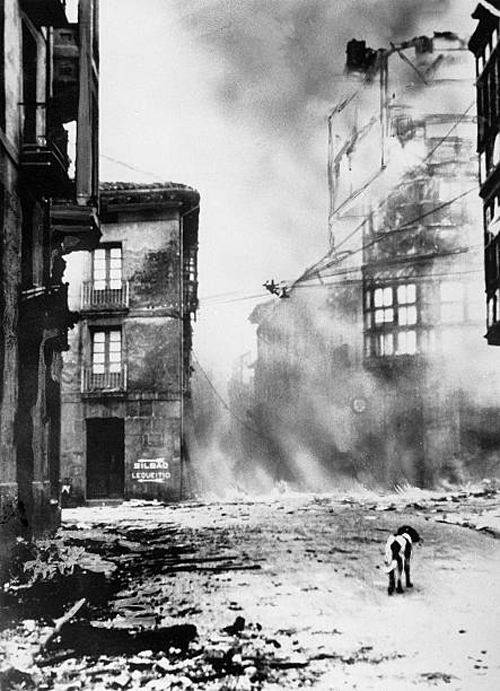
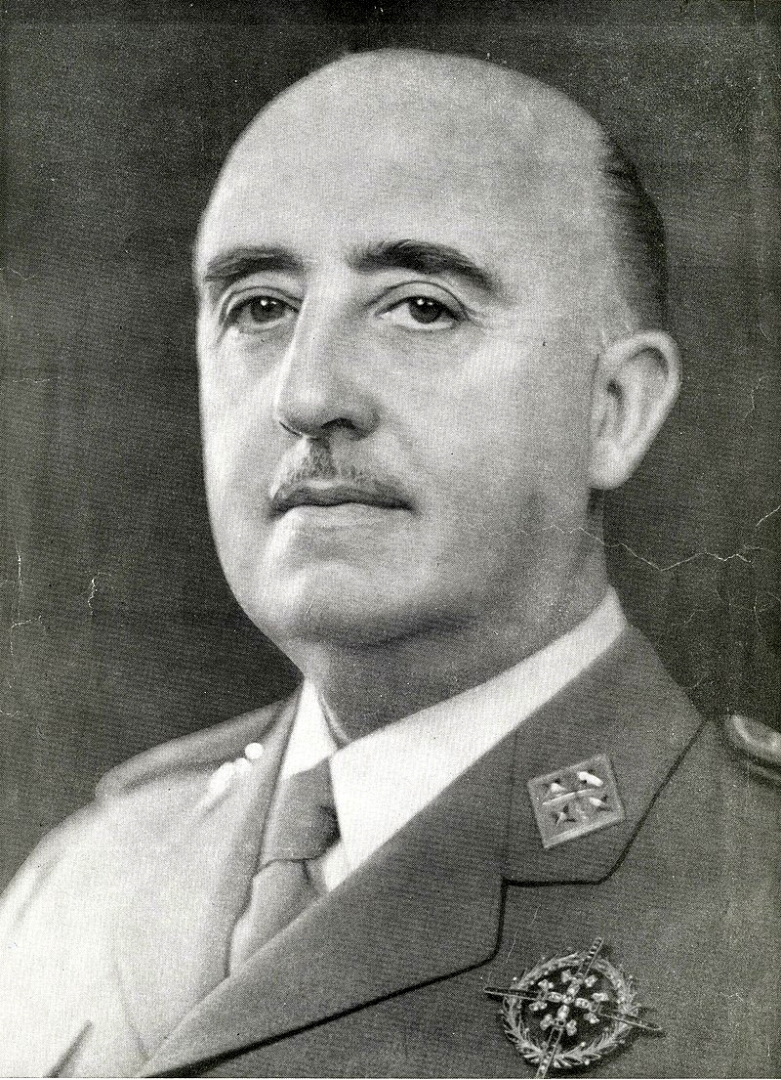
On 26 April 1937, the Basque village of Guernica was bombed by German and Italian bombers. This was carried out under the command of the fascist leader Francisco Franco, whose aim was to put an end to Republican resistance. Franco was one of the generals under Hitler’s command. Countless innocent people were killed; there were more than 1,600 deaths and 900 injuries.
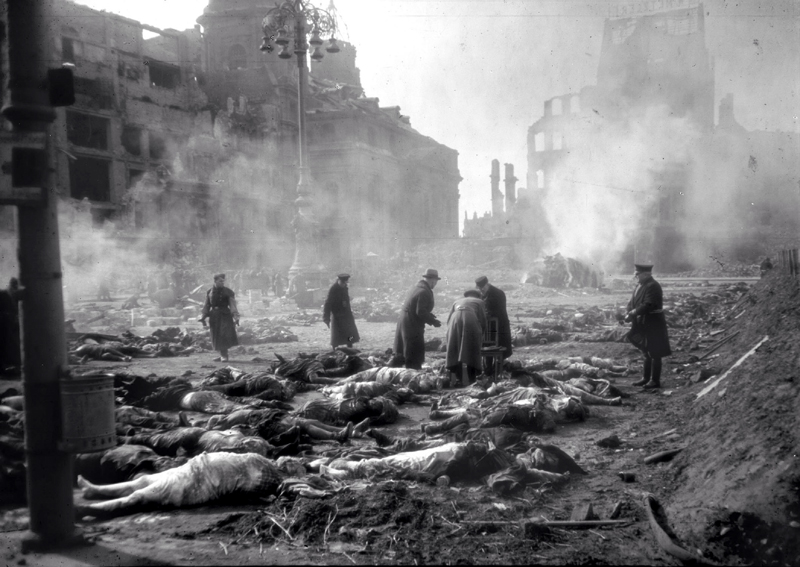
It was the first terrorist bombing in Europe, the first of many that were to follow, including those on Rotterdam, Coventry and Dresden. Historians still disagree to this day about the exact number of fatalities. Guernica was largely destroyed.
Like many other artists of the time, Picasso was a staunch opponent of Franco. Their artistic spirit was under serious threat from his regime.
The Basques regarded Guernica as their capital; it was therefore of great emotional significance, yet held no strategic value whatsoever for Franco. Picasso was furious and immediately set about creating his great mural entitled ‘Guernica’.
♦ Interesting fact:
When Paris, where Picasso was staying at the time, was occupied by the Germans in 1940, he received a visit one day from a few German officers. They noticed the painting (Guernica) and asked Picasso: “Haben Sie das gemacht?”, to which the young artist replied: “Nein, Sie”.
With this moving work, Picasso openly protested in 1937 against the Nazi bombing of the Basque town of Guernica that year. It is steeped in his personal symbolism of suffering and violence.
Through this painting, he wanted viewers to feel the chaos of a bombing raid as they looked at it.
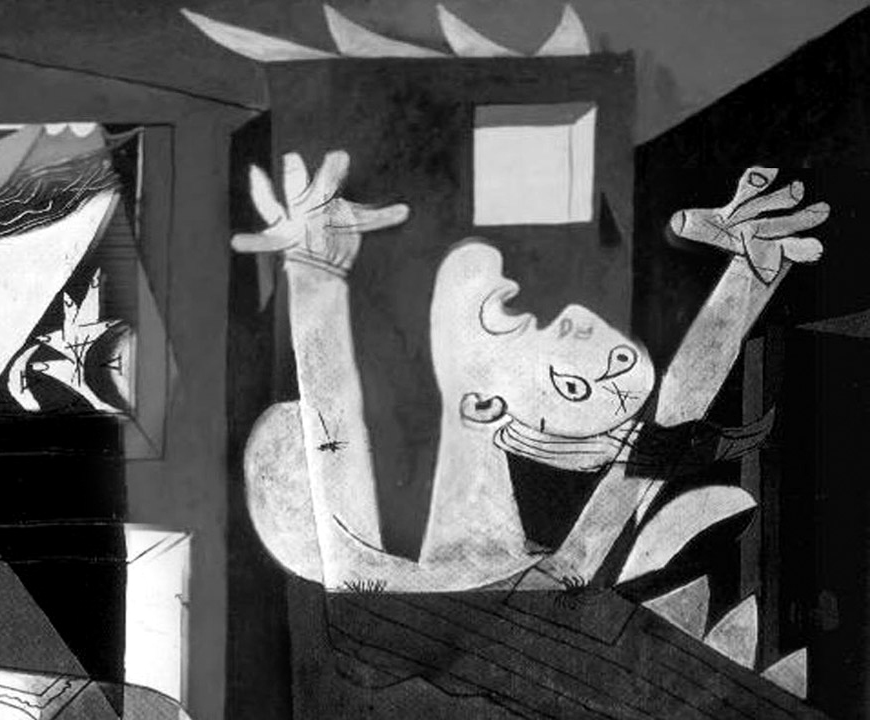
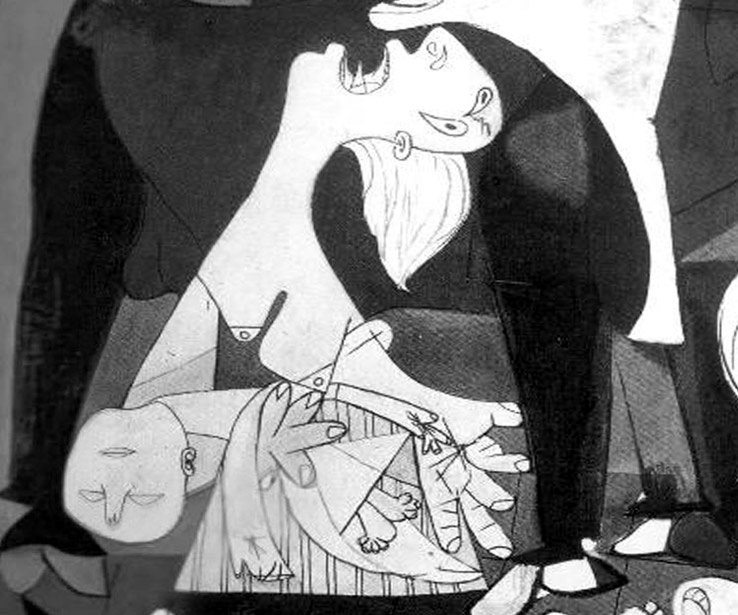
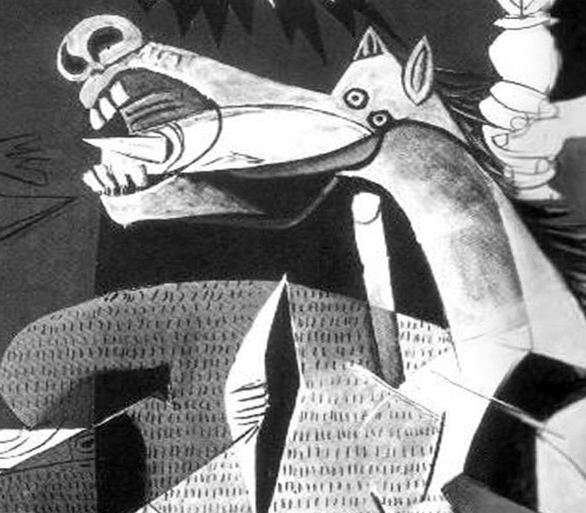
The background is also in disarray; there is no distinction between indoors and outdoors. People are running out of their homes in panic. There is a great deal happening in the painting at once; for example, a horse is charging into a house in a panic. On the right, someone is falling from the burning roof. A mother is weeping over her dead child.
The painting is rendered in lines and planes of black, white and grey to convey the reality of war. It is not a realistic painting. Pablo Picasso sought to convey the feeling experienced during the bombing, not what it actually looked like.
♦ Explanation
On the right, people are fleeing a burning building from which a woman is falling;
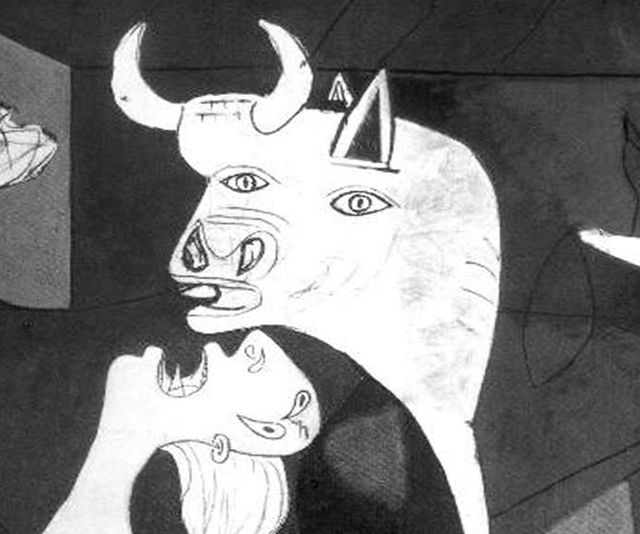
on the left, a weeping mother is holding her child
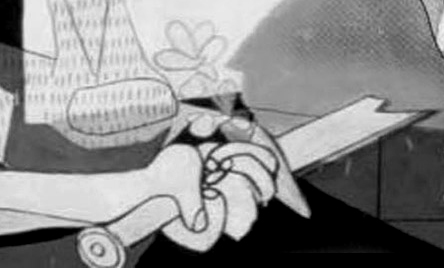
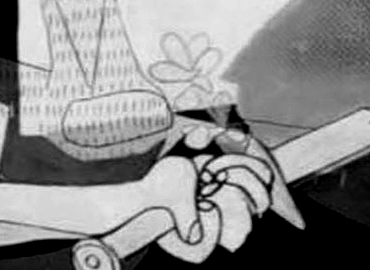
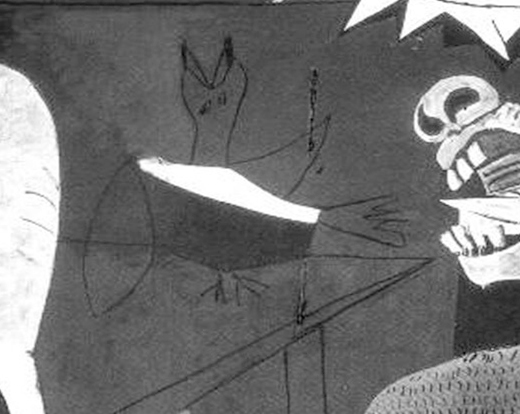
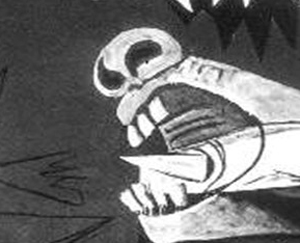
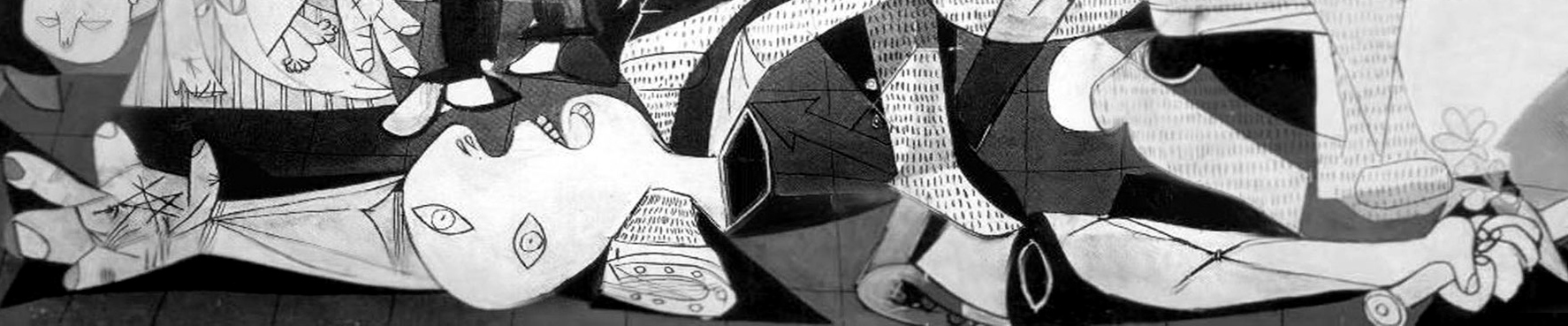
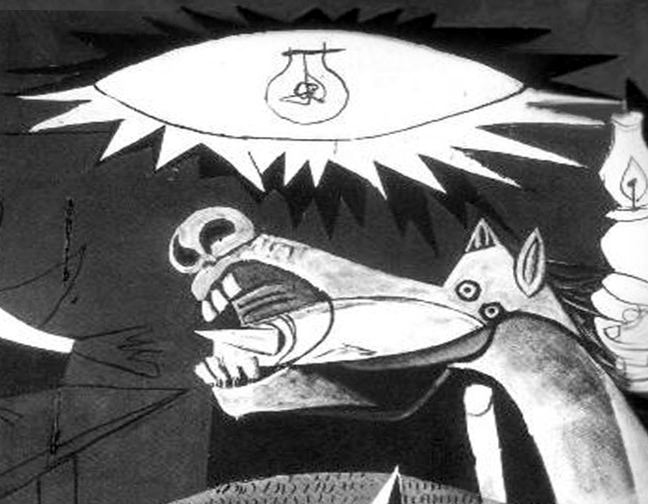
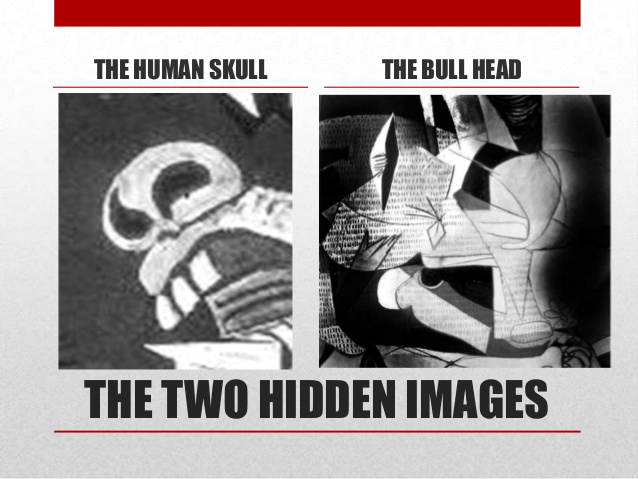
The broken sword, the flower, the dove, the skull (inside the horse’s body) and the fallen soldier’s crossed arms are symbols of war and death.
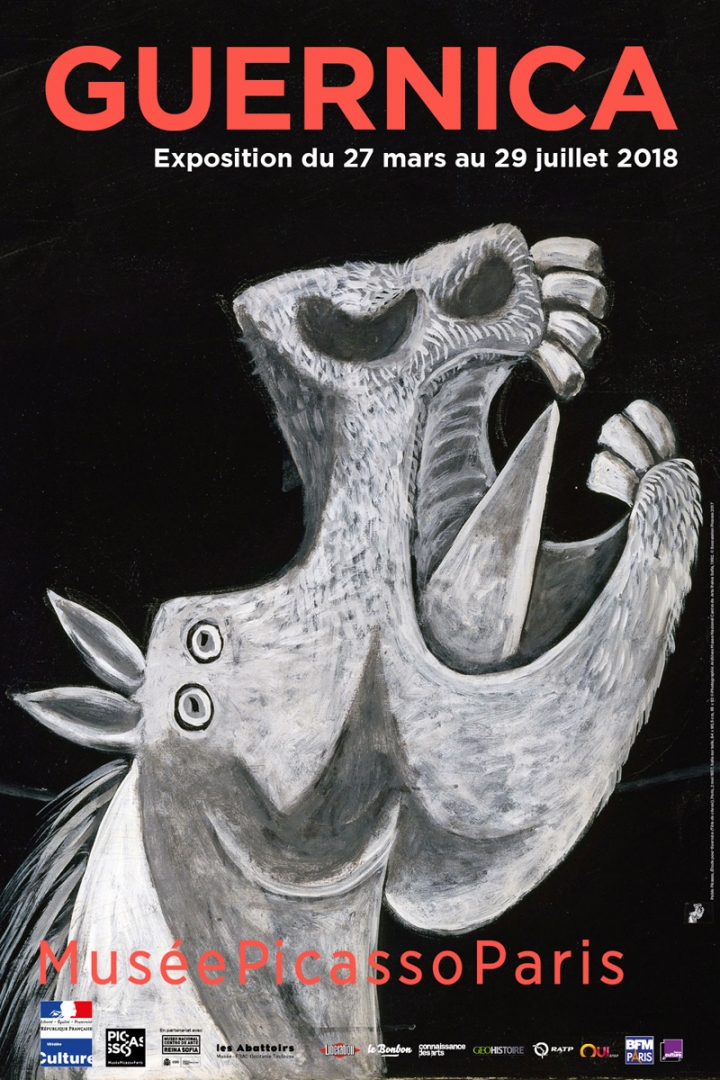
The bull symbolises cruelty, and the horse symbolises the fear of the innocent.
Together, these tormented figures form a sort of collage.
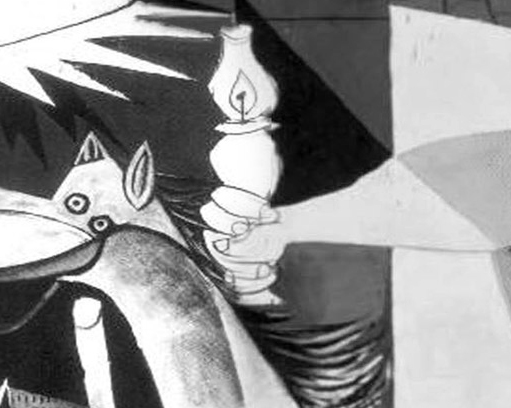
Their silhouettes, illuminated by a woman holding a lamp and an eye with a light bulb for a pupil, stand out against the darkness.
The monochrome newspaper-like effect and the contrast between light and dark intensify the powerful impression.
♦ Interpretation and meaning
There are countless interpretations of this artwork; here is one general interpretation.
This interpretation is accepted by most people as the most logical. Of course, it is never possible to say whether an interpretation is right or wrong; that is why it is called an interpretation.
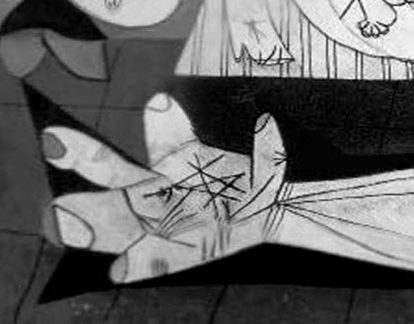
In this work, the bull is presented as a symbol of fascism, whilst the horse is more a sign of suffering, sorrow and pain. The meaning is therefore quite clear: here, fascism leads to mourning and pain. The arm visible at the bottom left symbolises heroic resistance against both fascism and violence. There is not much to say about the grieving mother on the left and the three other figures on the right: they express pain and violence (a Cubist element).
They also convey the chaos during the bombing, as can be seen from the many intersecting lines (particularly in the centre).
♦ Symbols:
- Flowers: symbolise, amongst other things, the transience of life
- Dove: which carries the soul to the afterlife
- Lamp: signifies divine light and wisdom
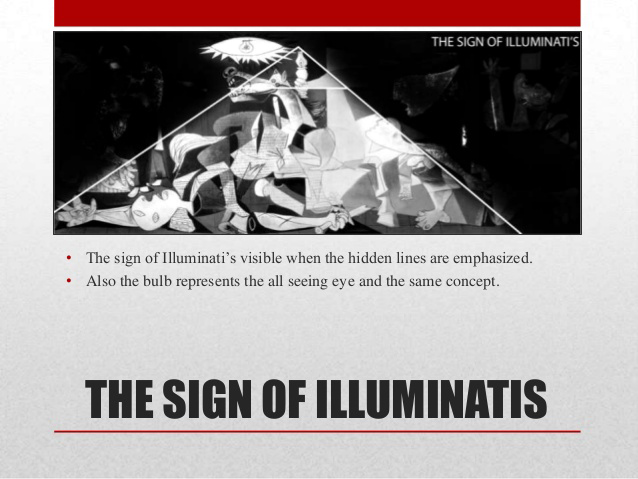
- Eyes: often symbolise the eyes of God, for the Bible says: ‘The eyes of the Lord are upon the righteous’.
The Trinity is sometimes depicted as an eye within a triangle.
Source: Symbolism in Western art