


As seen through the eyes of a patient in the 16th century
(1600-1625)
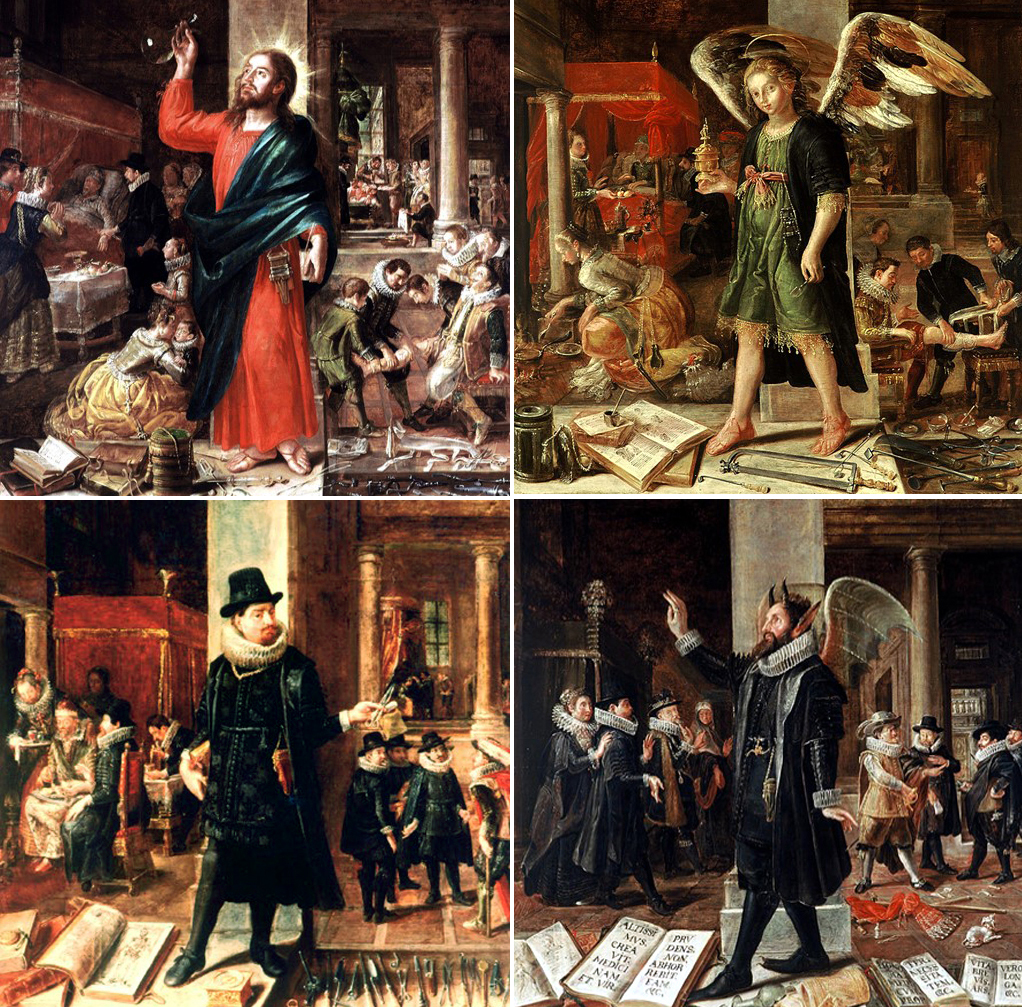
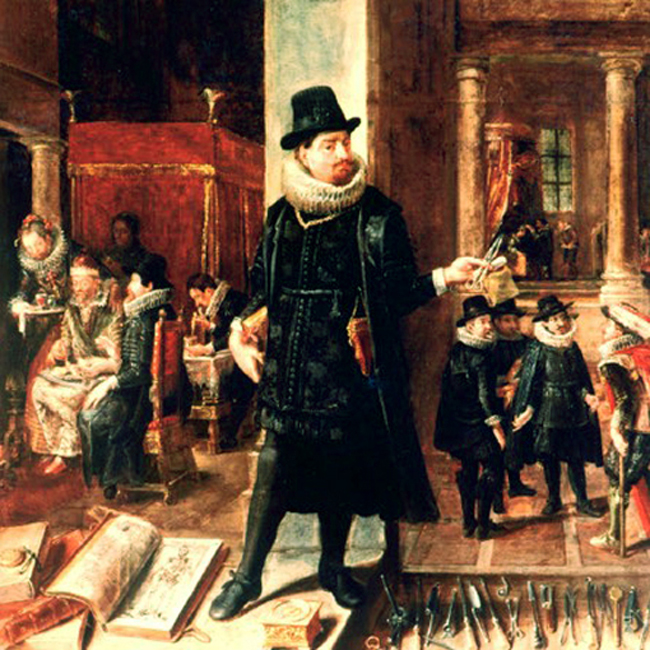
This is the first in a series of four paintings by an unknown artist from the Northern Netherlands, depicting the four guises of the doctor as seen through the eyes of a patient in the 16th century.
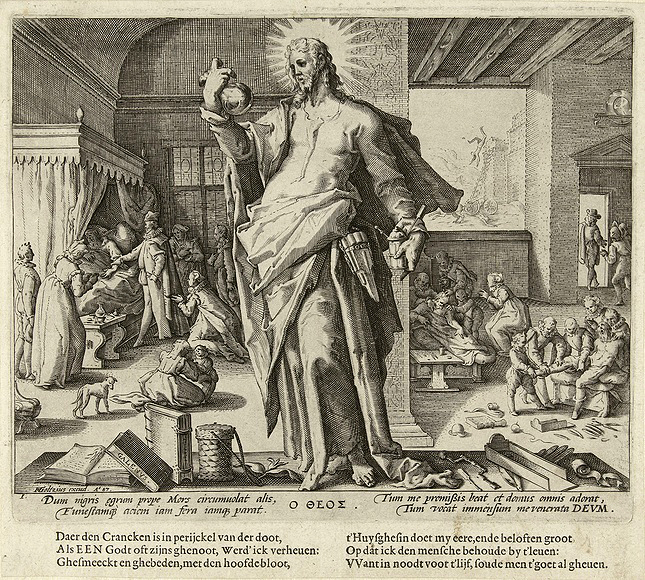
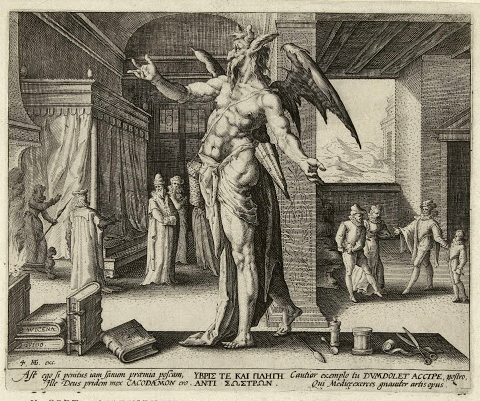
These paintings are based on a series of four engravings from 1587 by Hendrick Goltzius (1558–1617), but are not exact painted copies of these prints.
♦ first painting
In this first painting, we see the doctor, whom the seriously ill patient regards as the great healer who can save his life, on a par with God.
Three medical histories are depicted.
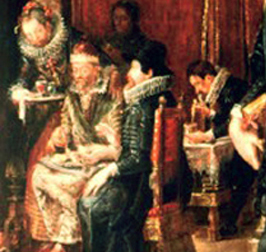
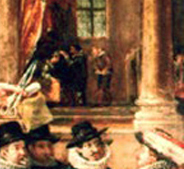
On the left, a patient with a fever lies in bed; the doctor is taking his pulse.
On the right, in the background, the doctor is performing a trepanation by candlelight on a patient who has placed his arms under his head.
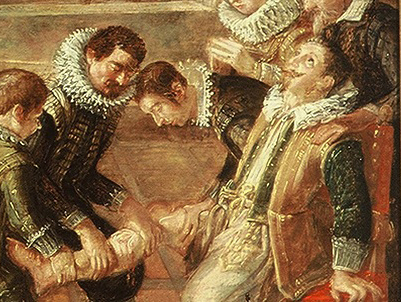
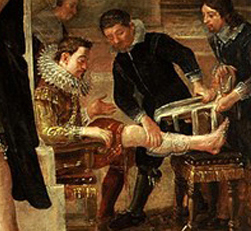
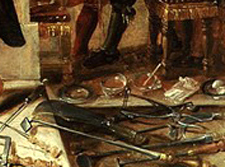
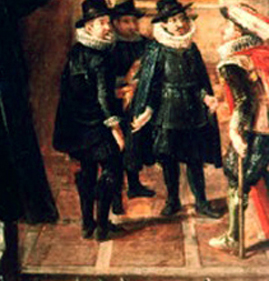
In the foreground on the right, a broken leg is being set. The splint is already laid out on the floor.reponeerd.
The ‘deified’ doctor, depicted in the centre, is performing a cystoscopy
♦ second painting
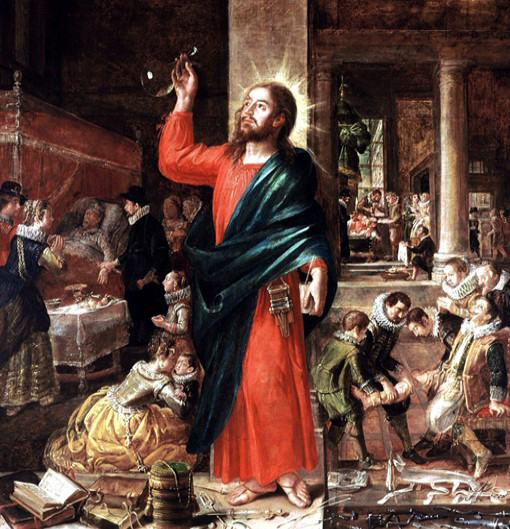
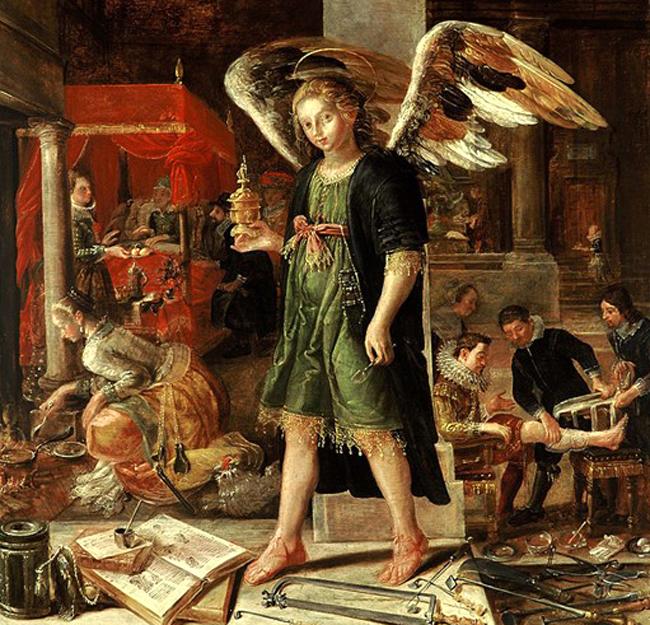
The second performance depicts the doctor as a guardian angel.
The patient is still ill, but the doctor is doing his healing work.
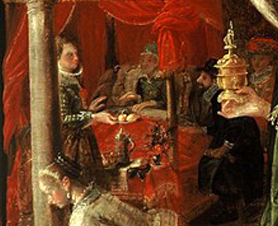
Left: The condition of the feverish patient on the left seems to have improved considerably thanks to the doctor’s medicines and the prepared food.
Right: The patient who has undergone trepanation, at the back of the painting, is also doing better.
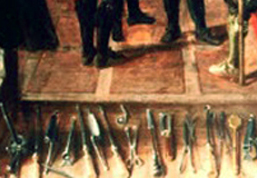
Foreground: And despite the surgical instruments on display, the patient with the broken leg – depicted at the front right without a splint – also appears to be recovering.
The precision with which the unknown painter has depicted the various instruments suggests a close relationship between the artist and a physician. The paintings are so rich in detail that they were probably commissioned by a well-heeled patron, such as a guild or a doctor.
♦ third painting
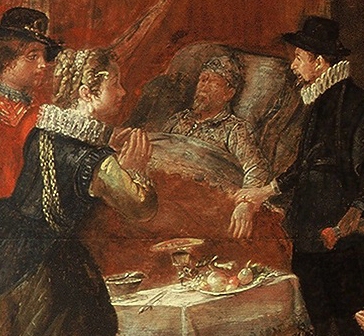
In this painting, the doctor is depicted as a man.
Left: The patient on the left of the painting is clearly recovering and is now allowed to get out of bed again.
Right: The trepanation wound on the head of the patient on the right in the background is being examined.
Foreground: The patient at the front on the right, who had broken his leg, is back on his feet – albeit with a walking stick.
The surgical instruments, which had been displayed so menacingly, have now been neatly put away.
Everyone seems satisfied.
♦ fourth painting
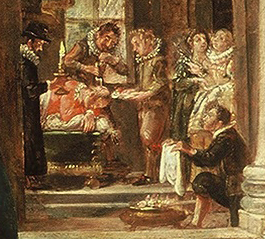
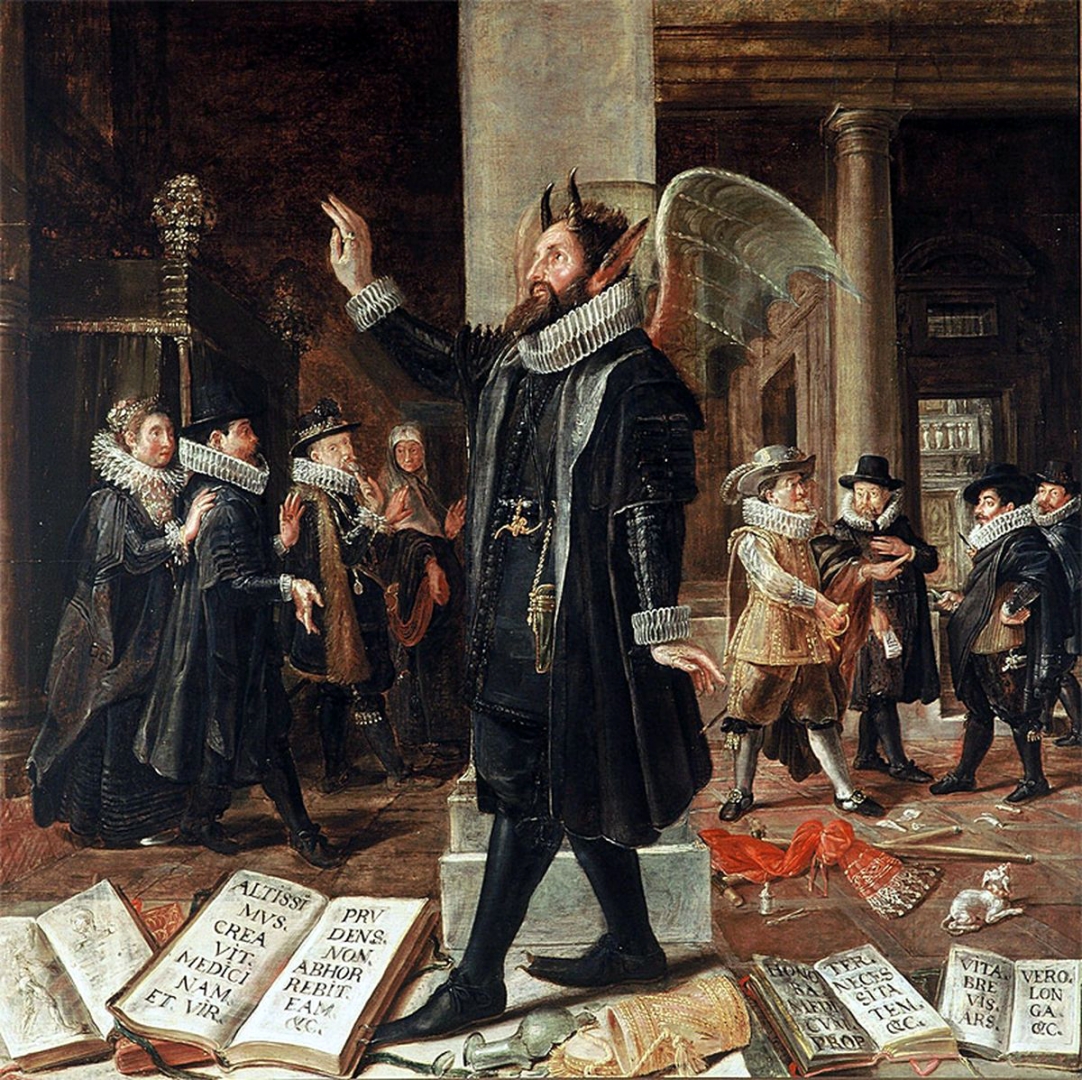
Does he see him as the devil incarnate?
These are the final paintings, which together present an allegorical depiction of the doctor’s status in the eyes of his patient. When the recovered patient receives his doctor’s bill, he sees him as the devil incarnate. The bill has been drawn up, so the good deeds have been forgotten.
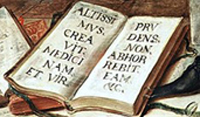
It would seem wise to treat this devil-like figure with caution, but the inscription in the foreground on the left warns against such an attitude:
ALTISSIMUS CREAVIT MEDICINAM ET VIR PRUDENS NON ABHORREBIT EAM &C
[The Most High has created medicine, and the wise person will not spurn it].
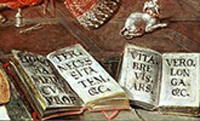
At the top right, it reads: HONORA MEDICUM PROPTER NECESSITATEM &C VITA BREVIS, ARS VERO LONGA &C
[Honour the doctor out of necessity, and so on; life is short, art truly long, and so on].
As well as offering a moralistic lesson on the reward to which the physician is entitled for his good care, these paintings also reveal a wealth of detail about the two main medical professions of the seventeenth century: the medicinae doctores and the surgeons.
In all the paintings, we see the university-trained doctor always to the left of the large central figure, busy taking the patient’s pulse, observing the patient and prescribing their diet.
The scenes on the right consistently depict the surgeon’s work: the treatment of a broken leg in the foreground, and the performance of a trepanation, or skull drilling, in the background.
The four paintings, created by an anonymous artist from the Northern Netherlands in the 16th/17th century, are currently on display at the Museum Boerhaave in Leiden.
Source: NTvG