
Personal reflection by Loes van Damme-Rietvelt
What caught my attention?
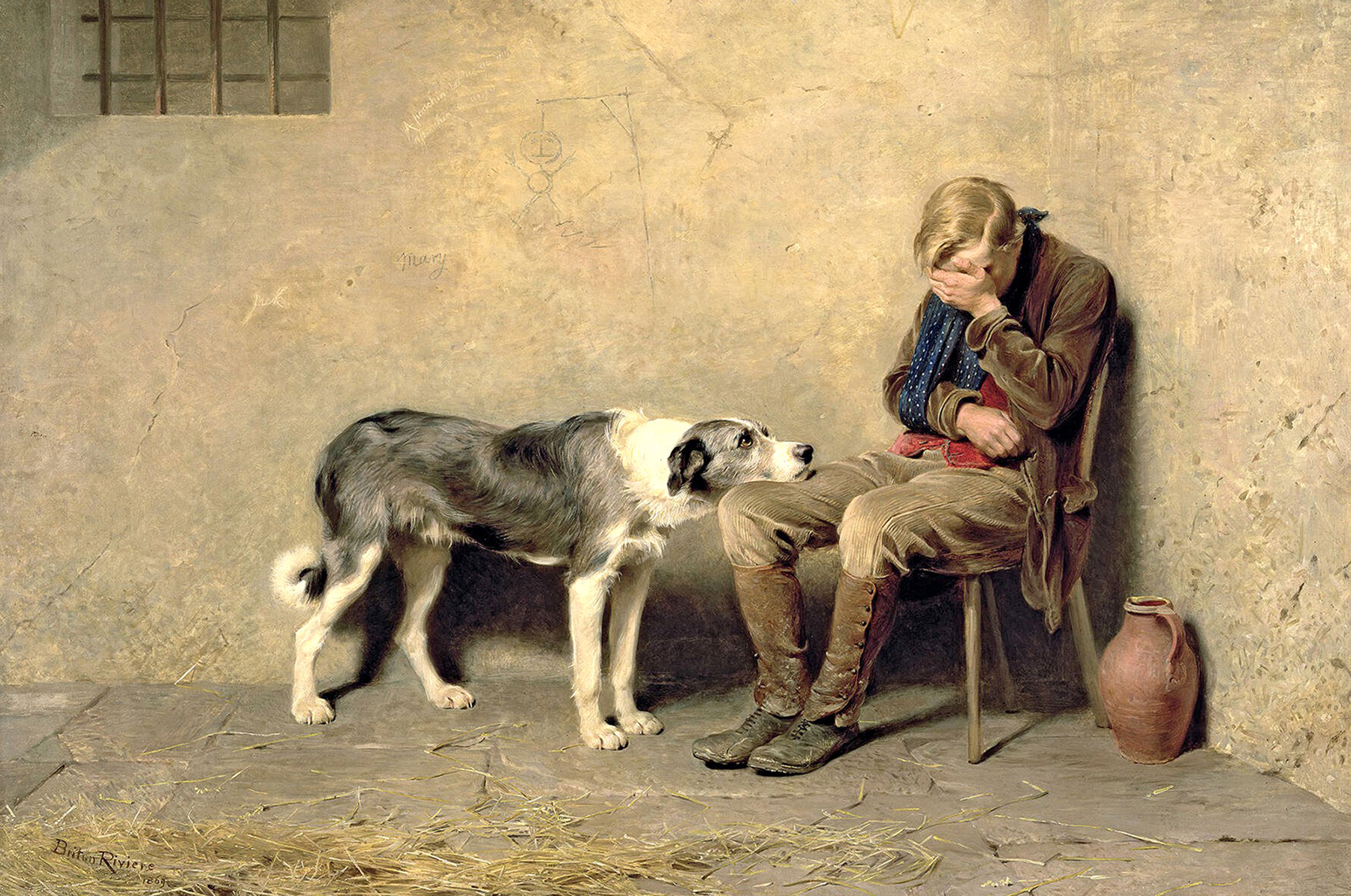
At first I see a bleak prison cell.
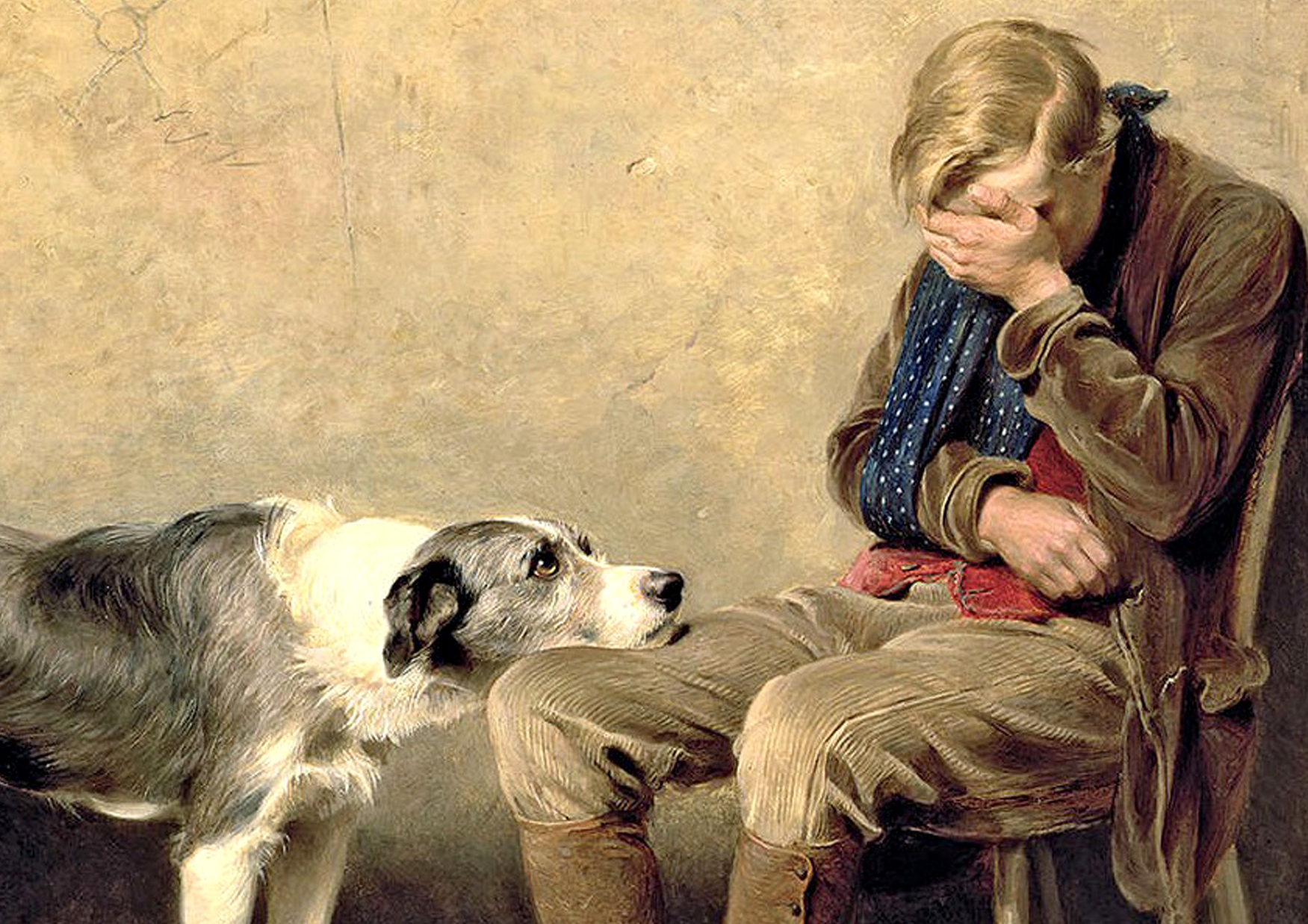
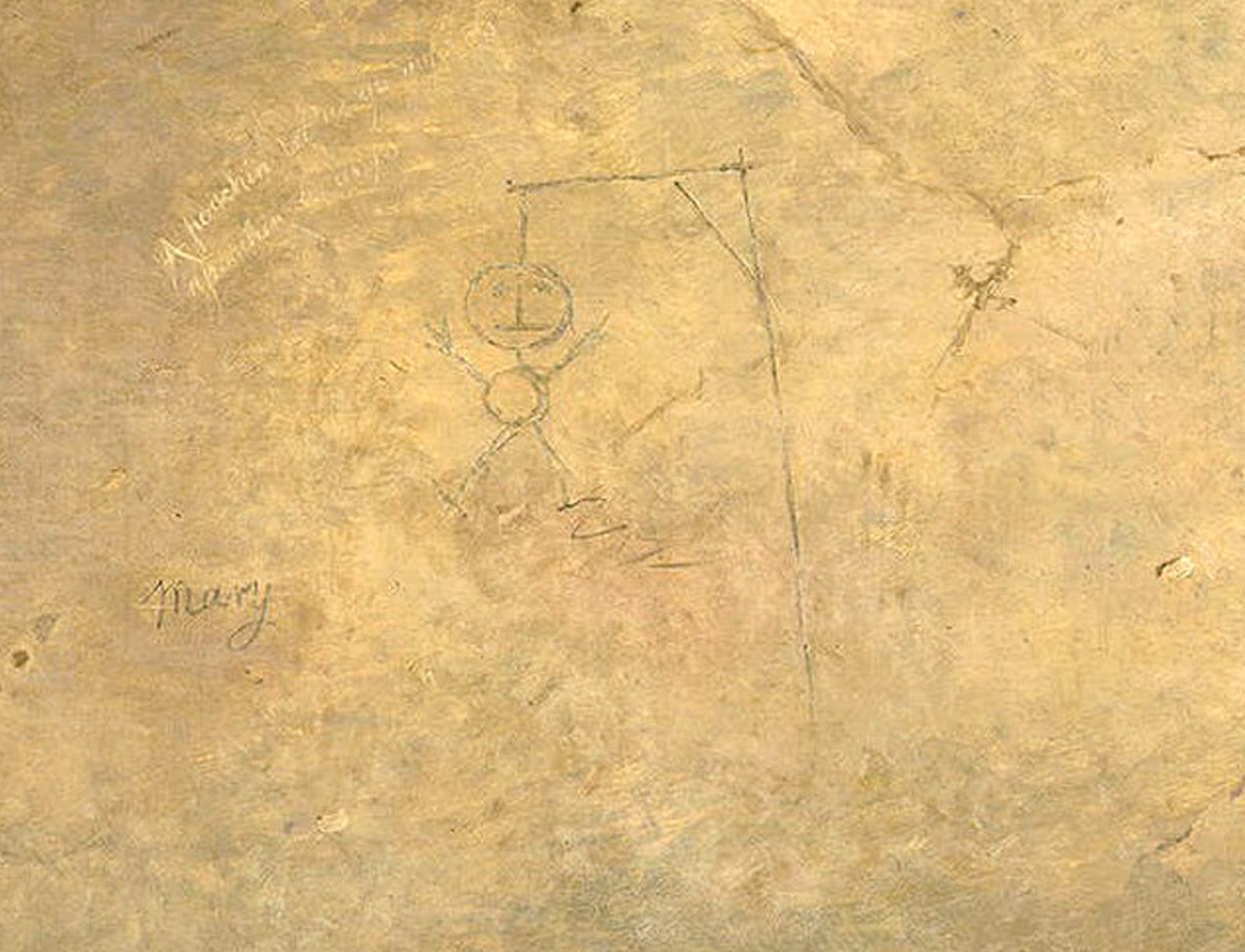
A young man sits hunched over on a chair, his face buried in his hand. His other arm is supported in a sling. The barred window, the bare walls and even the rough drawing of a gallows behind him make the situation feel hopeless.
And then I notice the dog.
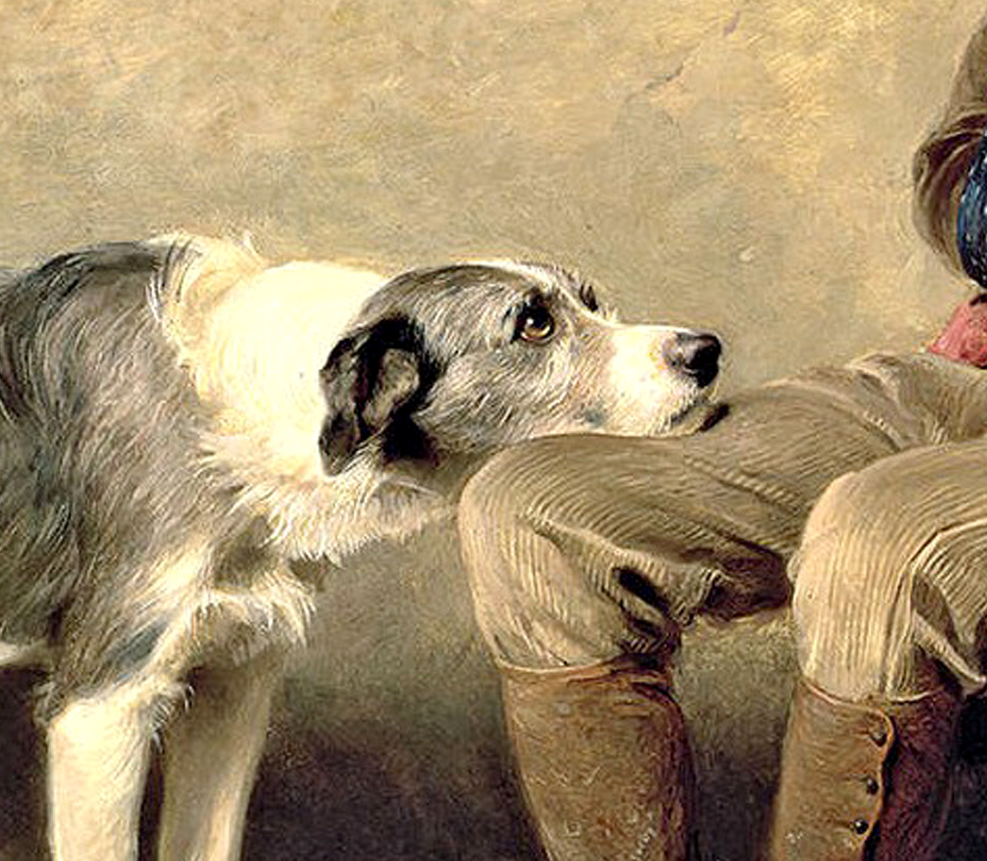
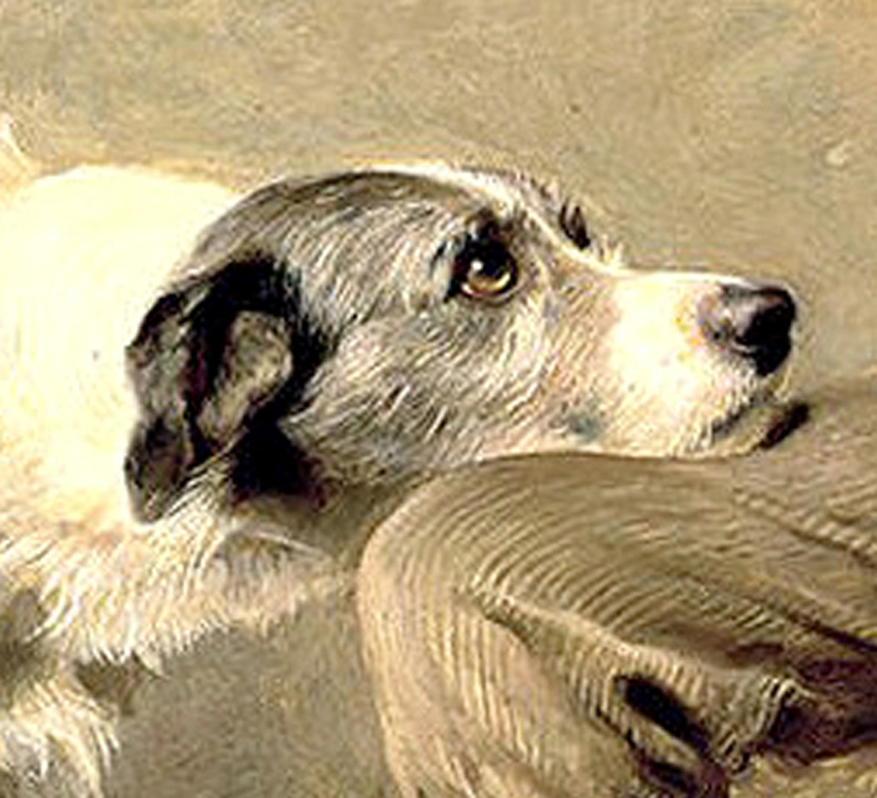
It stands beside him, watching him closely, its head resting gently against his knee.
The dog does not understand laws, judges or punishment.
But it seems to understand something else perfectly well: his distress.
That quiet moment between them is what moves me most.
A language without words
The dog cannot ask what has happened.
It cannot solve the young man’s problems.
But it stays.
And somehow that is enough to change the whole painting.
It makes me think about how much communication takes place without language.
A look.
A posture.
Touch.
Smell.
Movement.
Signals we notice — and many others that we do not.
Communication is everywhere
The more I think about it, the wider that idea becomes.
Many animals show complex social behaviour, memory, recognition and forms of communication that humans are still learning to understand.
Plants and fungi interact through chemical signals and mycorrhizal networks beneath the soil.
And even bacteria — organisms without a brain or nervous system — do not always behave as isolated individuals.
Through quorum sensing, bacteria produce and respond to signalling molecules. As these signals accumulate, groups of cells can alter gene expression together, for example during biofilm formation.
A bacterium does not feel loyalty or love like the dog in this painting.
But it still responds to information from others around it.
And that makes me wonder:
How much communication is taking place around us that we simply cannot see?
My final thought
This painting begins with a young man in despair and a dog that refuses to leave him alone.
For me, it ends with a much broader thought.
Human beings often like to imagine themselves as separate from the rest of nature.
But everywhere we look — in animals, plants, fungi and even microorganisms — living systems are responding to one another.
Perhaps we are not as isolated, or as unique, as we sometimes like to think.
Sometimes the most important messages are the ones that are never spoken.