
Quinten Matsys (1466, Leuven - 1530, Antwerpen)
Musée du Louvre, Parijs
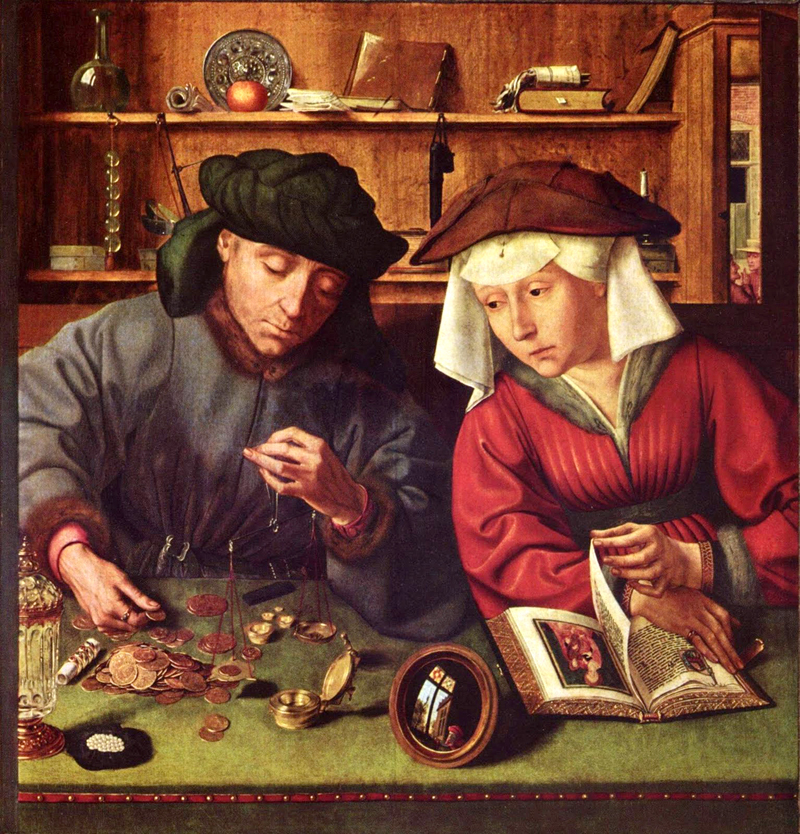
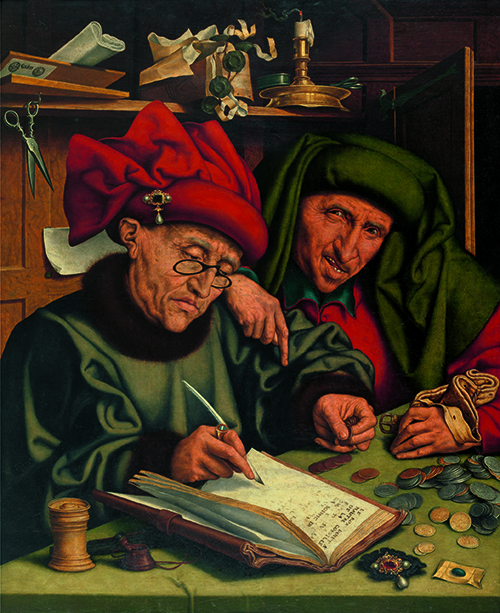
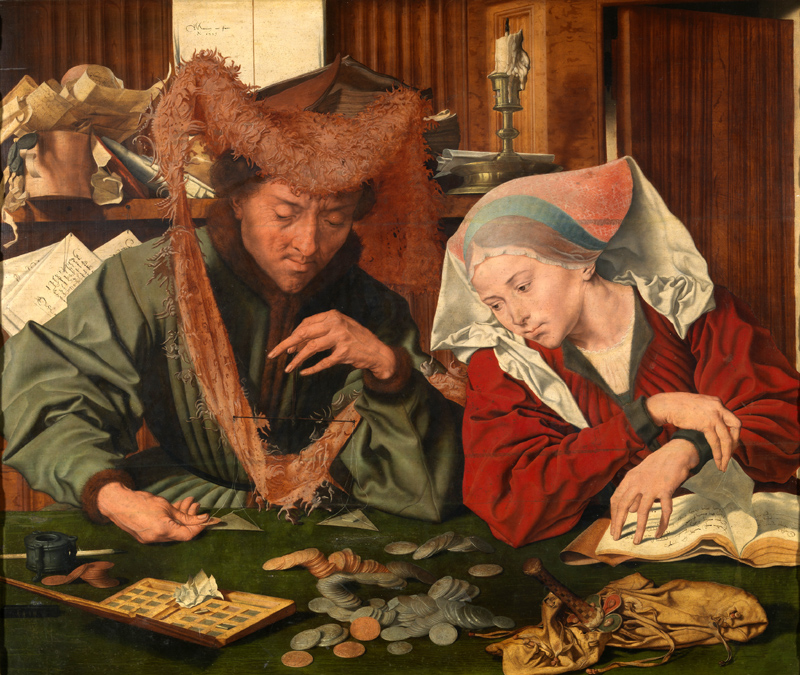
The money-changer and his wife
Banking and money-changing were relatively new professions in the early 16th century. In a rapidly changing society, commerce and money were taking on an increasingly important role.
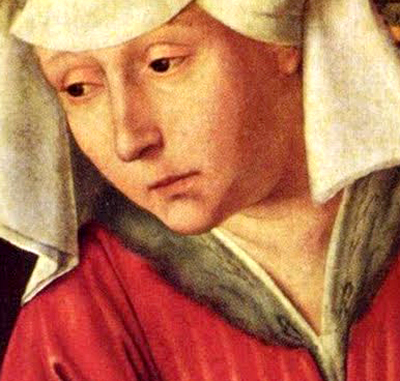
The Church warned against the resulting abuses. The man in this panel is absorbed in his work: weighing coins and determining their gold content. His wife watches intently.
This is an early ‘genre piece’: it is not a portrait but depicts a scene from everyday life. Such scenes often contain a moral lesson or a religious message. They were not commissioned by a specific patron, but produced for the open market.
The painter emphasises the dignity of both figures. The scene also has a picturesque and psychological aspect.
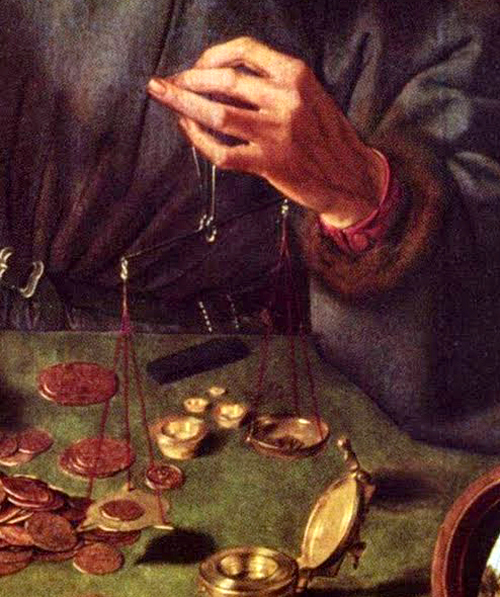
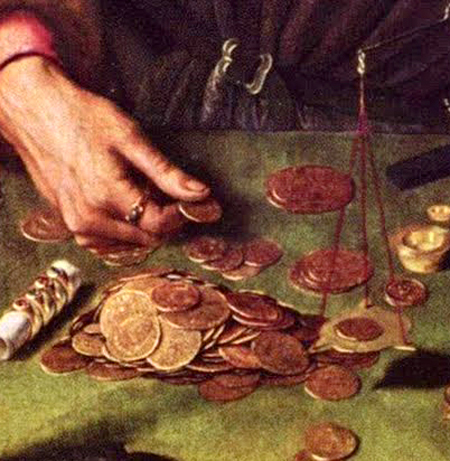
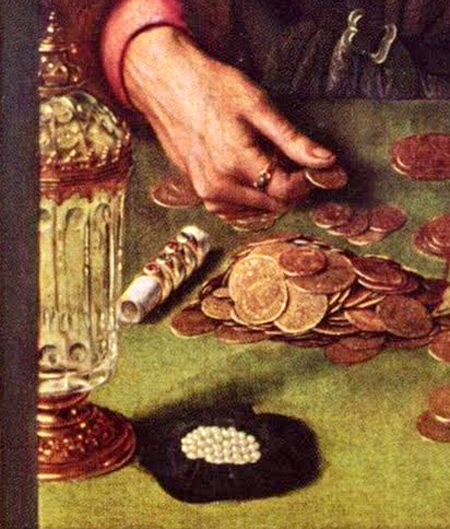
♦ The man is busy sorting and checking all sorts of coins. He weighs them one by one, as there are many counterfeit coins in circulation. It must be a very interesting coin that he is examining so closely, for even his wife has put down her book to take a look at it too.
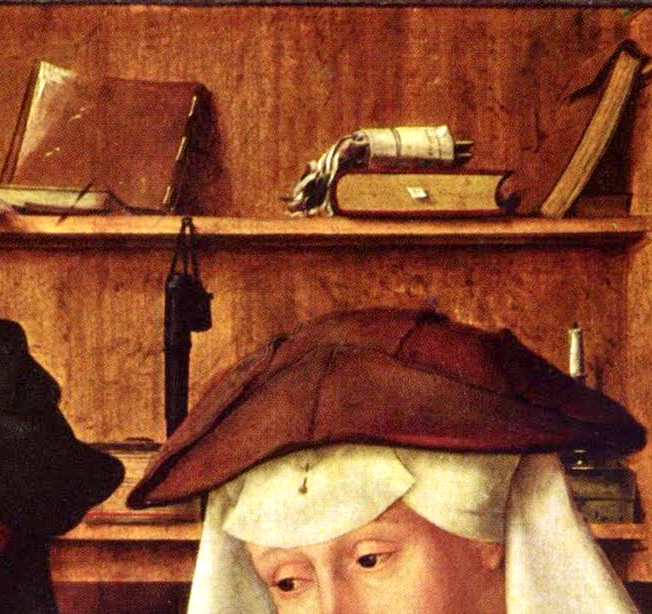
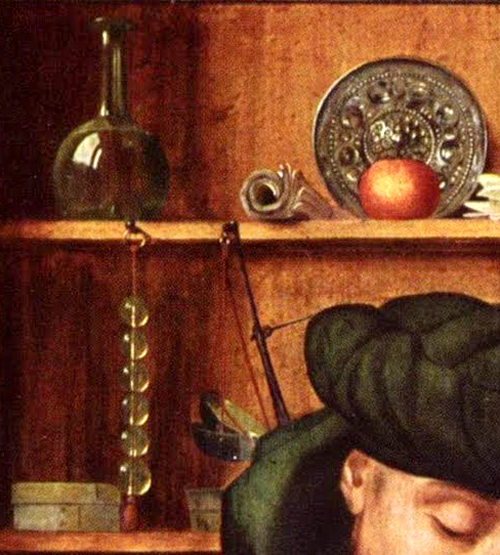
On the table one can see gold coins, a mirror and other symbols of the banker’s wealth, whilst in the background books and all manner of objects have been arranged neatly and carefully.
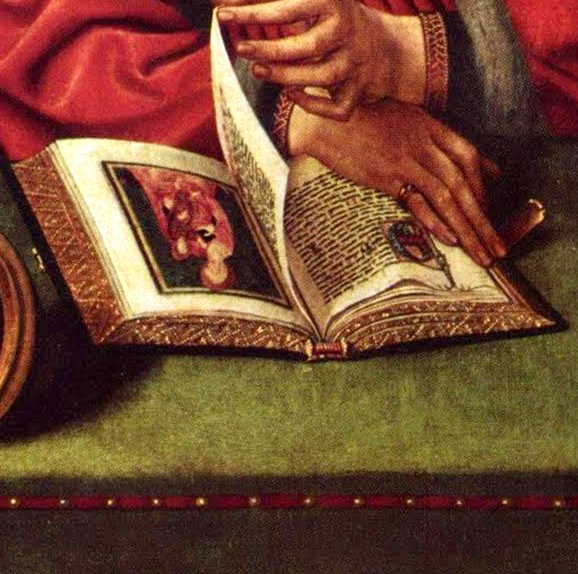
♦ The woman leafs through her illuminated book of hours – a book containing prayers for every day – to a page featuring a miniature of the Madonna.
She seems more interested in what her husband is doing than in her devotional reading.
In the new commercial metropolis of Antwerp, where Massys was active, must religious values give way to fleeting earthly possessions and greed? Or should the ‘higher’ values, symbolised here by the book of hours, actually help this couple on their path to righteousness? Interpretations of Massys’ work vary.
♦ The crystal goblet with its gold base and lid, and the black velvet cloth adorned with a number of pearls, have led some to suggest that this man is a jeweller.
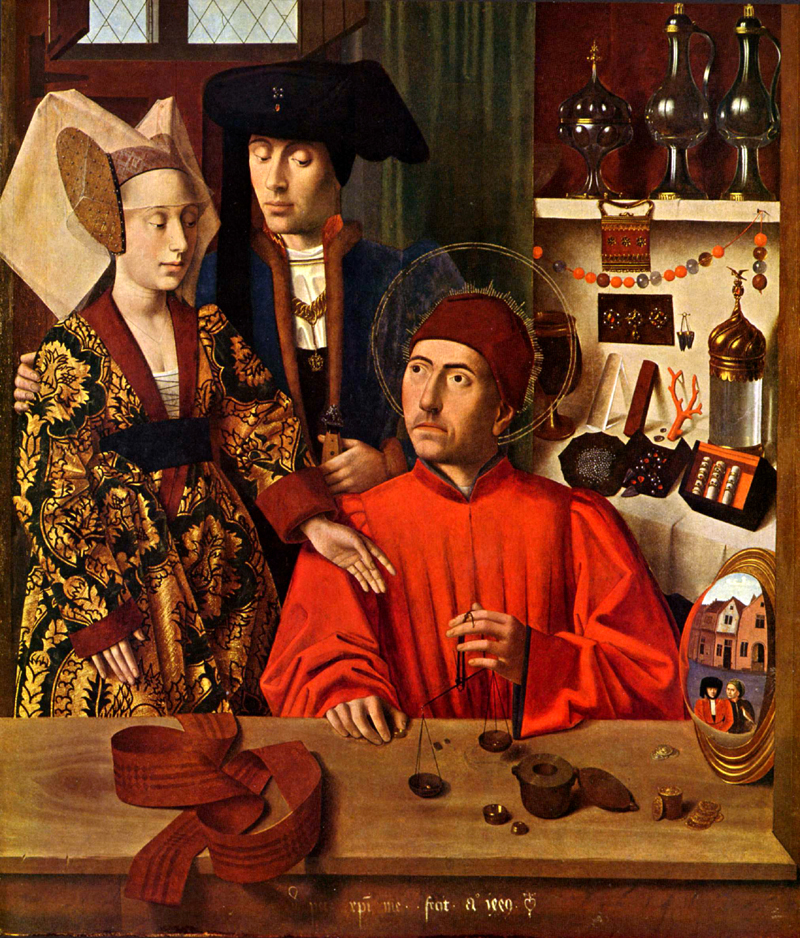
There is another reason for this: the composition of this panel is reminiscent of an earlier work by Petrus Christus in which Saint Eligius may be depicted as a goldsmith.
The fact that Massys’s couple are dressed in 15th-century Burgundian attire reinforces the link with Petrus Christus’s painting, although in Massys’s version the scene is ‘desecrated’.
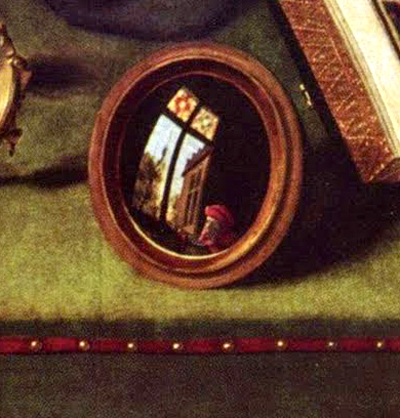
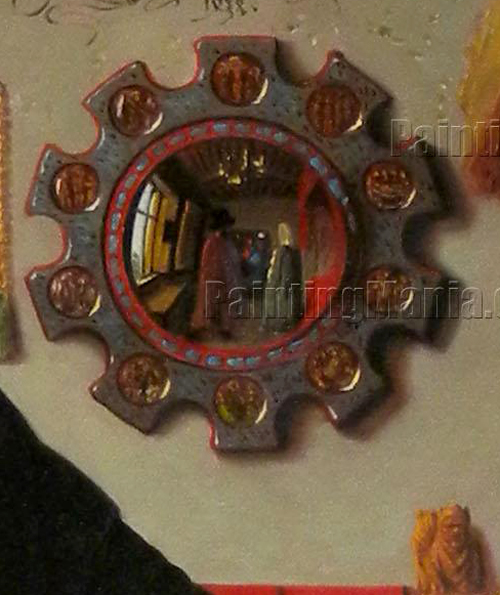
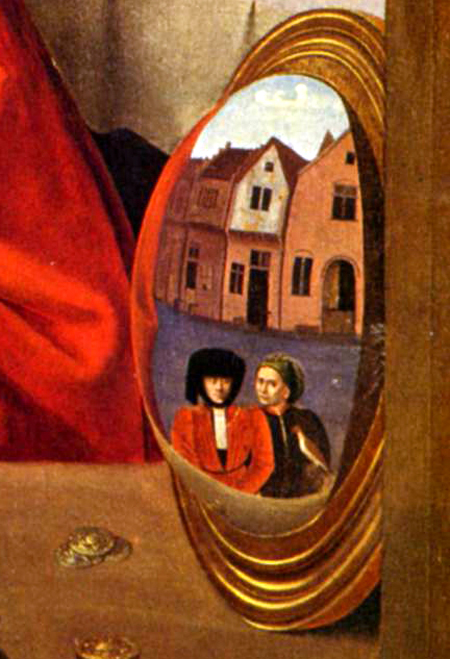
♦ We are already familiar with the motif of a mirror in a painting from Van Eyck and other artists. Painters can use it to demonstrate their virtuosity. Through the reflection, another space enters the painting and we sometimes see the painter himself. In this mirror, an outdoor window, an outdoor scene and a man reading are reflected.
Yet there is also symbolism: the round mirror also symbolises the fragility of life
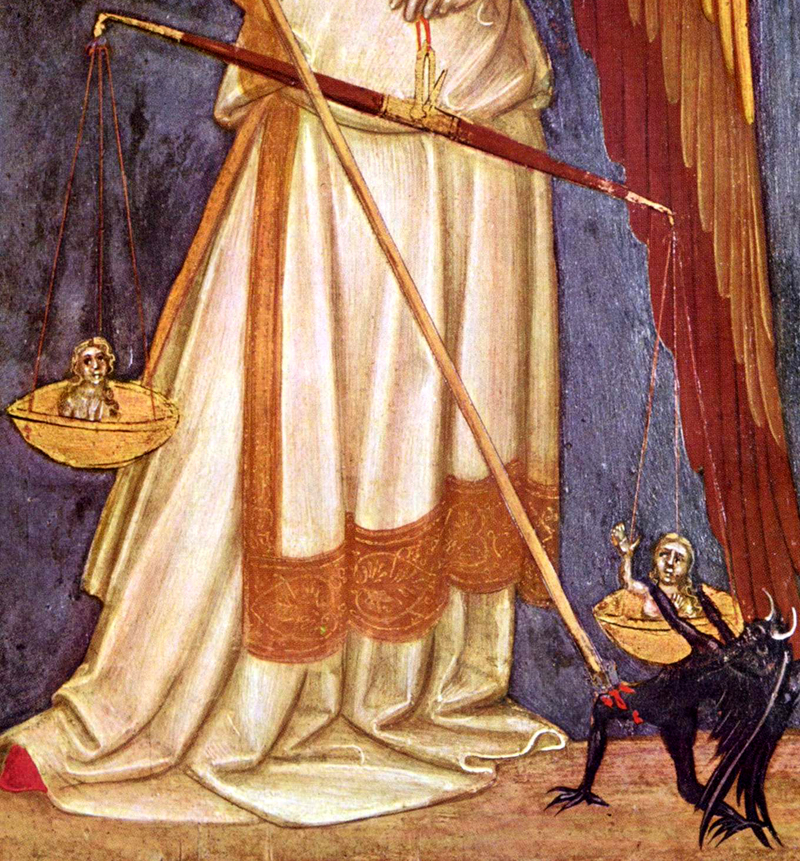
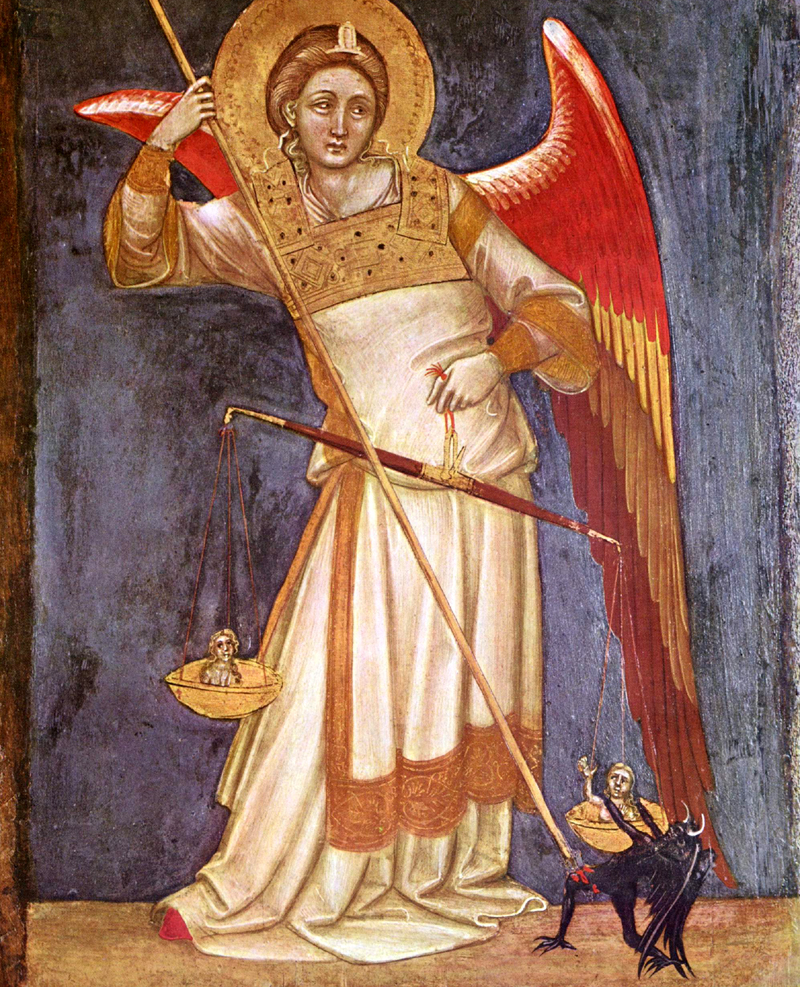
♦ A set of scales is a traditional symbol for weighing up good and evil in the administration of justice. For example, the Archangel Michael weighs the souls of the deceased during the Last Judgement. But that does not mean that we should interpret all painted sets of scales symbolically.
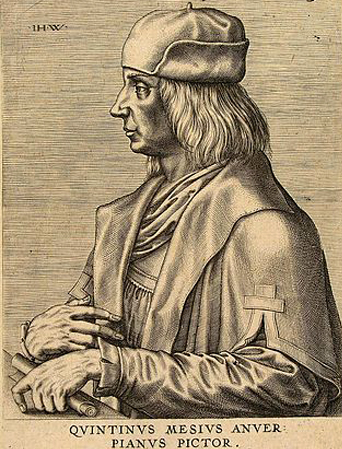
Quinten Matsys
He was a painter from the southern Netherlands, regarded as the last major representative of the Flemish Primitives.
He was also one of the founders of the Antwerp School.
♦ Life and work
Art historians disagree about Massijs’s training, as no documents relating to it have been found. It is possible that he was trained by Dirk Bouts. This would be the most likely scenario, as both lived in Leuven. However, it is also possible that Massijs learnt his craft in Bruges, in Hans Memling’s studio. Others believe that he did not receive any formal training as a painter at all and was self-taught. What is certain, however, is that Massijs was an accomplished painter when he was admitted as a master painter to the registers of the Antwerp Guild of Saint Luke in 1491.
He mainly painted religious works. His creations are particularly notable for their colour scheme and balanced compositions. He is regarded as the first great painter of the Antwerp School. Initially, his style was closely aligned with that of the Flemish Primitives, but later his works began to show traces of the Renaissance style.
His sons Jan Massijs and Cornelis Massijs, children from his second marriage to Catharina Heyns, with whom he had eight other children, were also painters, as was his grandson Quinten Massijs the Younger, who was named after him.
♦ Religious fanaticism
The intense religious fervour that could be said to have lain dormant within him proved fatal to two of his relatives.
His sister Catharina and her husband were punished in Leuven for what was then considered a capital offence: reading the Bible; he was beheaded and she was buried alive in the square in front of St Peter’s Church.
Source: Symbolism in Western Art
The Art of Seeing
Wikipedia