
Personal reflection by Loes van Damme-Rietvelt
What caught my attention first?
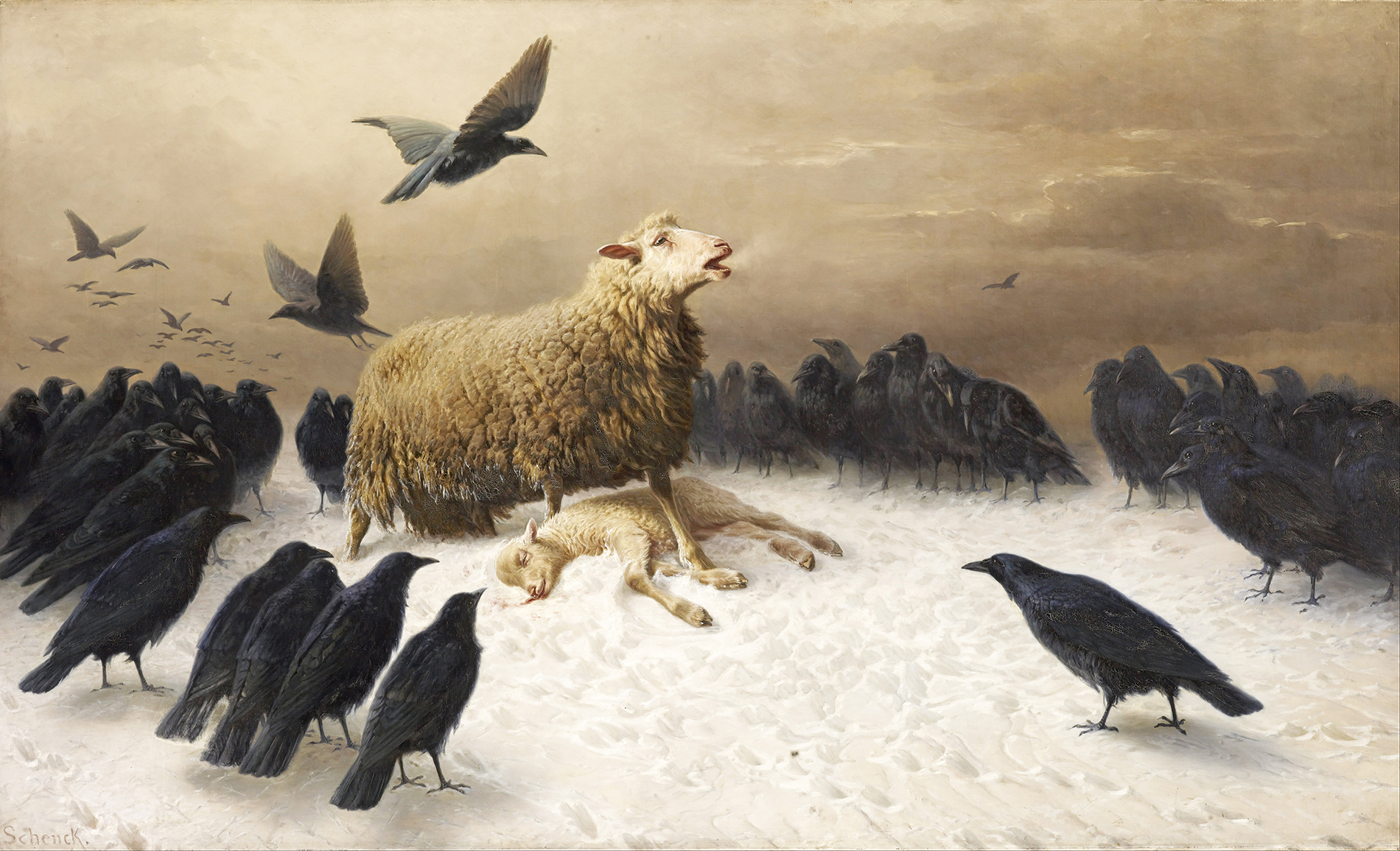
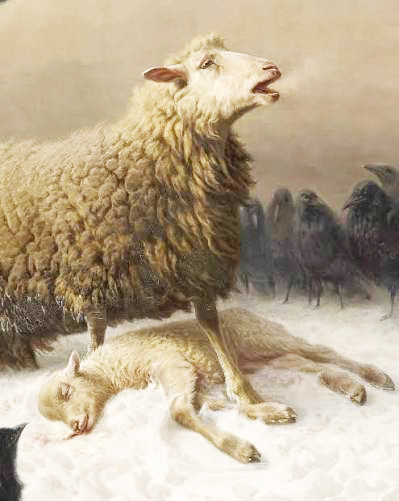
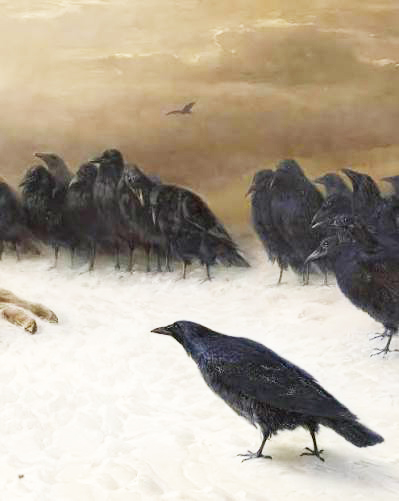
A mother sheep stands beside her dead lamb in the snow. Black crows have gathered around them.
She raises her head and seems to cry out in despair into the freezing air. But there is no answer.
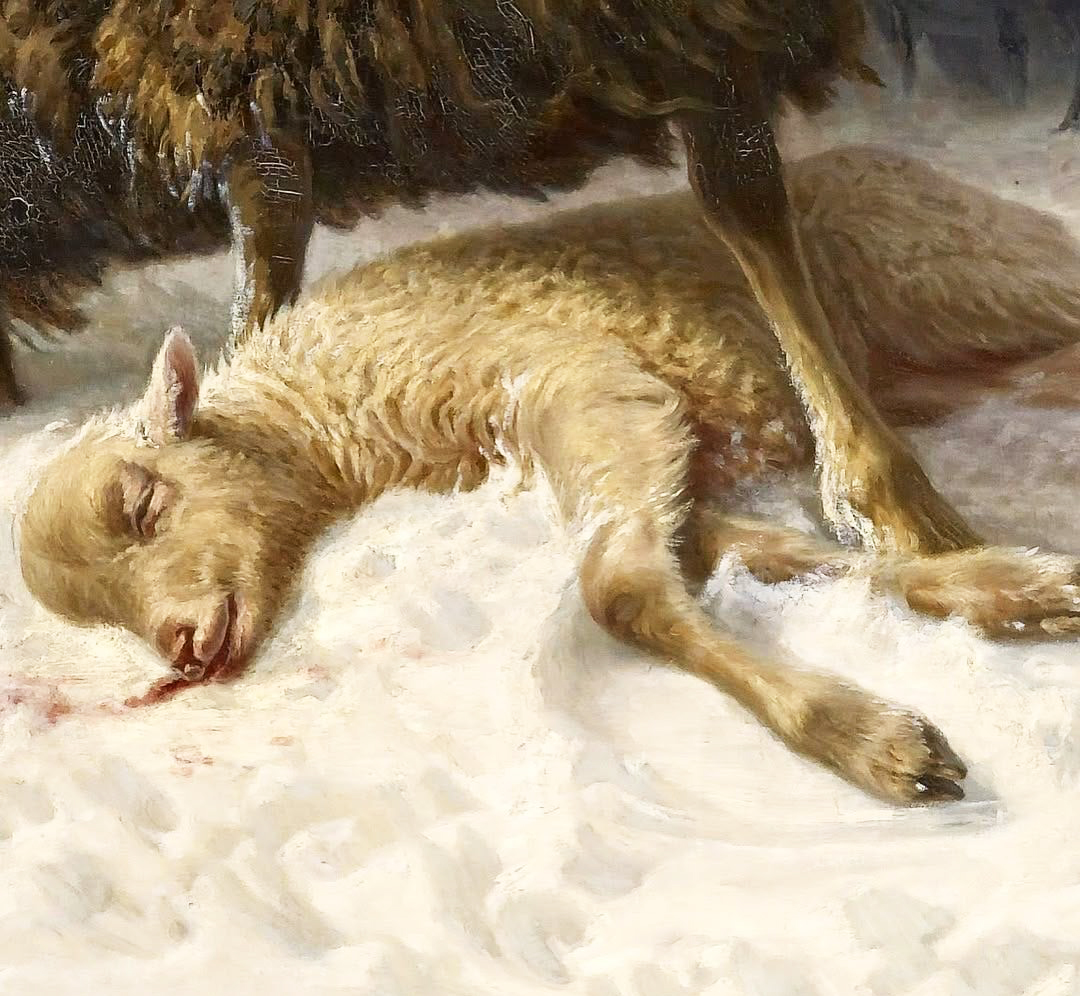
Her lamb lies motionless at her feet. She can no longer save it, and yet she remains beside it, as if she is still trying to protect her child.
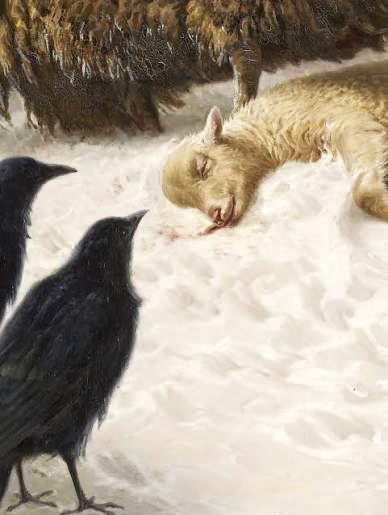
The crows do not seem evil to me. They are waiting. They represent the harsh reality of nature: the life of the lamb has ended, and eventually nature will take its course.
One crow has come closer. To me, it almost feels as if death itself is slowly approaching, forcing the mother to face what she is not yet able to accept.
This painting affected me deeply.
What I see here is not simply the grief of an animal. I see a mother who has lost her child.
Inconsolable. Frightened. Powerless.
She knows that her lamb is dead. No one can help her. Yet she is unable to walk away and leave her child behind.
That is exactly why this painting feels so human.
It shows something for which there are hardly any words: the moment when you know that someone will never return, while everything inside you still refuses to let go.
The crows wait patiently until, eventually, she will have to move away and allow nature to take its course.
But love does not end at the moment a life ends.
Perhaps that is why this painting is so confronting.
It shows an ancient sorrow that people everywhere, throughout all ages, recognise: the loss of someone you love, and the impossibility of simply letting them go.