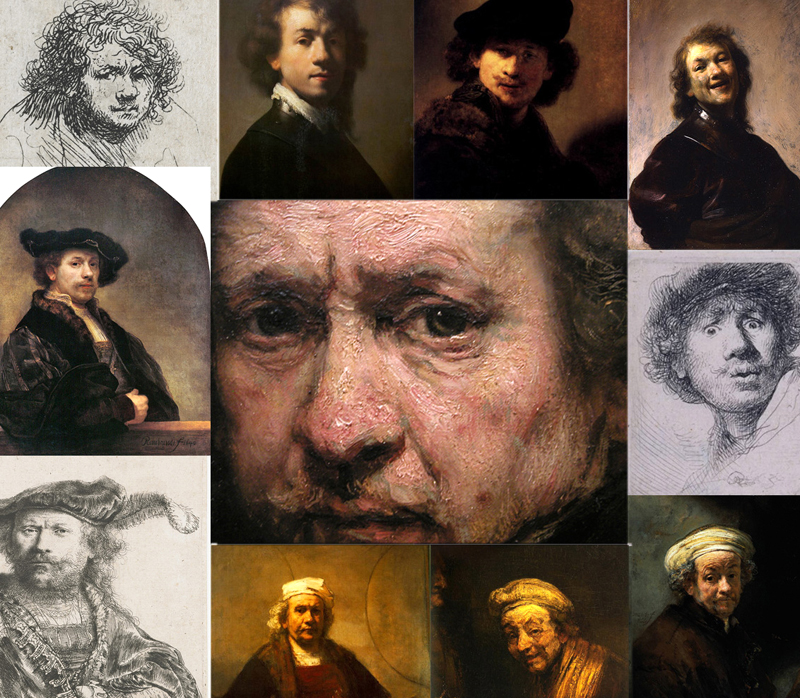
Rembrandt Harmenz. van Rijn
15 July 1606, Leiden – 4 October 1669, Amsterdam, the Netherlands
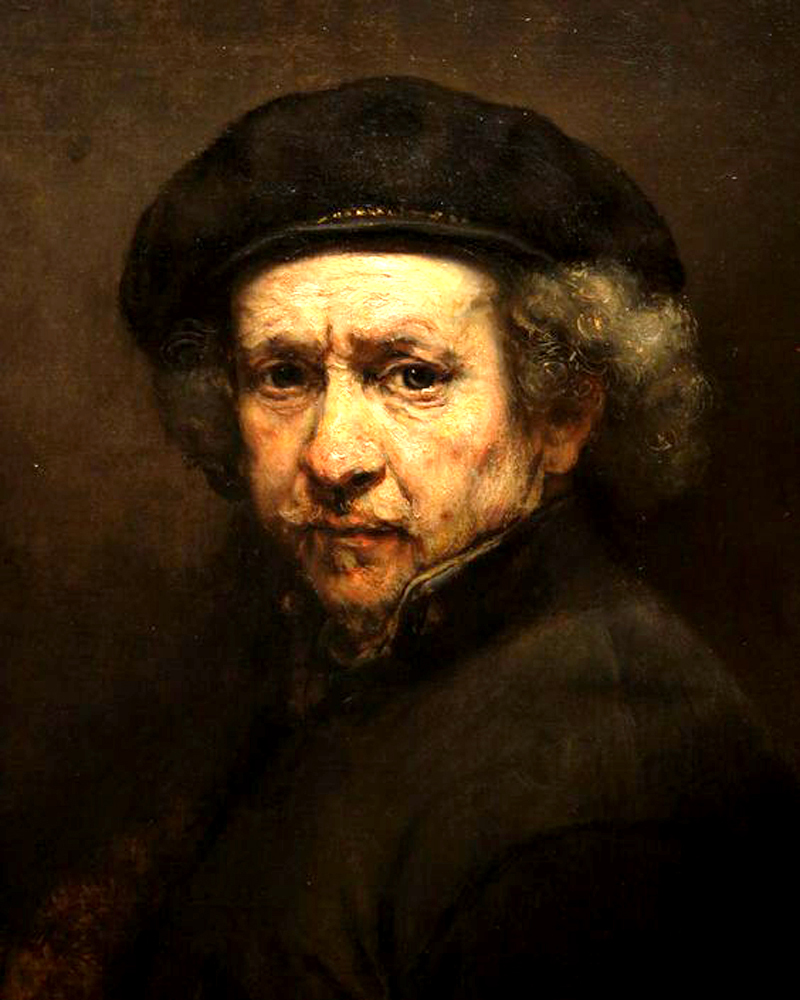
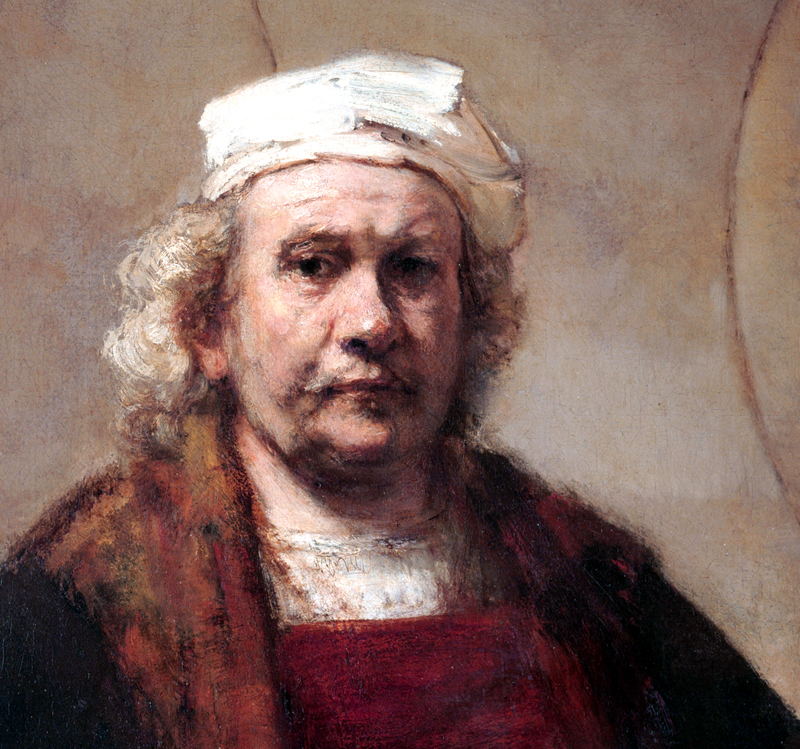
♦ Self-Portrait, 1659 ♦
Rembrandt, aged 51 in this portrait, clasped his hands and turned his head. At first glance, it seems as though he is actually there.
♦ Diagnosis
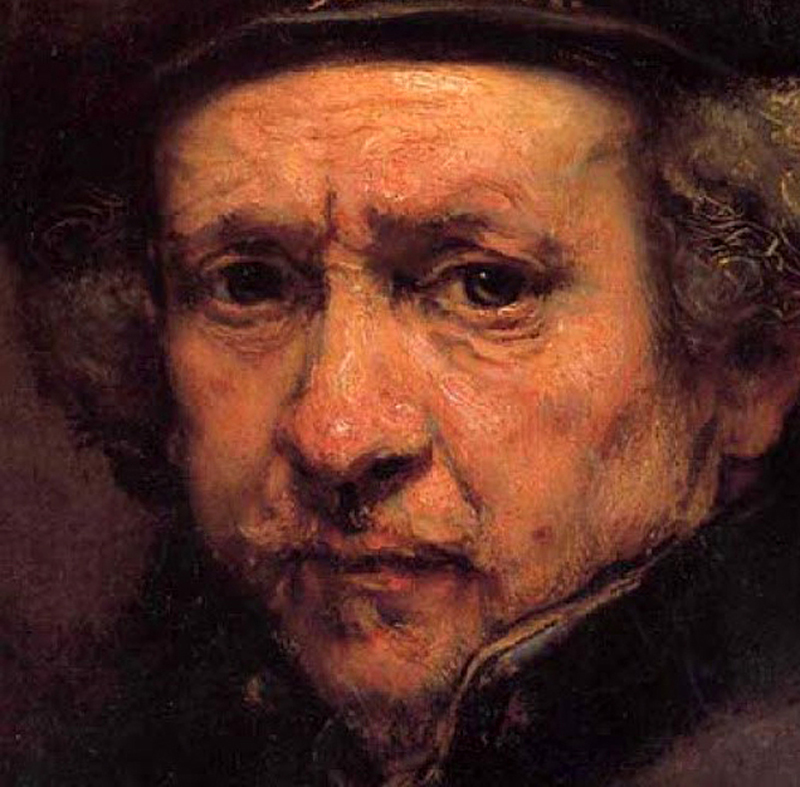
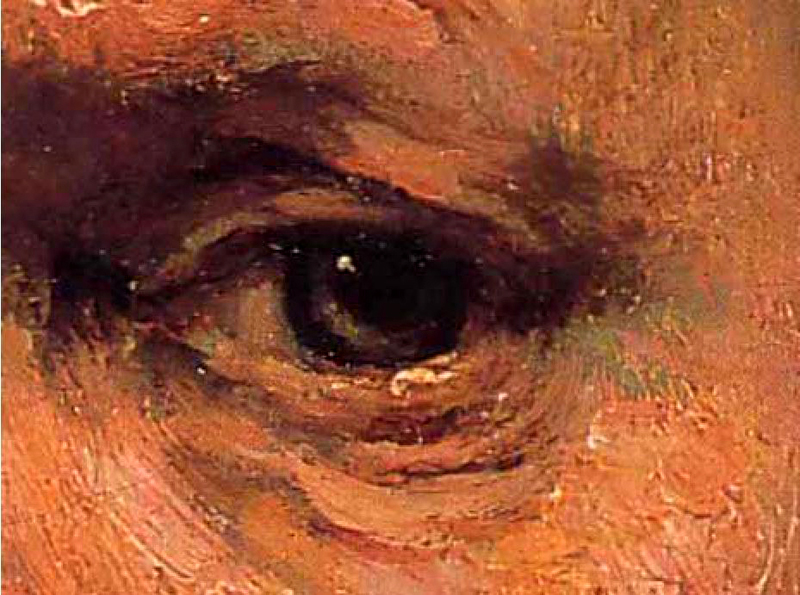
Main symptoms: Drooping of the eyebrows and eyelids, more pronounced on the left than on the right. Arcus senilis (a white-grey ring in the cornea) and xanthelasma, telangiectasia (dilated blood vessels) with a red nose and lesions on the chin, nose and cheeks.
Additional symptoms: Male, aged 51, prominent forehead, painter, mental depression.
Clinical diagnosis: Rhinophyma rosacea, premature skin ageing, reactive depression.
♦ Definition: rhinophyma rosacea
Chronic hyperaemia of the skin on the nose, forehead and cheeks, characterised by hypertrophy, erythema, flushing and telangiectasia.
♦ Definition: arcus senilis
An opaque ring at the edge of the cornea, often seen in older people and patients with hypercholesterolaemia.
♦ Discussion
The following assessment was carried out by Espinel 1) in 1997.
Any insight into Rembrandt’s emotional state contributes to his medical assessment. In 1659, he had lost his wife and three of his five children. His wealth had vanished, as had his art collection and his large house. He was embroiled in several legal cases. Three years earlier, he had been declared insolvent. He had withdrawn from public life and rarely painted any more. He may well have been experiencing periods of clinical depression. As late as 1659, his *Moses and the Stone Tablets* had been rejected by the client.
He failed to secure any new commissions. Living in extreme poverty, he moved to the Jordaankwartier in Amsterdam, where the plague occasionally raged. There he rented a small house on the banks of the neglected Rozengracht. He may well have painted this self-portrait there.
1) Espinel C.H., A medical evaluation of Rembrandt. His self portrait: ageing disease and the language of the skin. Lancet 1997; 350: 1835-8
Source: Jan Dequeker

Rhinophyma rosacea_depression
References
Jan Dequeker
The artist and the doctor are looking at paintings.
Photos
wikipedia.org