
Domenico Ghirlandaio
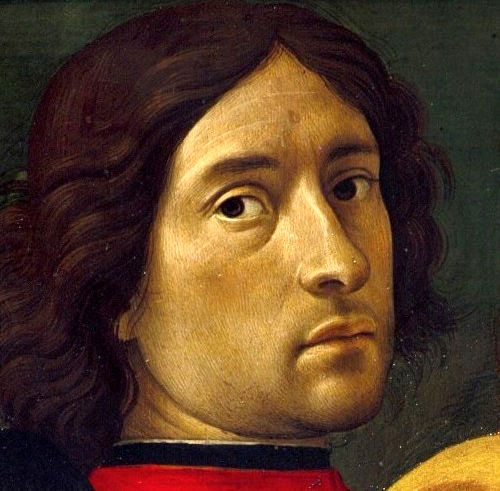
1449, Firenze – 11 jan 1494, Firenze, Italië
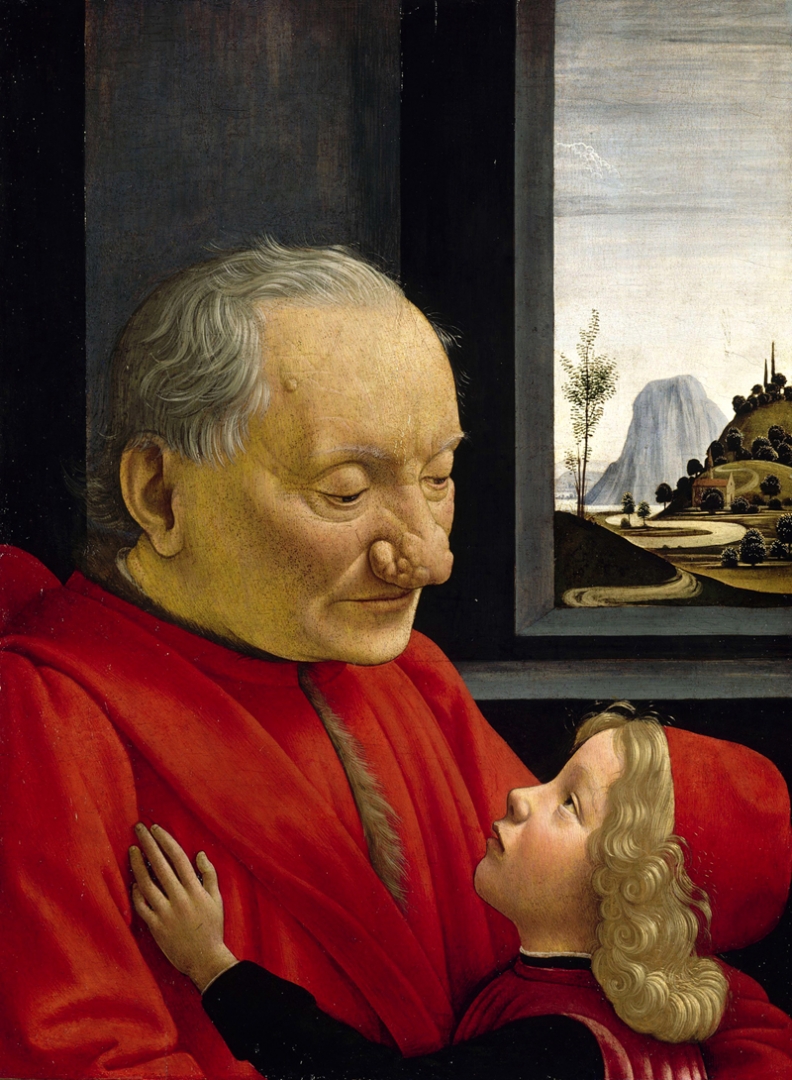
♦ Old Man with a Child (Count Francesco Sassetti with his Grandson) 1490 ♦
Francesco Sassetti was a 15th-century banker and an influential patron of the arts. His portrait reflects the grace, dignity, inner tranquillity and robust bearing of old age. The portrait is regarded as Ghirlandaio’s masterful depiction of the intense relationship between the old man and the child.
♦ Diagnosis
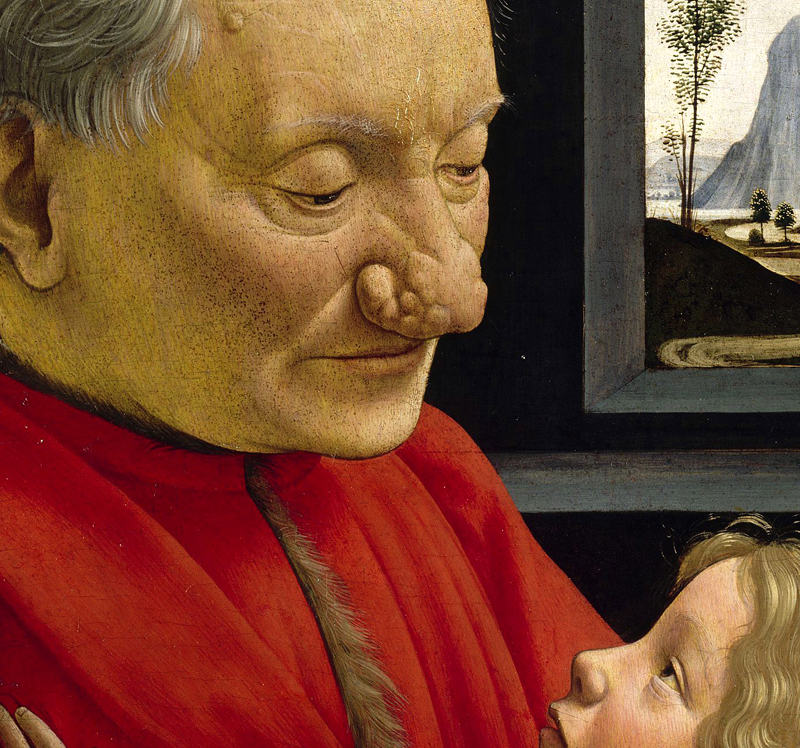
Main symptoms: Hypotrophic thickening and nodular formation of the skin on the nose,naevus mollis in the temporal region.
Additional symptoms: An elderly man wearing a red coat.
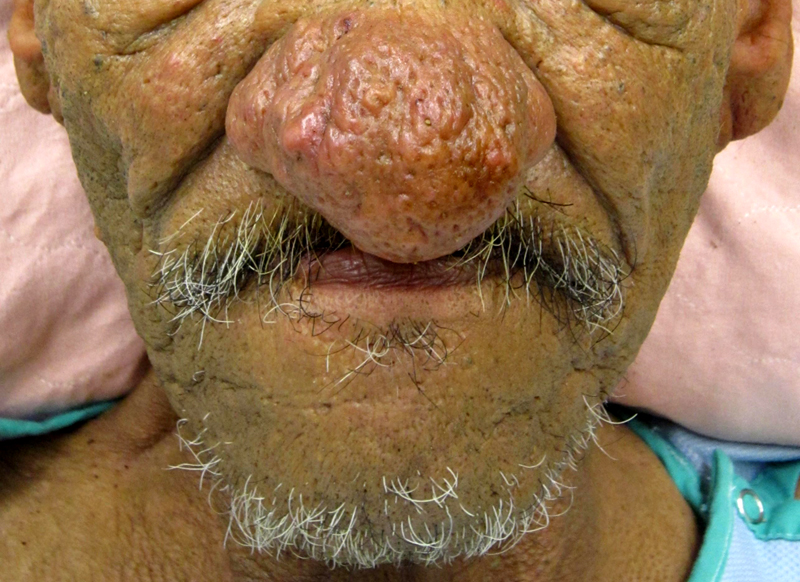
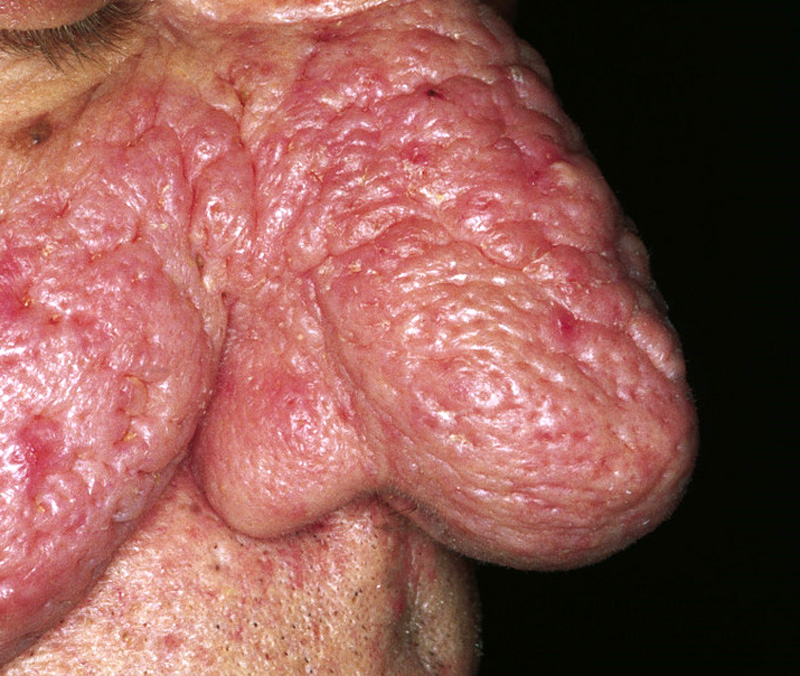
Clinical diagnosis: Rhinophyma
♦ Definition: rhinophyma
Rhinophyma is a form of acne rosacea affecting the nose, characterised by the excessive growth of blood vessels, sebaceous glands and connective tissue, resulting in a knobbly appearance at the tip of the nose. It is sometimes referred to as a ‘drinker’s nose’ or a ‘gin nose’, due to the possible role of alcohol abuse in its development.
♦ Discussion
Domenico Ghirlandaio was a Florentine painter. His style was solid, prosaic and a touch old-fashioned, certainly when compared with the great masters of his time, such as Botticelli. He was, however, an excellent craftsman and a shrewd businessman. He ran one of the most prosperous studios in Florence. He also painted portraits, of which *The Old Man with His Grandson* is one of the most refined. He depicted the grandfather’s symptoms of illness with ruthless realism, yet managed to imbue the man with a remarkable kindness and gentleness.
This painting is strongly influenced by the art of the Low Countries. Here, Ghirlandaio has imitated a portrait style that was in vogue in the Netherlands. He strove – in details such as hair, fur or foliage – to emulate the effects achieved by artists such as Memling.
Rhinophyma is one of the most common clinical diagnoses attributed to works of art. A knobbly nose is regarded as unusual and unsightly, and disfigures the face. As such paintings were not easy to sell, the artist often had no qualms about simply painting over the nose. There are other clinical syndromes that can result in such a knobbly, irregular and non-ulcerative nose, as depicted here by Ghirlandaio.
We can immediately rule out certain fungal diseases, such as blastomycosis, coccidioidomycosis and histoplasmosis, due to their typical geographical distribution.
Mycobacterium tuberculosis can affect the face, but the lesions usually ulcerate. Lepromatous leprosy is also a likely possibility, were it not for the fact that the bridge of the nose is well preserved here, as are the eyebrows. Sharma believes that Francesco Sassetti may have suffered from sarcoidosis. The associated nasal condition is of the lupus pernio type.
Most dermatologists, however, regard it as a typical case of rhinophyma.
Source: Jan Dequeker
♦ Rhinophyma / bumpy nose
Or ‘strawberry nose’ is a specific form of rosacea. In this condition, the nose is red, bumpy and swollen, with telangiectasia. This form is particularly common in men. Such a nose is by no means indicative of excessive alcohol consumption, as patients are often accused of.
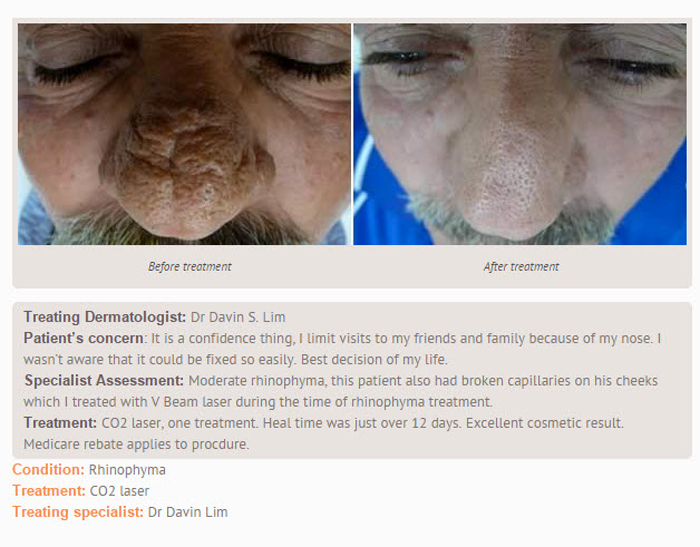
The treatment of rhinophyma, or a bulbous nose, is entirely different from other types of nose surgery. It is a condition affecting the skin, whilst the underlying structure of the nasal skeleton, cartilage and subcutaneous tissue remains normal. Due to the continuous enlargement of the sebaceous glands, the nose takes on a bulbous shape with an irregular surface. The fine blood vessels just beneath the skin’s surface dilate abnormally, giving the nose a veiny appearance. Rhinophyma is part of a facial skin condition. Treatment therefore begins with a consultation with a dermatologist (skin specialist). Once the skin growth on the nose has progressed too far to respond to medication, surgical correction may be recommended. Under local or general anaesthesia, the skin of the nose is shaved off. A drying dressing gradually comes away after healing (two to three weeks).