Jan van Eyck
1390, Maaseik – 19 July 1441, Bruges, Belgium
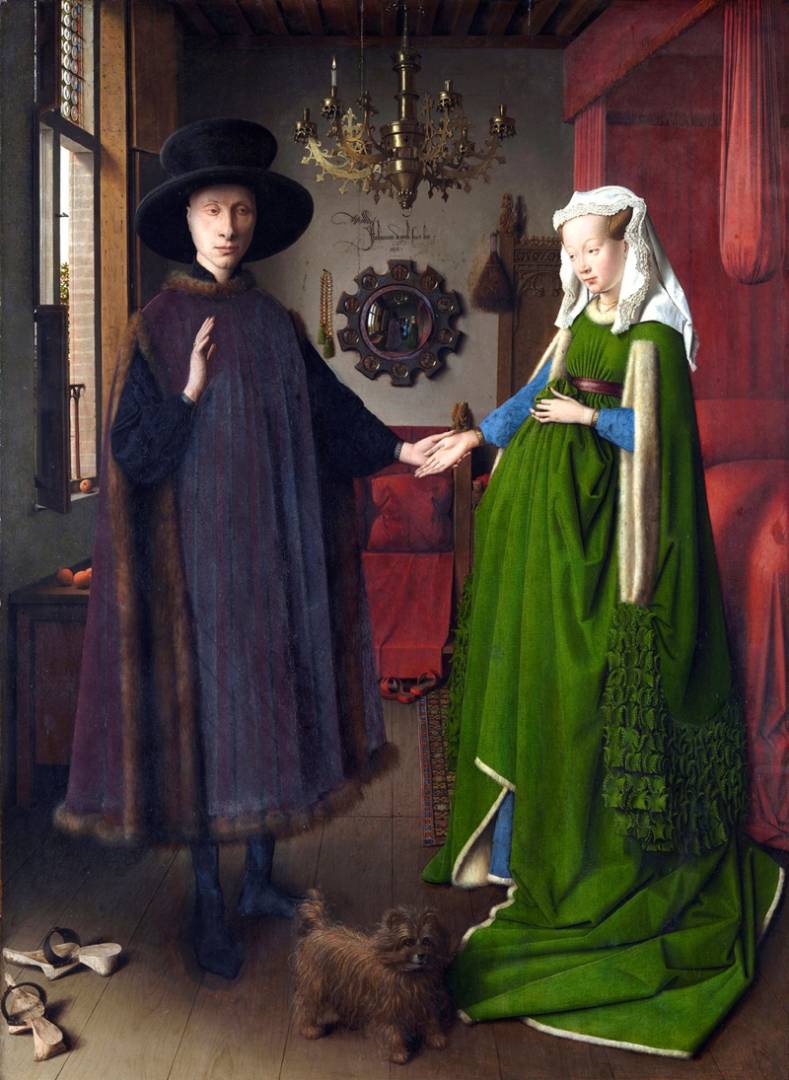
♦ The Marriage of Giovanni Arnolfi (1434) ♦
Here, in his highly realistic and colourful style, Jan van Eyck painted and documented an event from everyday life in the city: the wedding of Giovanni Arnolfi.
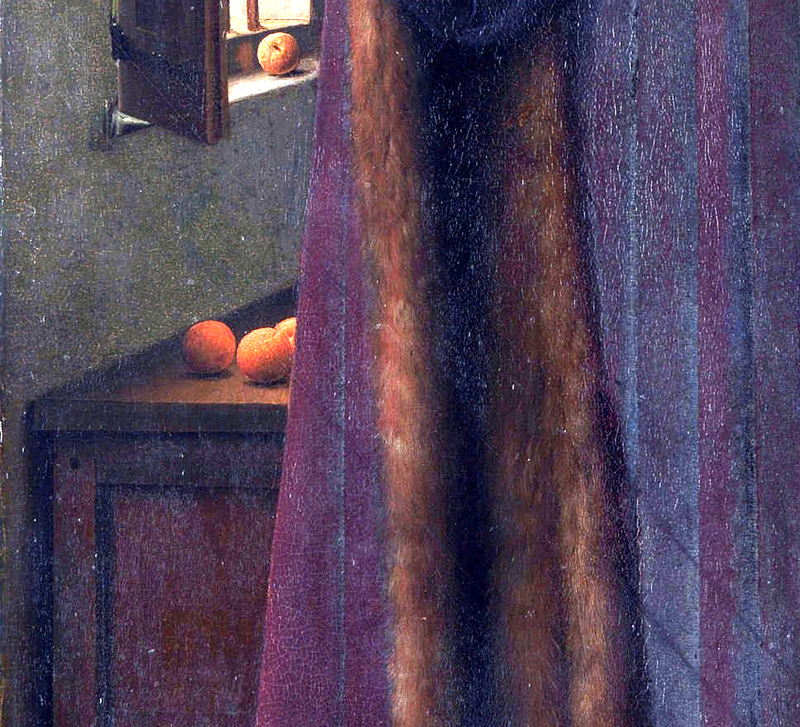
The man is wearing a mink-fur cloak resembling a scapular (a shoulder cloak worn by members of the older order) and a large, wide-brimmed hat. He is the Italian merchant Arnolfi, who ran Marco Guidecom’s Lucca-based business in Bruges, the city where Jan van Eyck lived and worked. We know from documents that his wife’s name was Jeanne (Giovanna) Cenami and that she was born in Paris, but, like him, was of Italian descent.
In this painting, she is dressed in a heavy green gown and is reaching out her hand towards Arnolfi. He holds his right hand raised in what might appear to be a blessing, but may also have been the gesture made when taking an oath, the so-called ‘fides lavata’. Arnolfi looks at the viewer, although his gaze itself is averted. Giovanna Cenami’s eyes are cast down humbly.
♦ Diagnosis
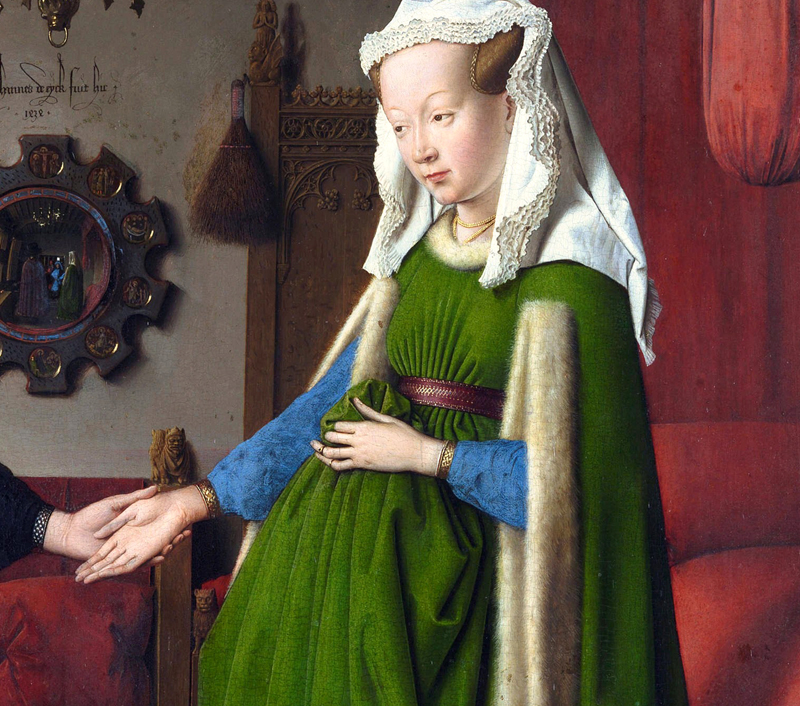
Main symptoms: Dress bunched up at the waist.
Additional symptoms: Young woman in a fashionable wedding dress.
Clinical diagnosis: Pseudopregnancy
♦ Discussion
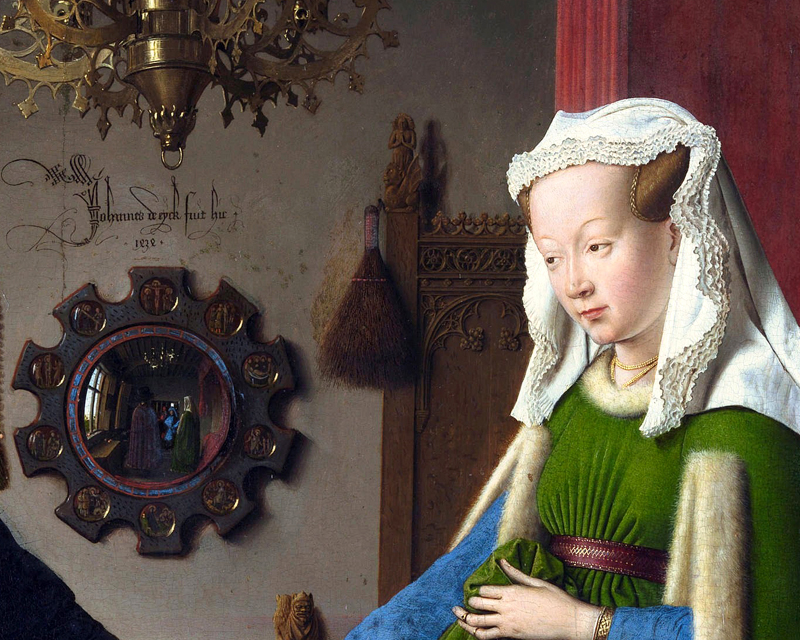
Arnolfi’s bride is most likely not pregnant. She is holding the fur-trimmed front of her dress gathered in front of her stomach. Some art critics have concluded from this that the swollen contours of her stomach indicate pregnancy.
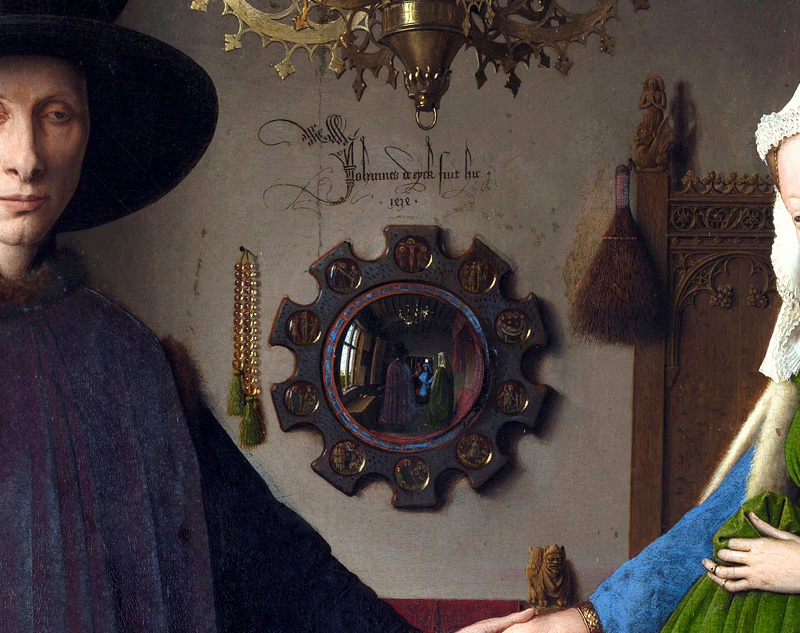
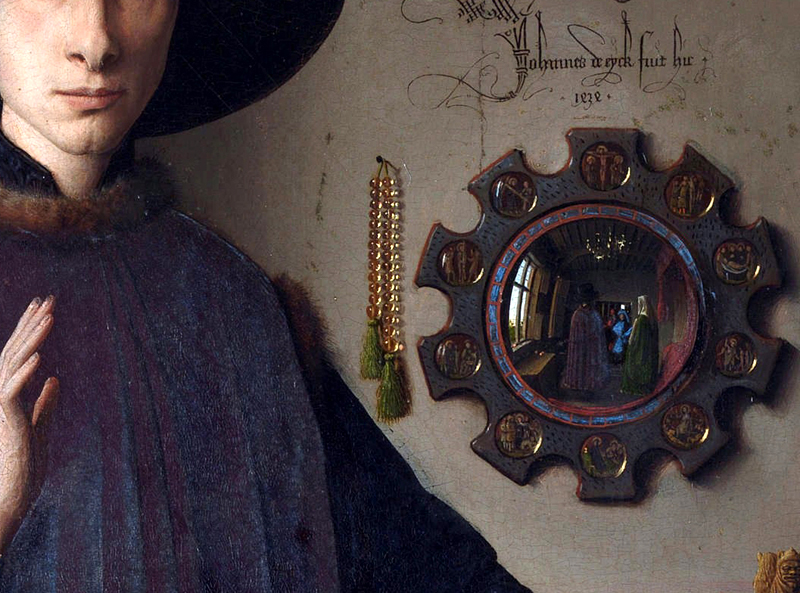
However, this is nothing more than a ritual gesture, entirely in keeping with the conventional views of the time regarding family and marriage, and intended to symbolise fertility. After all, this is the couple’s wedding portrait. The painting is the visual representation of that event and also served as a marriage certificate, as it attests to the painter’s attention to the occasion and his testimony through the inscription on the rear wall: ‘Johannes de Eyck fuit hic’ (‘Jan van Eyck painted this’). There is, in fact, a second piece of evidence of this testimony, reflected in the convex mirror on the same wall. The mirror shows the entire room and is framed by ten small scenes from the Passion of Christ. The use of an inscription illustrates the growing need for written evidence of legal transactions, a development that went hand in hand with the adoption of Roman law. This inscription should therefore not be interpreted as merely a signature. It carries the weight of testimony, just like a signature in an official register.
In the 13th century, it was still customary for the bride and groom to pledge their marital fidelity to one another without a priest being present as an official witness. The ‘dextrarum junctio’ – the joining of each other’s right hands – and the groom’s solemn vow were regarded as a legal union.
It is noteworthy, however, that Arnolfi offers his left hand here. This could indicate that this is a morganatic marriage (also known as a ‘marriage with the left hand’), between two partners of unequal status, which had a number of consequences for inheritance and succession rights.
Van Eyck depicted this domestic interior with its wooden floor as a thalamus, a bridal chamber, to which he added a number of symbolic objects bearing either a hidden meaning or a theological or moral commentary on the event.
Thus, the everyday convex mirror becomes a ‘speculum sine macula’ (an unblemished mirror), alluding to the purity of the bride, who, according to treatises of the time, was also expected to remain chaste as a married woman.
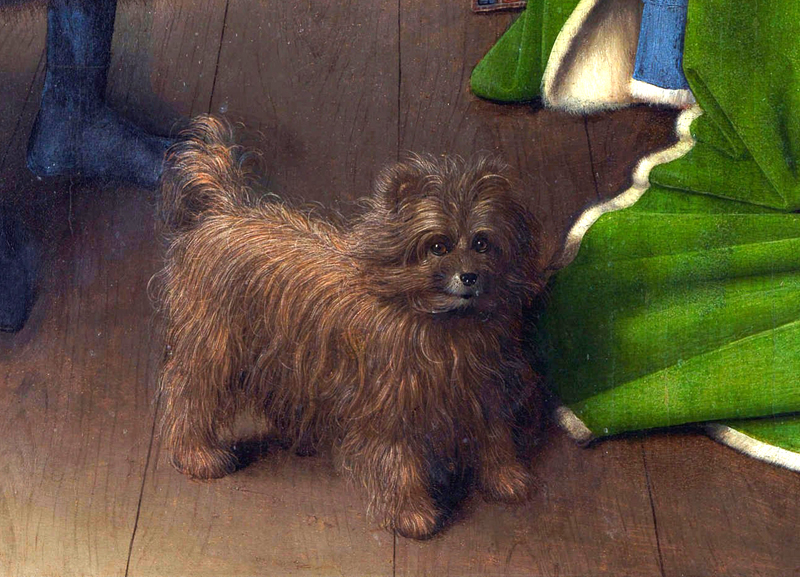
The dog in the foreground – always a symbol of devotion – represents marital fidelity.
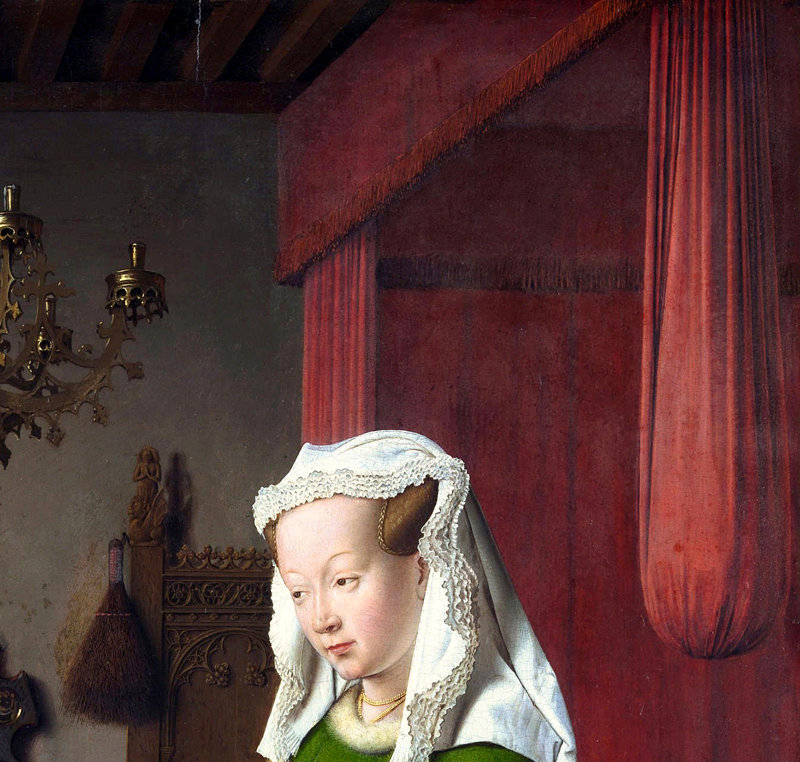
The red alcove on the right – a reference to the Song of Solomon – symbolises the bridal chamber.
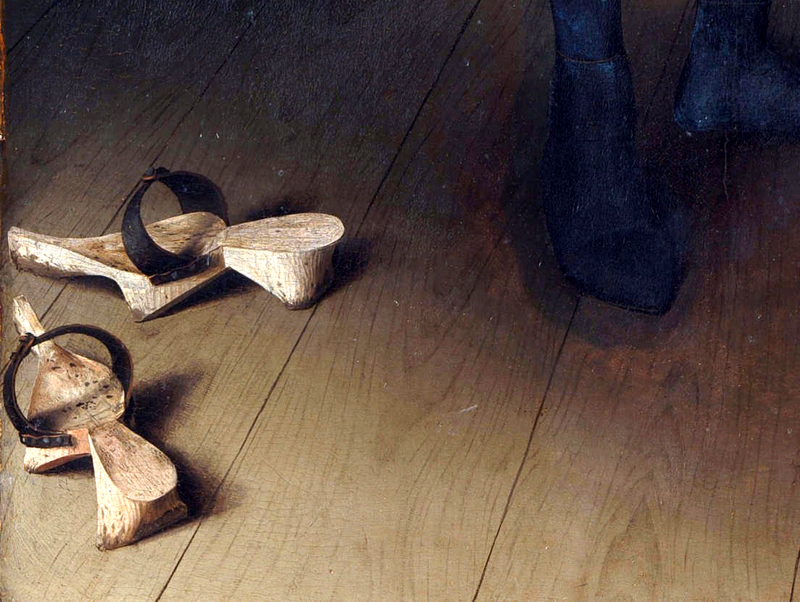
The cork clogs on the left – the groom has just stepped out of them and left them behind – refer to the biblical book of Exodus: ‘Take your sandals off your feet, for the place where you are standing is holy ground’ (Exodus 3:5).
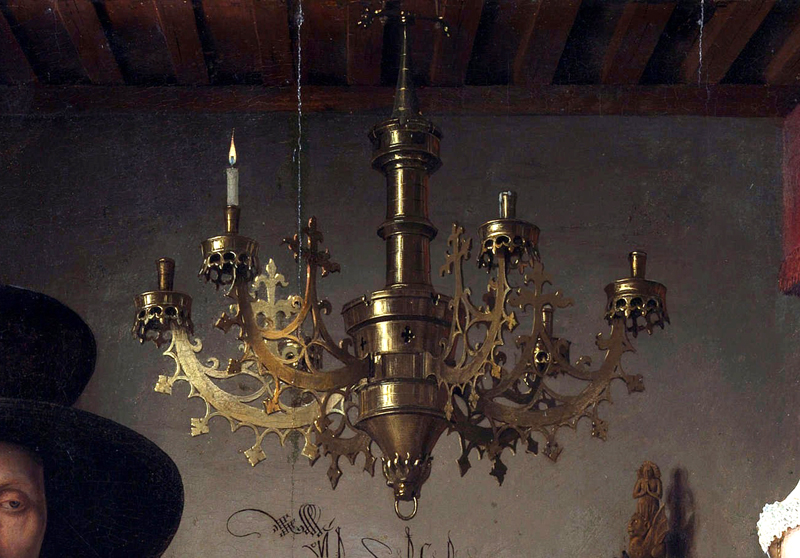
The burning candle in the candlestick – a wedding candle – appears to allude to the iconography of the Annunciation.
It emphasises the Mariological character of the painting. Devotion to the Virgin Mary, intended particularly for women, was a key factor in 15th-century marriage customs.
The apples on the windowsill allude to the Fall of Man and serve as a warning against sinful behaviour.
A set of glass prayer beads hangs on the back wall. Such beads were a typical gift from a far-sighted husband to his beloved wife. They were intended as a symbol of his wish that she would remain calm and devout.
Women were also expected to manage the household, which is why a brush hangs on the wall next to the box bed. It symbolises ‘Ora et labora’ (‘Pray and work’), the daily duty of a Christian.
The bed is adorned with a sculpture of Saint Margaret, the patron saint of childbirth.
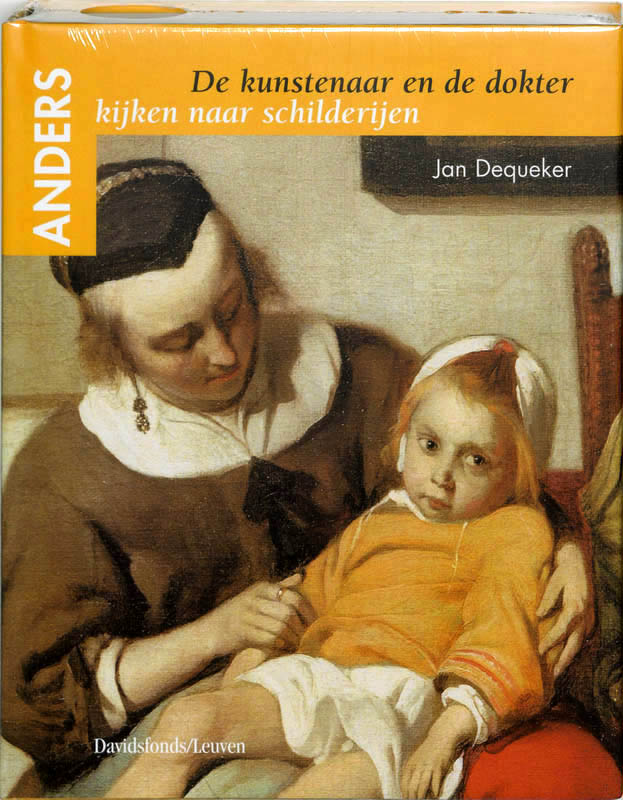
Source: Jan Dequeker

Pseudopregnancy
References
Jan Dequeker
The artist and the doctor look at paintings
Photos
wikipedia.org