
Vincent van Gogh
30 March 1853, Zundert, Netherlands – 27 July 1890, Auvers-sur-Oise, France
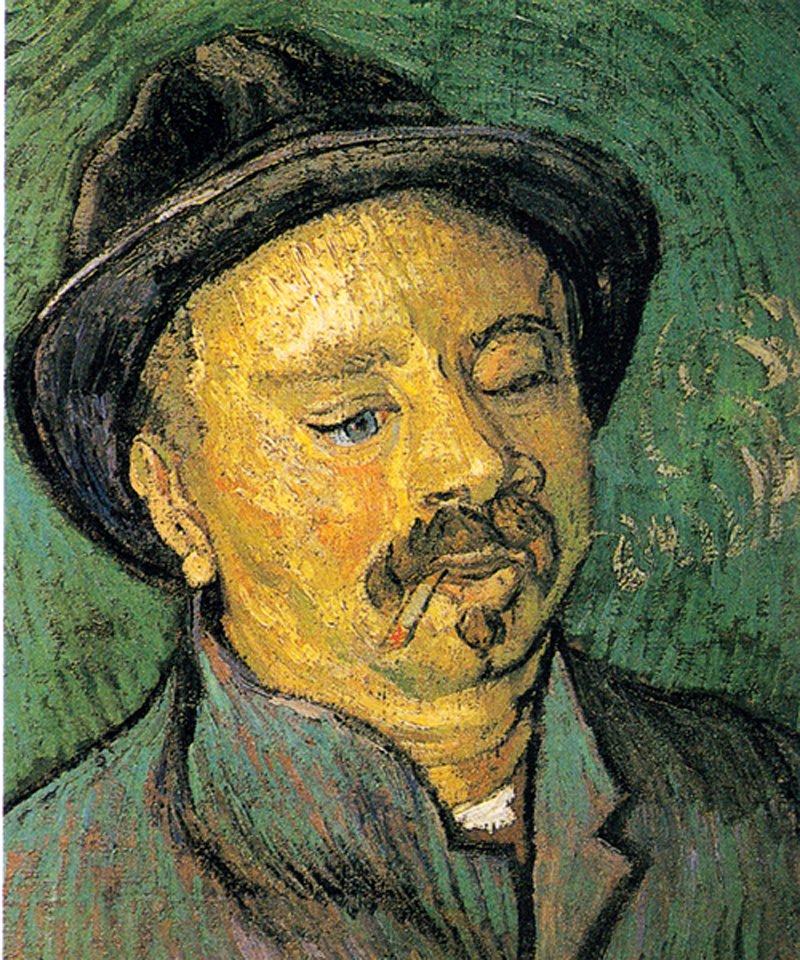
♦ The one-eyed man with a swollen face ♦
Portrait of a man with one eye. *The One-Eyed Man with the Swollen Face* (1888) was painted whilst van Gogh was admitted to a mental health institution.
♦ Diagnosis:
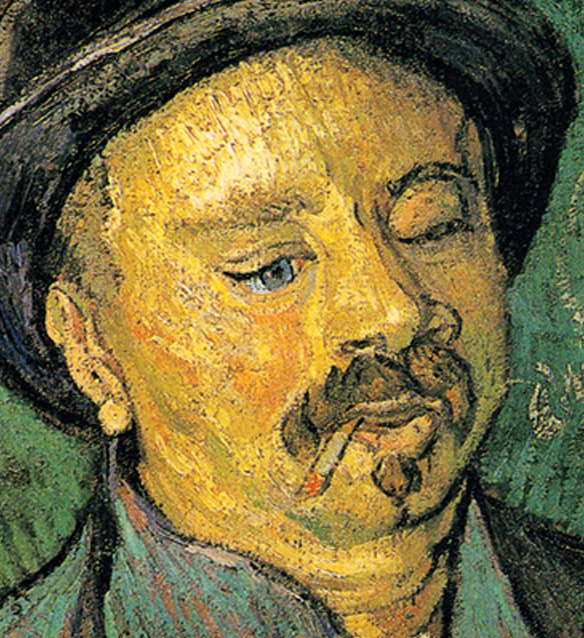
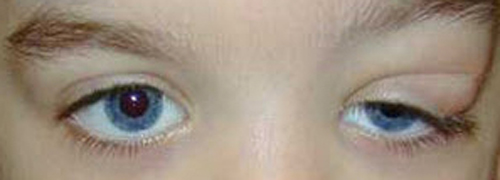
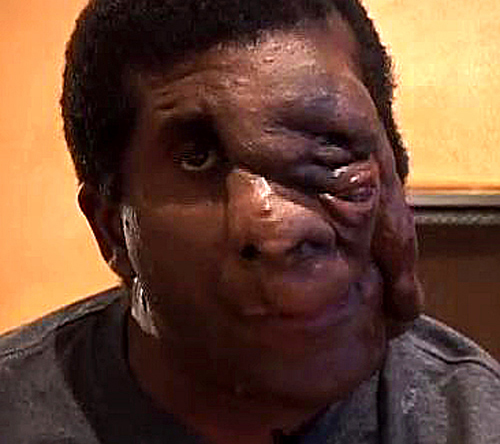
Main symptoms: swelling of the left upper eyelid, which pushes the eyebrow upwards and causes the eye to close
♦ Clinical diagnosis:
neurofibromatosis, Recklinghausen’s disease
♦ Definition: neurofibromatosis
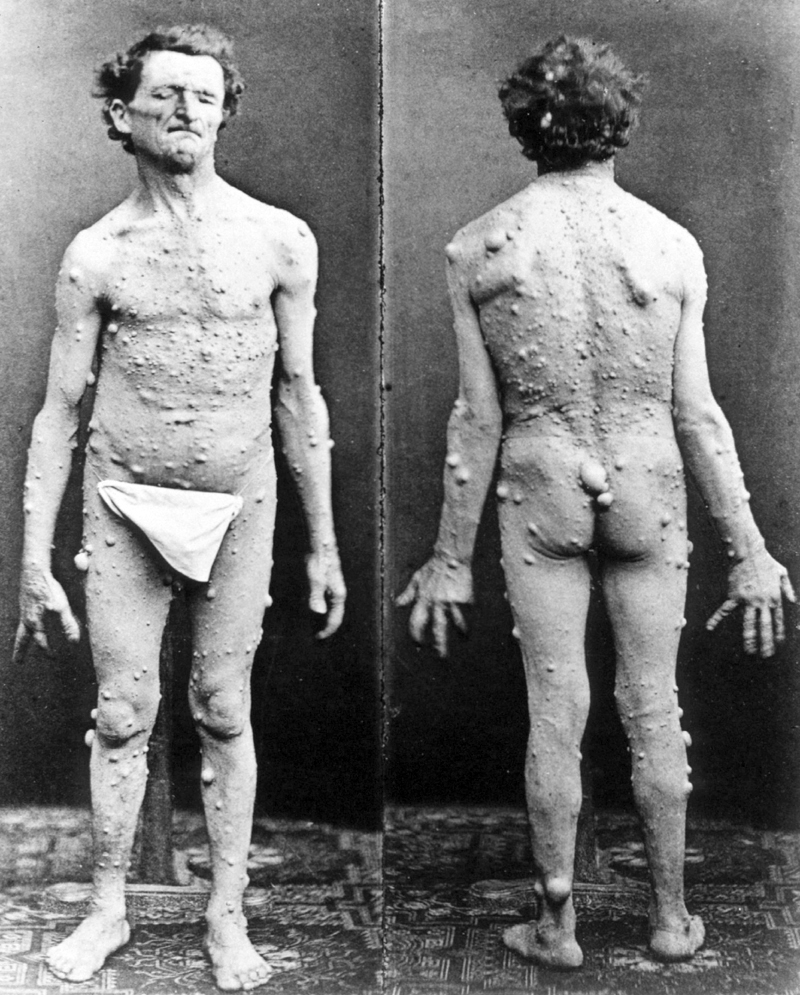
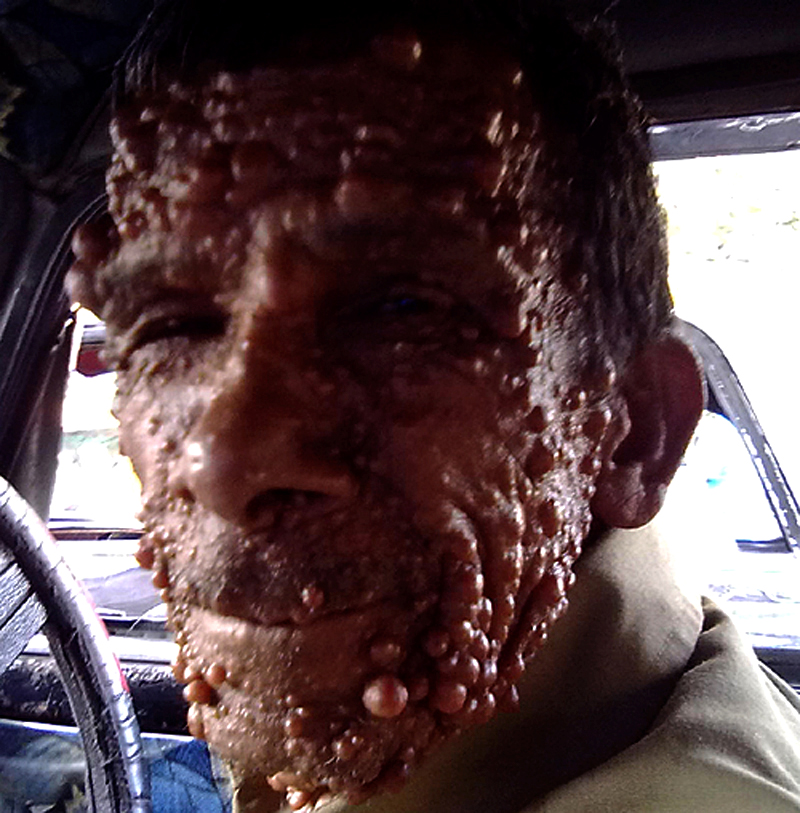
The condition is characterised by the presence of growths (neurofibromas) in or under the skin, which originate from the cutaneous nerves. These are usually harmless, although malignant ones do occasionally occur. The condition is thought to be hereditary.
♦ Discussion:
Neurofibromas occur both on the eyelids and within the eye sockets. Normally, the temples are also affected, but the left temple region is not visible in this painting. The lower figure shows a contemporary patient in whom both the eye and the skin are affected by neurofibromatosis.
Source: Jan Dequeker
The most famous person with neurofibromatosis (particularly Proteus syndrome)
♦ is: John Merrick, the Elephant Man
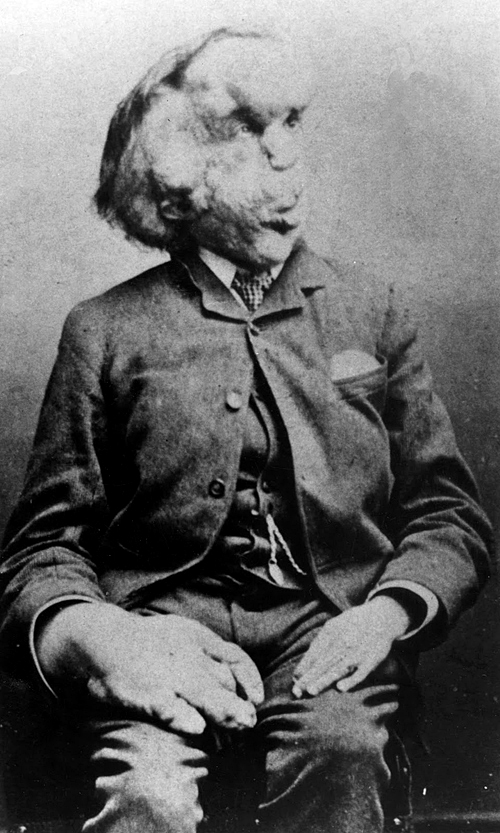
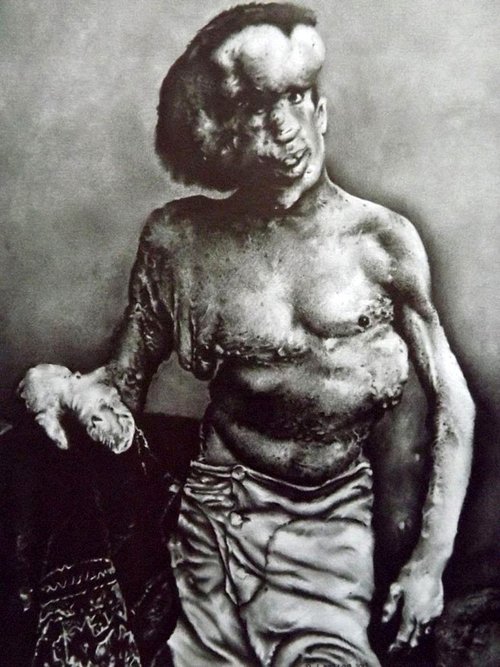
Joseph Merrick, alias ‘The Elephant Man’ Joseph Carey Merrick, better known as the Elephant Man (Leicester, 5 August 1862 – London, 11 April 1890), was an Englishman who became famous for his unusual physical appearance.
This was subsequently classified as Proteus syndrome, and it is thought he may also have suffered from neurofibromatosis
♦ Biography
Merrick’s parents were Joseph Rockley Merrick and Mary Jane Potterton. At the start of his life, he looked like an ordinary boy, but between the ages of three and five, that changed. Lumps began to grow on the right-hand side of his face and body, and these increased rapidly.
The doctors who examined him assumed that he was suffering from the rare condition elephantiasis.
Because of his deformity, Merrick was isolated from normal social interaction with other children and could hardly attend school, as he was frail and was bullied. He was too frightening for most people to look at.
The doctors were unable to help him, and Merrick was soon ostracised by those around him.
According to various sources, his parents are said to have completely disowned him when he was ten years old. This is not entirely correct. His mother never disowned him, but died when Merrick was twelve years old. He remained with his father, who remarried.
Merrick’s stepmother did not accept him and insisted that the child be thrown out of the house. As a result, Merrick began to roam the streets and tried to earn a living as a shoe-shiner. He was bullied and laughed at on the streets because of his terrifying appearance. Merrick’s face and body were largely overgrown with hard bone tumours. Curious onlookers would often gather round him to stare. Merrick decided to work as a sideshow attraction in a circus ‘freak show’, where he drew large crowds.
He later wrote that the time he had spent working as a sideshow attraction for the circus had been less painful for him than his life in the ‘normal’ world. At the circus, people had been exceptionally kind to him. He saved the money he earned at the circus, but it was stolen from him in Belgium by a con artist.
Merrick returned to England penniless and heartbroken. There, he was attacked by a mob, beaten up and ended up in hospital.
The police found a card addressed to Dr Frederick Treves in his pocket. A few years earlier, Dr Frederick Treves had met Merrick at one of his circus performances. The surgeon had shown an interest in his condition and given him his address in London. Now Merrick got back in touch with Dr Treves. The doctor offered Merrick accommodation in a hospital in Whitechapel.
♦ Frederick Treves
Treves diagnosed Merrick with ‘elephantiasis’ (a diagnosis which, incidentally, was incorrect). Dr Treves collected donations to pay Merrick’s hospital bills. The press also took an interest in Merrick, as a result of which he began to enjoy a degree of fame. Merrick once again became a curiosity, but this time for wealthier people, who treated him with greater respect. Even members of the royal family came to ‘view’ him. When he was off duty, Merrick could not simply walk down the street, as he would be attacked and hurled abuse at. For this reason, he wore a hood specially made for his enormous head, to conceal his appearance. He was a sensitive man who, understandably, suffered greatly from his deformities. In 1889, he took a six-week holiday and retreated into the countryside, far away from the prying eyes of the public. His health deteriorated as his deformities continued to worsen.
♦ Death
Merrick had been forced to sleep sitting up for most of his life because his head was so heavy that he could not breathe properly when lying flat. On 11 April 1890, he was found dead in his bed. It was not clear whether he had deliberately lain flat in bed to die, or whether it had been an accident. Merrick was 27 years old. After his death, his body was on public view for some time at the Royal Hospital in London.
♦ Name
He was given the nickname The Elephant Man because he suffered from severe deformities covering almost his entire body. Initially, the doctors thought Merrick had elephantiasis. Long after Merrick’s death, it was suggested that he might have suffered from neurofibromatosis.
In 1986, it was concluded that his condition was the rare Proteus syndrome.
In 2003, Dr Charis Eng announced that, according to DNA testing, Merrick certainly had
Proteus syndrome, but that it was quite possible he also had neurofibromatosis (type 1).