.jpg)
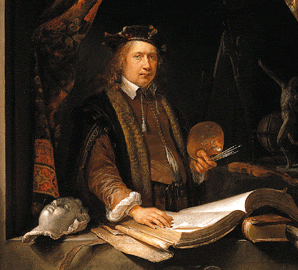
Gerard (Gerrit) Dou
7 April 1613, Leiden – 9 February 1675, Leiden, the Netherlands
Gerard Dou, the son of a glass painter, was trained as an engraver. He worked in the studio of the young Rembrandt. Although he occasionally ‘borrowed’ themes from Rembrandt, his execution was more detailed and meticulous.
His scenes depicting middle-class domestic life were immensely popular and were often imitated.
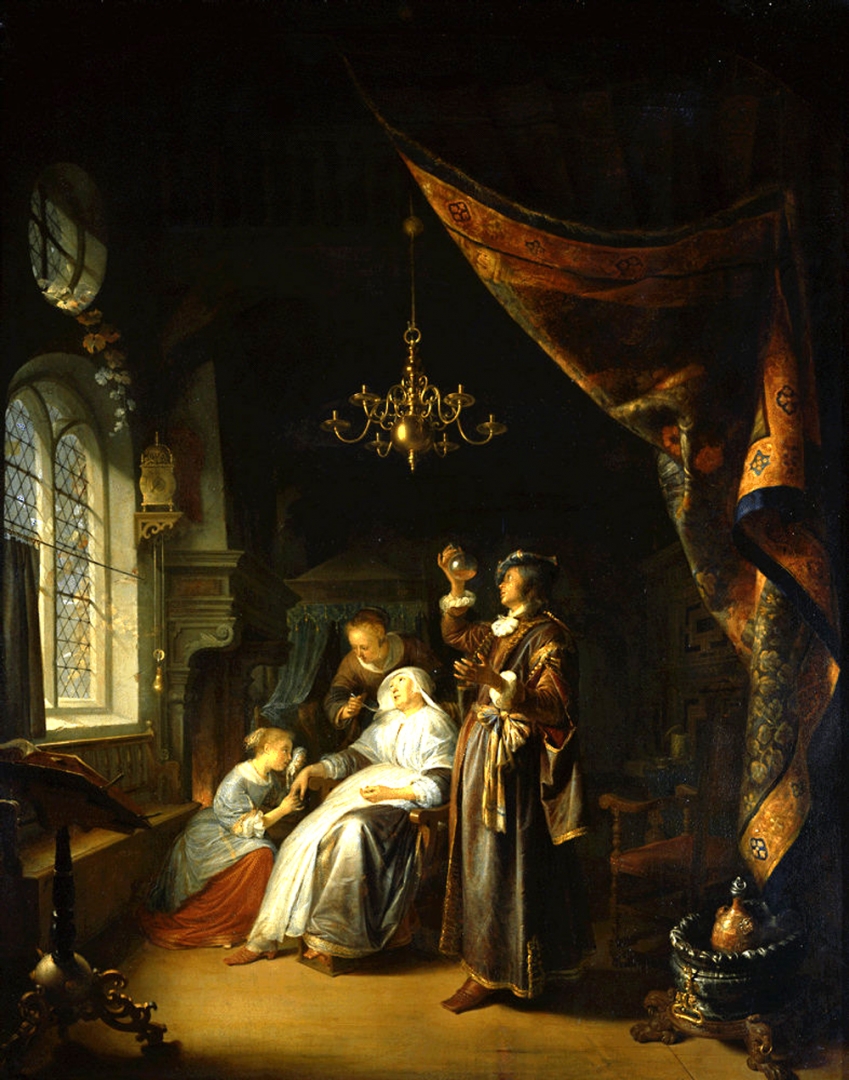
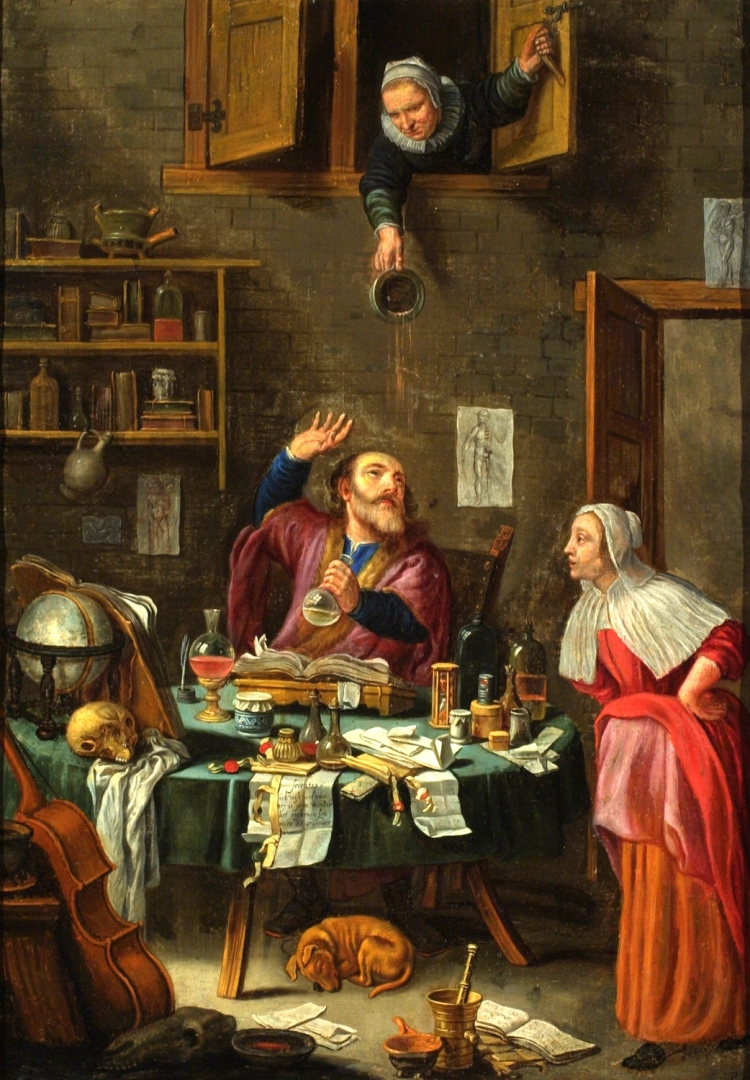
♦ The woman with dropsy ♦
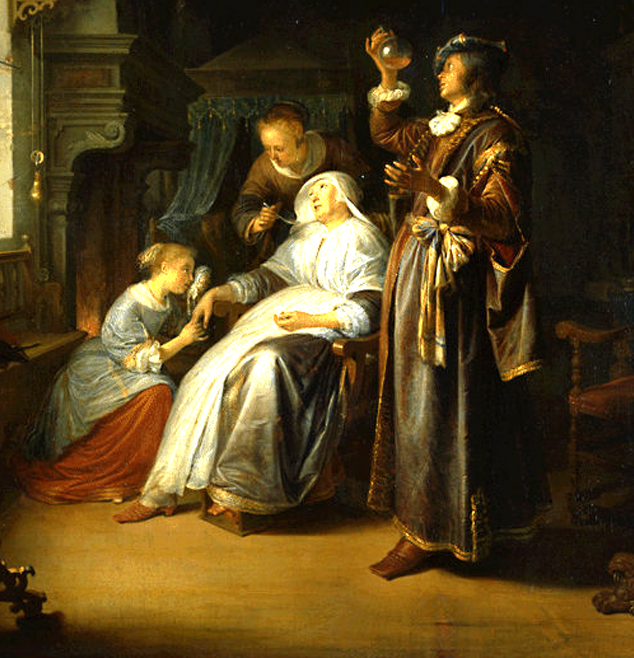
A very ill woman is being cared for in a Dutch patrician house whilst she is being fed with a spoon and comforted by her daughter.
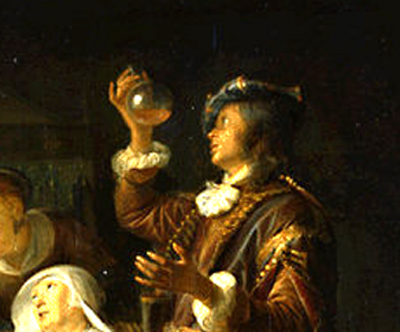
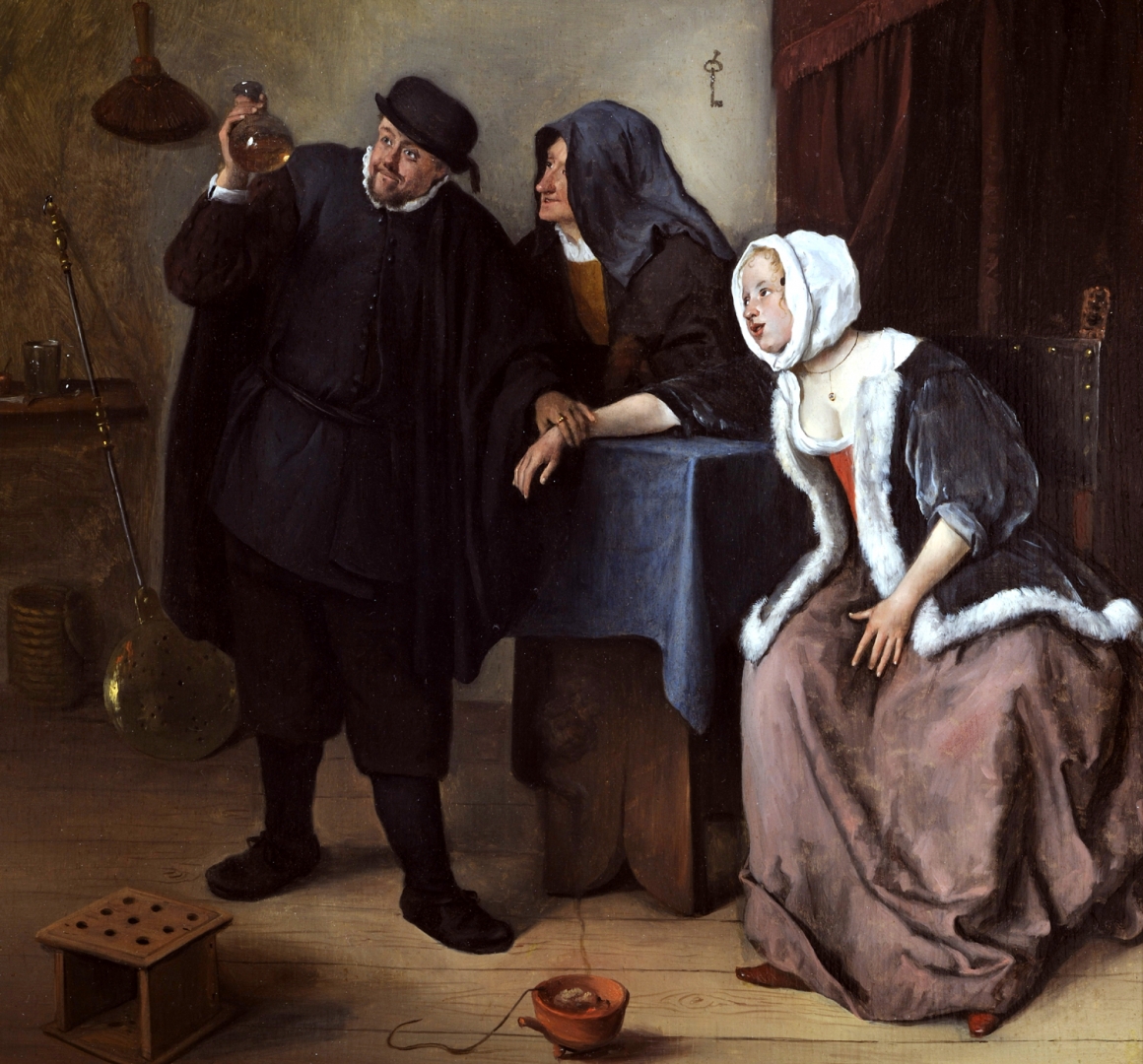
A doctor, wearing a long coat, is examining a bottle containing her urine.
♦ Diagnosis
Main symptoms: Oedema in the legs, anaemia, blood in the urine (haematuria), a swollen, pale face.
Additional symptoms: Middle-aged woman, lethargic.
Clinical diagnosis: Membranous glomerulonephritis.
♦ Definition: membraneuze glomerulonefritis
A kidney disease characterised by increased permeability of the glomerular basement membrane (GBM). As a result, blood and proteins pass into the urine, often to such a severe extent that it leads to hypoproteinaemia and oedema.
♦ Discussion
The cause of death is usually elevated urea levels in the blood (uraemia), often complicated by anaemia or infections.
In other cases, the patient dies from a cerebral haemorrhage, heart failure or a myocardial infarction. Terminal non-bacterial pericarditis (inflammation of the pericardium) is common.
♦ Uroscopy: a tool and a status symbol
The elements in this painting draw our attention to two historical facts relating to medicine:
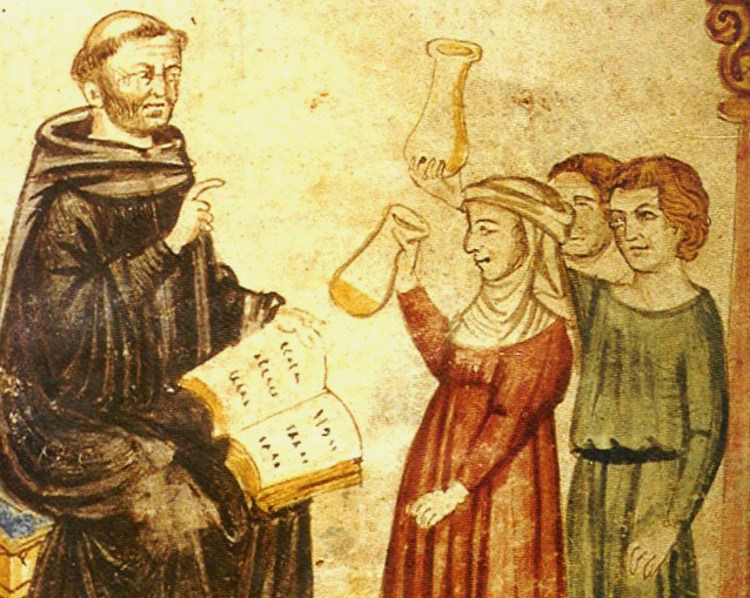
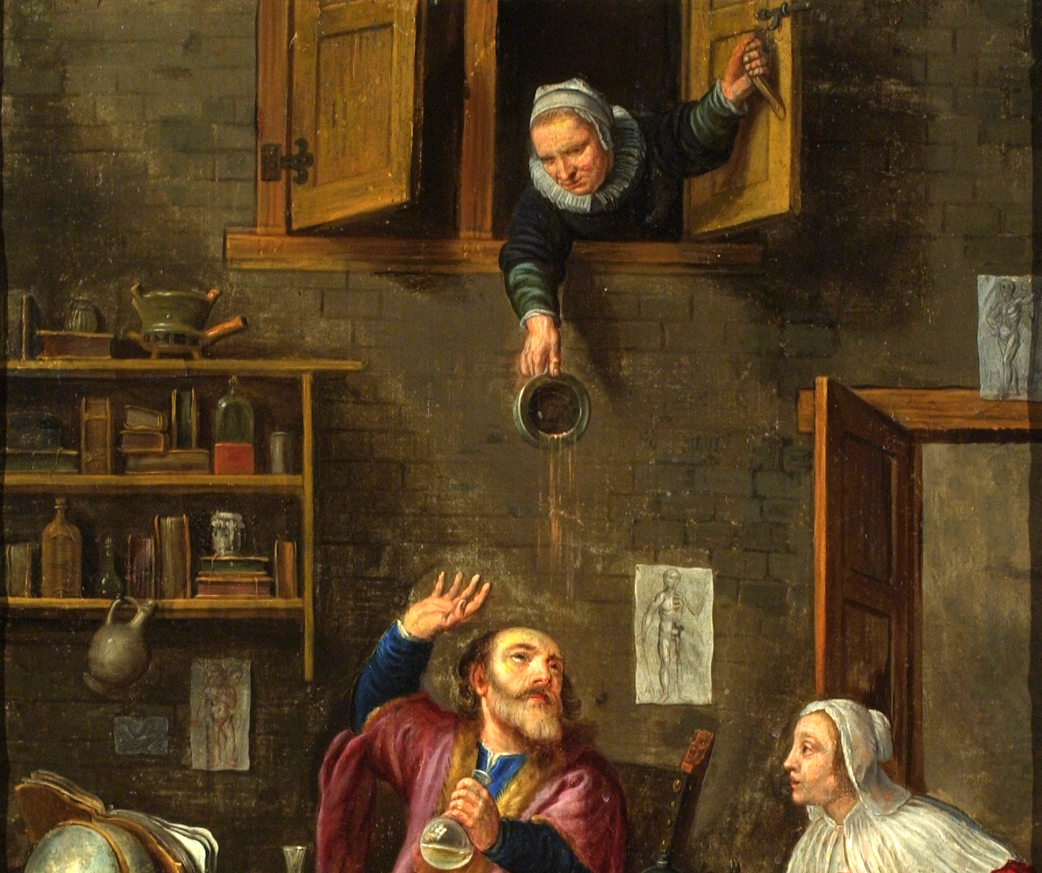
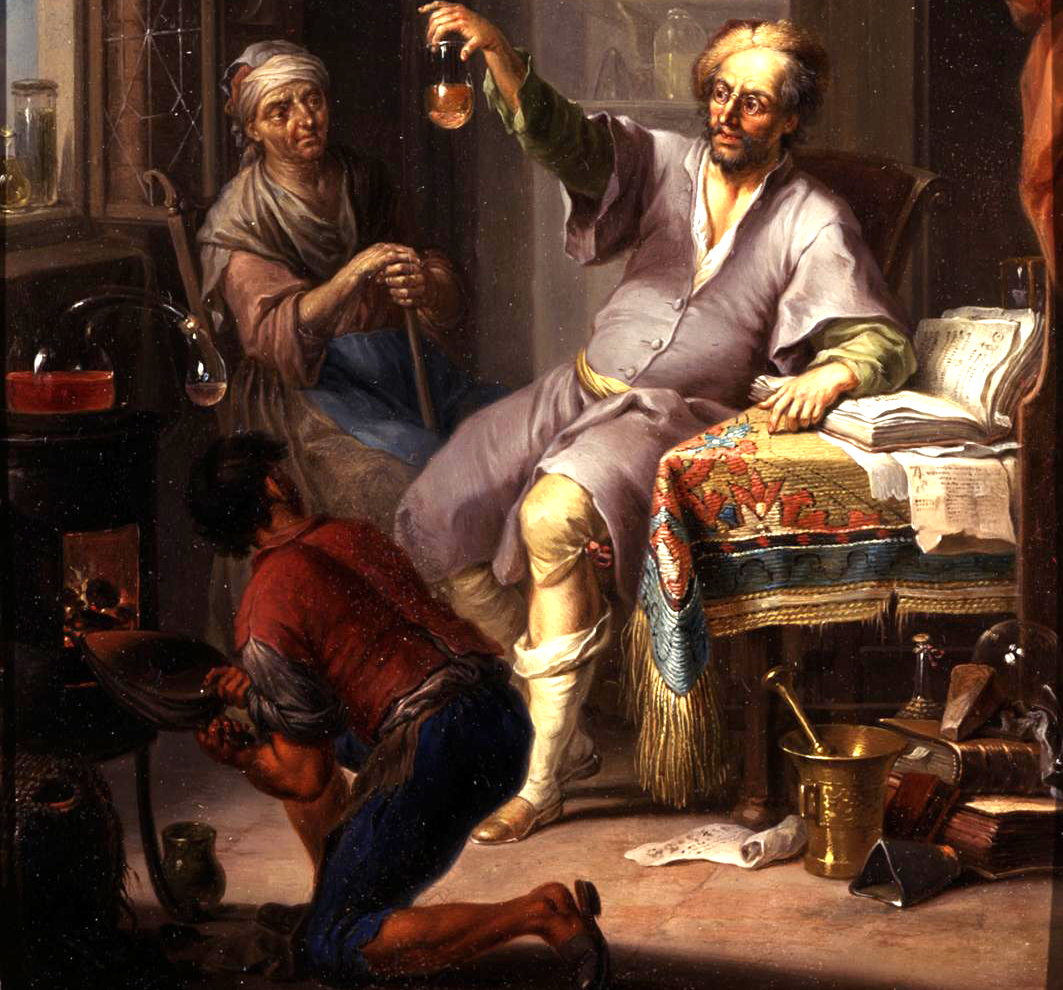
1) uroscopy (examination of urine) as the most highly regarded diagnostic tool in academic internal medicine during the early Renaissance, enabling a diagnosis to be made from a distance.
2) the difference in status between the academic physician and the artisan surgeon
When Felix Platter (1536–1614), a scientific successor to Vesalius, arrived in his hometown of Basel in 1557, he received a cool reception there. His fellow citizens sent him urine samples along with false information about a patient, in the hope of thereby demonstrating his incompetence. But Platter was so successful in making accurate predictions based on uroscopy that he soon gained many followers and became known as one of the most popular doctors of his time.
At that time, a uroscopy was accompanied by a grand ceremony. A sample of early morning urine was placed in a special bottle, which was left to stand for a few hours to allow everything to settle. The doctor would then examine the urine against the light and have all details regarding colour, consistency and any impurities noted down. He would subsequently shake the bottle, assess the floating particles and compare his findings using colour charts and evaluation charts. Finally, he solemnly proclaimed the final diagnosis.
The English physician Thomas Willis brought these ceremonies to an end by publishing his *Dissertatio de Urinis* in 1673, thereby introducing the chemical analysis of urine. In the same year, he discovered the sweet taste in the urine of a diabetic patient.
In 1694, the Dutch physician Frederik Dekkers discovered how boiling urine could be used to detect albumin (soluble proteins).
Eventually, uroscopy – or ‘urine gazing’ – became part of medical folklore.
Source: Jan Dequeker

Membraneuze glomerulonefritis
References
Jan Dequeker
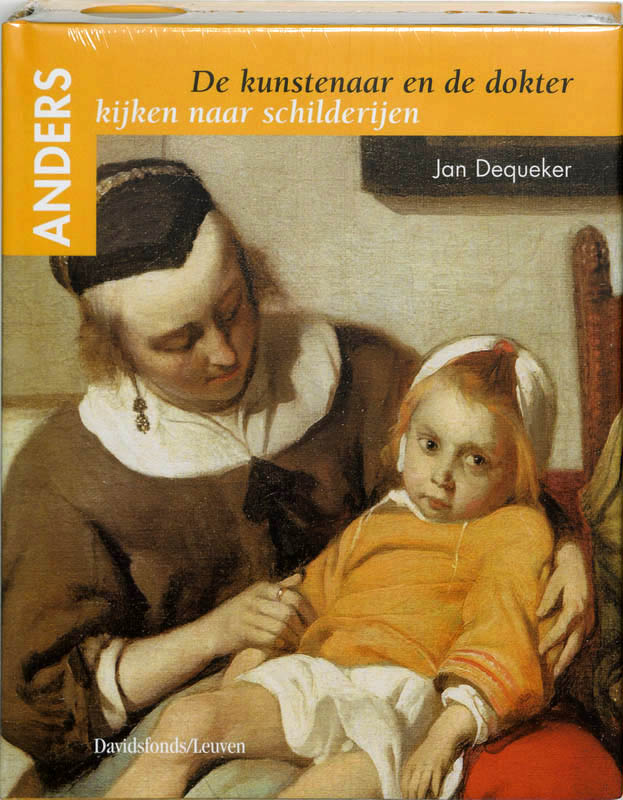
The artist and the doctor look at art
Photos
wikimedia.org
- Constantino die een diagnose stelt met urine
https://www.labrujulaverde.com/2018/04/constantino-el-africano-el-converso-musulman-que-introdujo-en-europa-los-textos-medicos-clasicos-y-arabes