



.jpg)
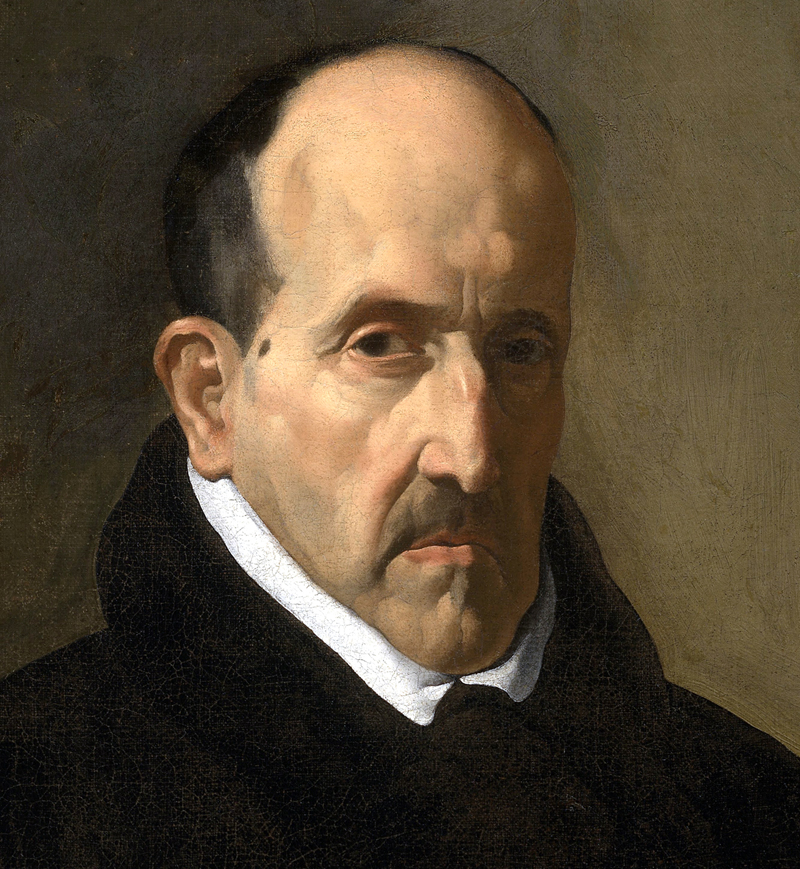
Diego Rodriquez de Silva y Velázquez
1599, Seville – 6 August 1660, Madrid, Spain
♦ Portrait of Luis de Góngora y Argote (1561–1627) ♦
Luis de Góngora y Argote was a famous Spanish poet. In 1626, he fell ill whilst out for a ride in the countryside. He later complained that he could remember nothing of recent events, but only of things that had happened a long time ago. Overcome by despair and restricted in his movements, he died one year later, in 1627.
♦ Diagnosis
Main symptoms: Pigmented mole on the right temple.
Additional symptoms: A 60-year-old man developed acute memory loss and motor difficulties four years later.
Clinical diagnosis: Dysplastic naevus, malignant melanoma, melanocytic acanthoma.
♦ Definition: naevus (birthmark)
A well-defined pigmented area or area of increased blood flow in the skin, which usually appears shortly after birth. Also known as a birthmark.
♦ Definitie: melanoma
A tumour that develops in a pigmented naevus and which can become malignant and metastasise. This is a transformation of the naevus into a malignant tumour.
♦ Definition: acanthoma
A growth or excessive proliferation in a part of the spinous cell layer of the skin, such as a seborrhoeic wart.
♦ Discussion
Afgezien Apart from its undeniable artistic and historical value, this painting by Diego Velázquez is also of interest to dermatologists because of a clearly visible pigmented skin lesion on Góngora’s right temple.
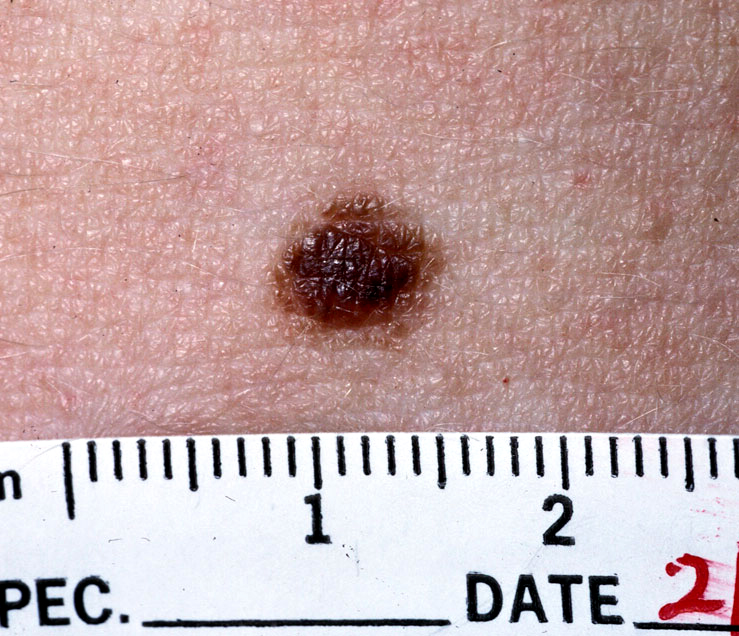
Numerous dermatological diagnoses have been proposed for this lesion, including congenital naevus, dysplastic naevus, seborrhoeic keratosis and melanoma. Furthermore, from a medical point of view, a link between the pigmented lesion and the motor problems that afflicted the poet must also be considered. With the aim of – albeit retrospectively – verifying the diagnosis of this skin lesion to determine whether the motor problems could be attributed to brain metastases caused by the pigmented lesion on the right temple, Borroni carried out a computerised morphometric analysis of Góngora’s mole 1).
After lung and breast cancer, melanoma is the third most common tumour to metastasise to the brain. In 12–20 per cent of patients suffering from malignant melanoma, the brain is the first site where clinical metastases develop.
The frontal lobe, the cerebellum and the spinal cord are the most commonly affected areas. Compared with metastases from other malignant tumours, those from melanoma show a particular tendency to bleed (33 to 50 per cent of cases). A worsening headache in the forehead and mental deficits are common symptoms in such cases. The main physical sign of brain metastases is a neurological deficit with pyramidal signs. These are signs relating to the central motor neurons.
According to Góngora’s biography, more than a year is said to have elapsed between the appearance of pyramidal signs on 20 March 1626 and his death on 23 May 1627. This period is too long to support a diagnosis of brain metastases caused by a malignant melanoma.
Melanomas often cause metastases in the brain, but they can also cause cerebral haemorrhages, thereby mimicking a cerebrovascular accident. All things considered, it seems more likely that Góngora suffered a simple stroke in March 1626. Furthermore, Borroni’s morphometric analysis suggests a naevus rather than a melanoma.
1) Borroni G., Vignati G., Gabba P., Calligaro A., Did the Spanish poet Luis de Góngora die of metastatic malignant melanoma? Am J Dermatol 1991; 13: 91-5
Source; Jan Dequeker