
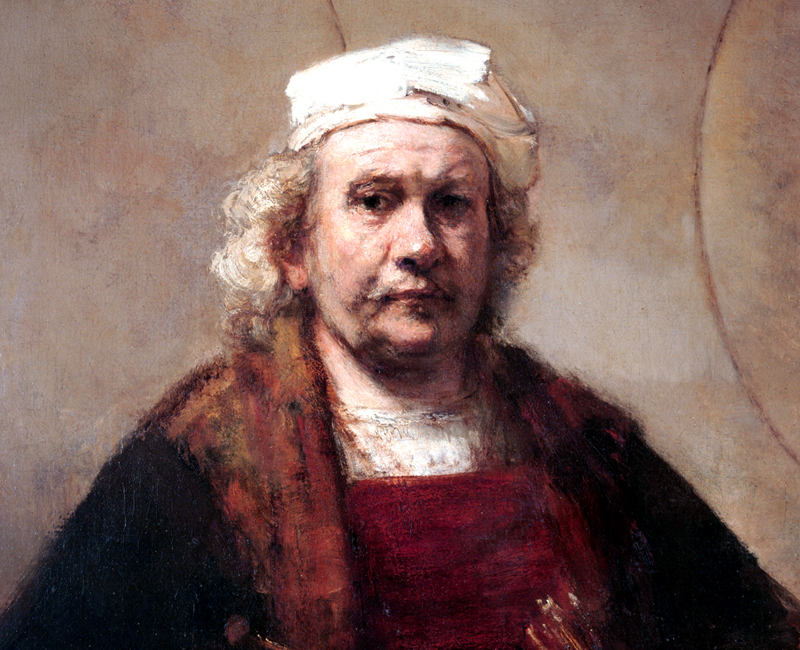
Rembrandt van Rijn
15 July 1606, Leiden – 14 October 1669, Amsterdam, the Netherlands
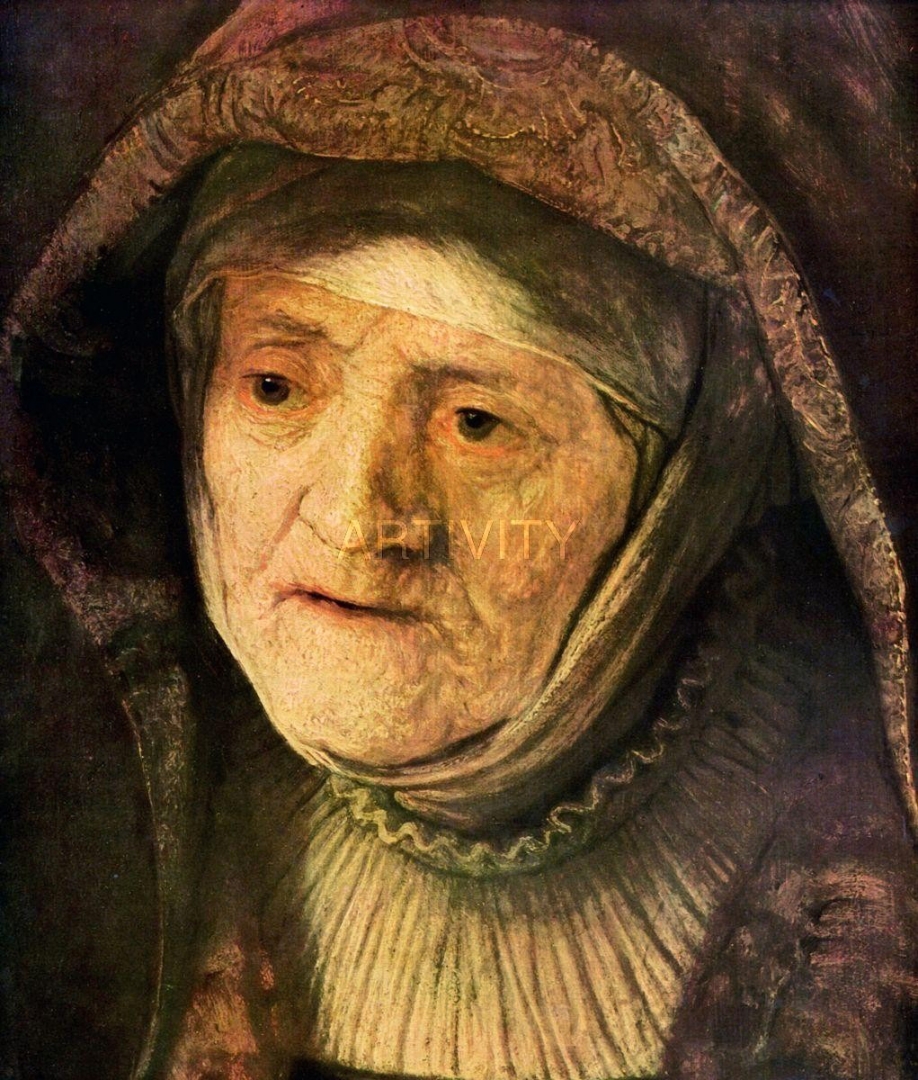
♦ Rembrandt’s mother 1639 ♦
Rembrandt painted his mother a year before she died.
She is leaning on a walking stick and wearing a Jewish prayer shawl, depicting the prophetess Hannah, aged 84, as described in Luke 2:36–38:
‘There was also a prophetess, Hannah, the daughter of Phanuel, of the tribe of Asher.
She was advanced in years: after her girlhood, she had lived with her husband for seven years and had been a widow ever since, for about 84 years. She never left the temple, fasting and praying, honouring God day and night. Now the time has come for her to fulfil her duty.
She gives thanks to God and speaks to all who are awaiting the redemption of Jerusalem.’
♦ Diagnosis
Key symptoms: Scar on the left side of the face, retracted left lower eyelid, atrophied jaw muscles, toothless mouth, tilted head. (pain?)
Additional observations: 84-year-old woman, devout, richly dressed.
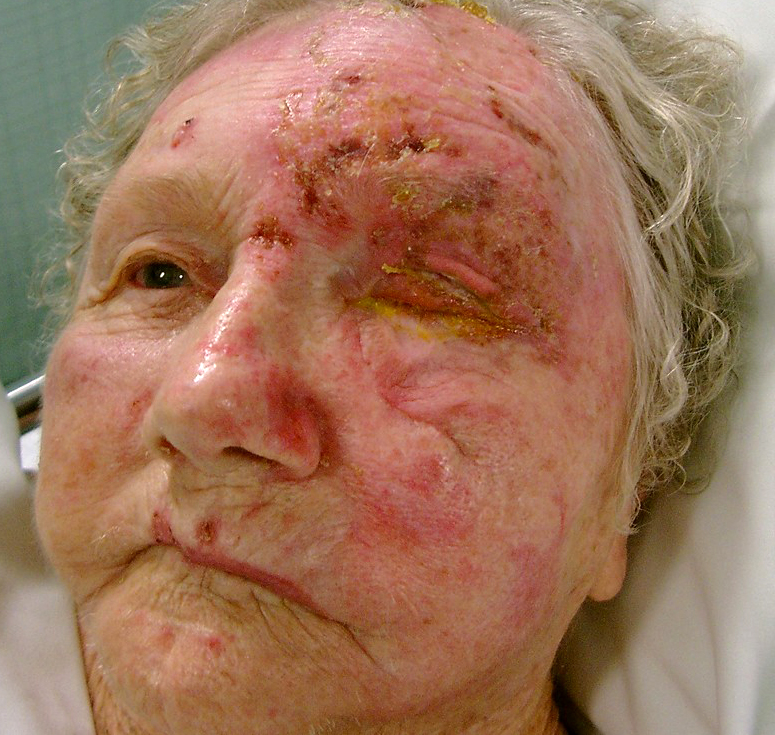
Clinical diagnosis: Herpes zoster (shingles), postherpetic neuralgia, torticollis (tilted neck due to neck spasm).
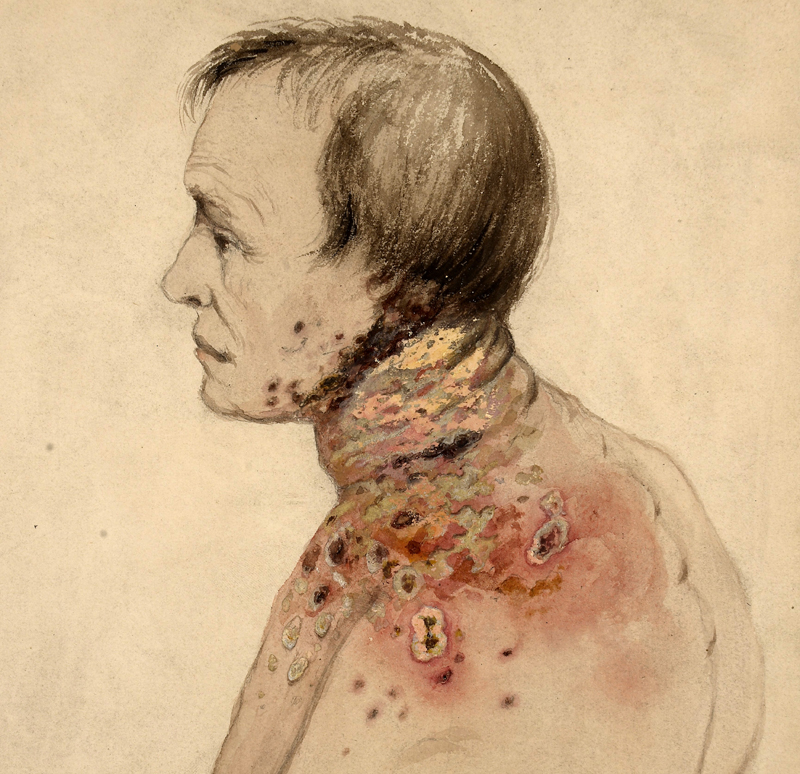
♦ Definition: Herpes zoster (shingles)
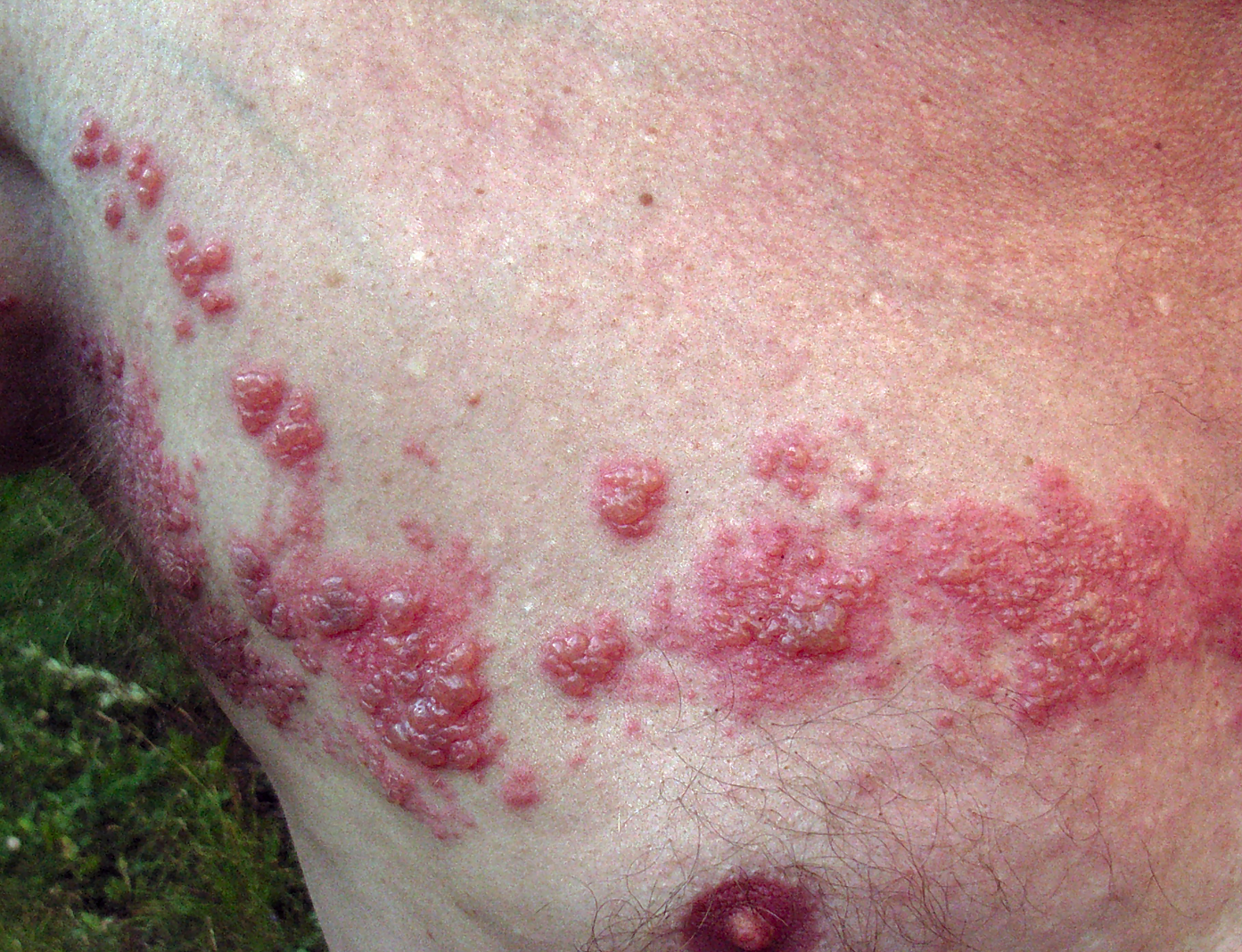
Herpes zoster is a form of herpes in which the lesions follow the course of a nerve.
As a rule, it occurs on only one side of the body. The condition usually manifests along the course of an intercostal nerve, but in principle it can occur along any nerve.
The bursting of the blisters is often preceded by, and may also be followed by, severe nerve pain, known as postherpetic neuralgia.
It is a systemic infection caused by a virus.
It can be serious in older or frail individuals.
Apart from ‘zoster’, the condition is also known as shingles or (in Flanders) ‘zona’.
Reactivation occurs when the body’s immune response is suppressed by another illness, by medication (such as corticosteroids and immunosuppressants) or by old age.
The pain caused by Herpes zoster usually subsides as the rash clears, but in rare cases, particularly in older people, it may be followed by persistent postherpetic neuralgia, which can last for months or even years.
Partial muscle wasting is rather rare.
Source: Jan Dequeker