
Personal reflection by Loes van Damme-Rietvelt
What Caught My Attention?
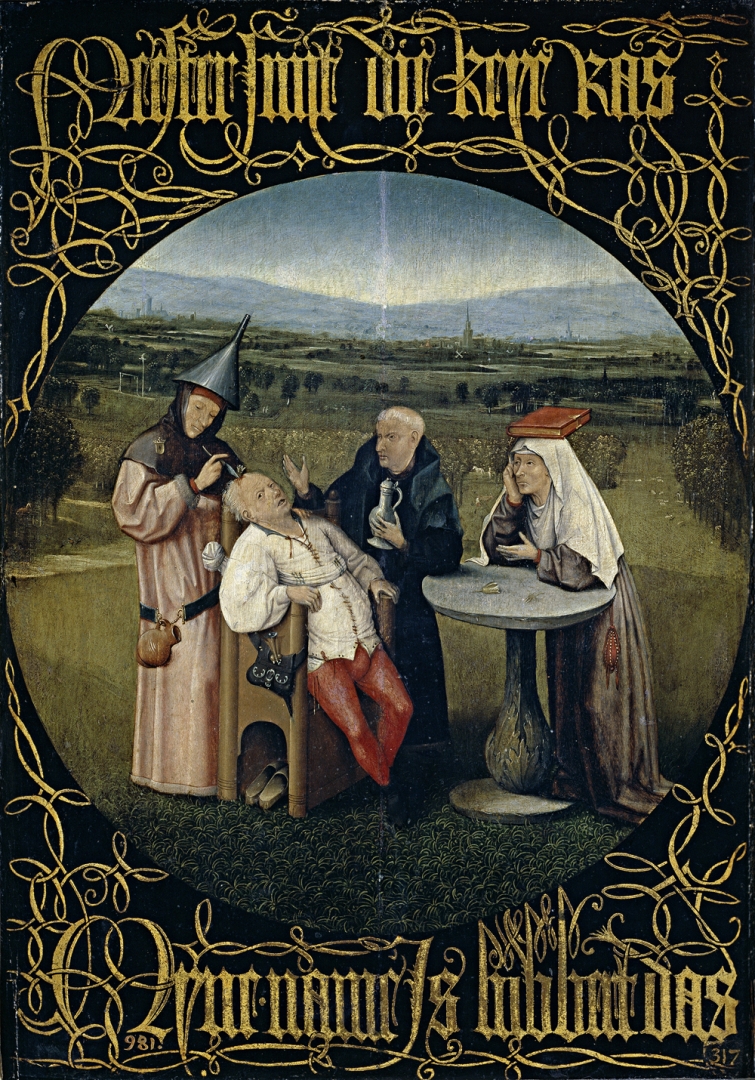
When I look at The Extraction of the Stone of Madness, I first see a patient who has placed his trust in someone else.
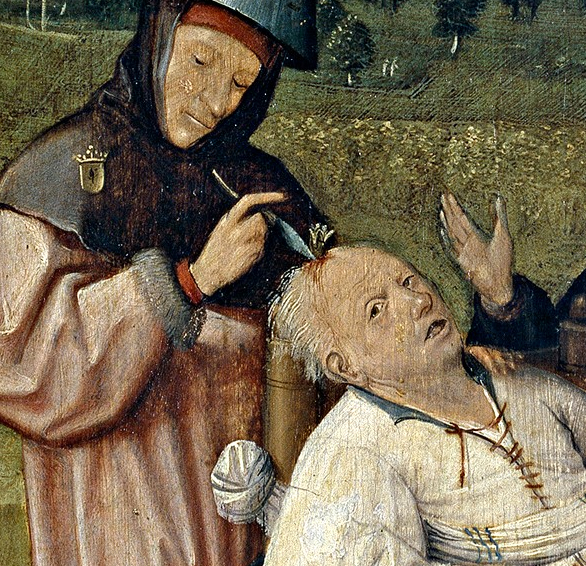
A man sits in a chair while a so-called surgeon cuts into his head. The scene seems absurd. According to the old belief behind this image, foolishness or madness could be caused by a stone inside the head, and removing that stone would make the patient well again.
To us, this seems impossible.
But what interests me most is not the stone.
It is the patient’s trust.
The patient must have had complaints, worries or suffering for which he wanted an explanation. We cannot know what troubled him. What we can see is that he allows another person to perform a procedure on him because he believes, or hopes, that this person knows what he is doing.
That is what makes the painting uncomfortable.
What Does It Make Me Think About?
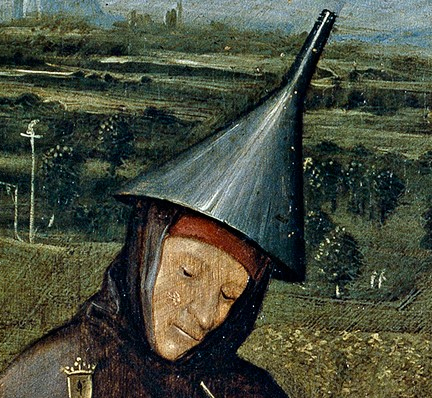
The figure performing the operation presents himself as someone with knowledge and authority. He offers something very powerful: a clear cause and a simple cure.
For someone who is suffering, that can be tempting.
The patient in the painting does not look like someone without means. He appears well dressed and able to pay for treatment. That makes the scene even more interesting to me. It reminds me that anyone can become vulnerable when searching for help, certainty or relief.
Modern medicine is, of course, completely different from the false operation shown here. Today we depend on training, evidence, diagnosis and carefully tested treatments.
Yet the basic human situation has not disappeared.
People still become ill. People still have symptoms they do not understand. People still search for explanations. And people still need to trust someone.
That trust is essential in medicine.
But trust also makes patients vulnerable.
What Has Not Changed?
Every age has its own false promises.
There will always be people who claim to have simple answers to complicated suffering. They may speak with confidence, use impressive words or present themselves as healers, experts or people with special insight.
For someone who is frightened or desperate, that can be enough.
This is why the painting feels less like a strange joke from the past and more like a warning.
It asks a question that is still important today:
How does a patient know whom to trust?
Good medicine is not only about knowledge. It is also about responsibility. When someone claims to heal, that person has power over someone who may be afraid.
For me, The Extraction of the Stone of Madness is a reminder to look carefully at every promise of healing.
Who is speaking?
What is being promised?
Is there evidence?
And is the patient being helped, or merely being used?
The stone may have disappeared from our medical imagination, but the danger of false certainty has not.
That is why this painting still matters.
Not because it shows us madness in the past, but because it reminds us how deeply human it is to hope that someone can take our suffering away.