

Jan van Eyck
1390, Maaseik – 19 July 1441, Bruges, Belgium
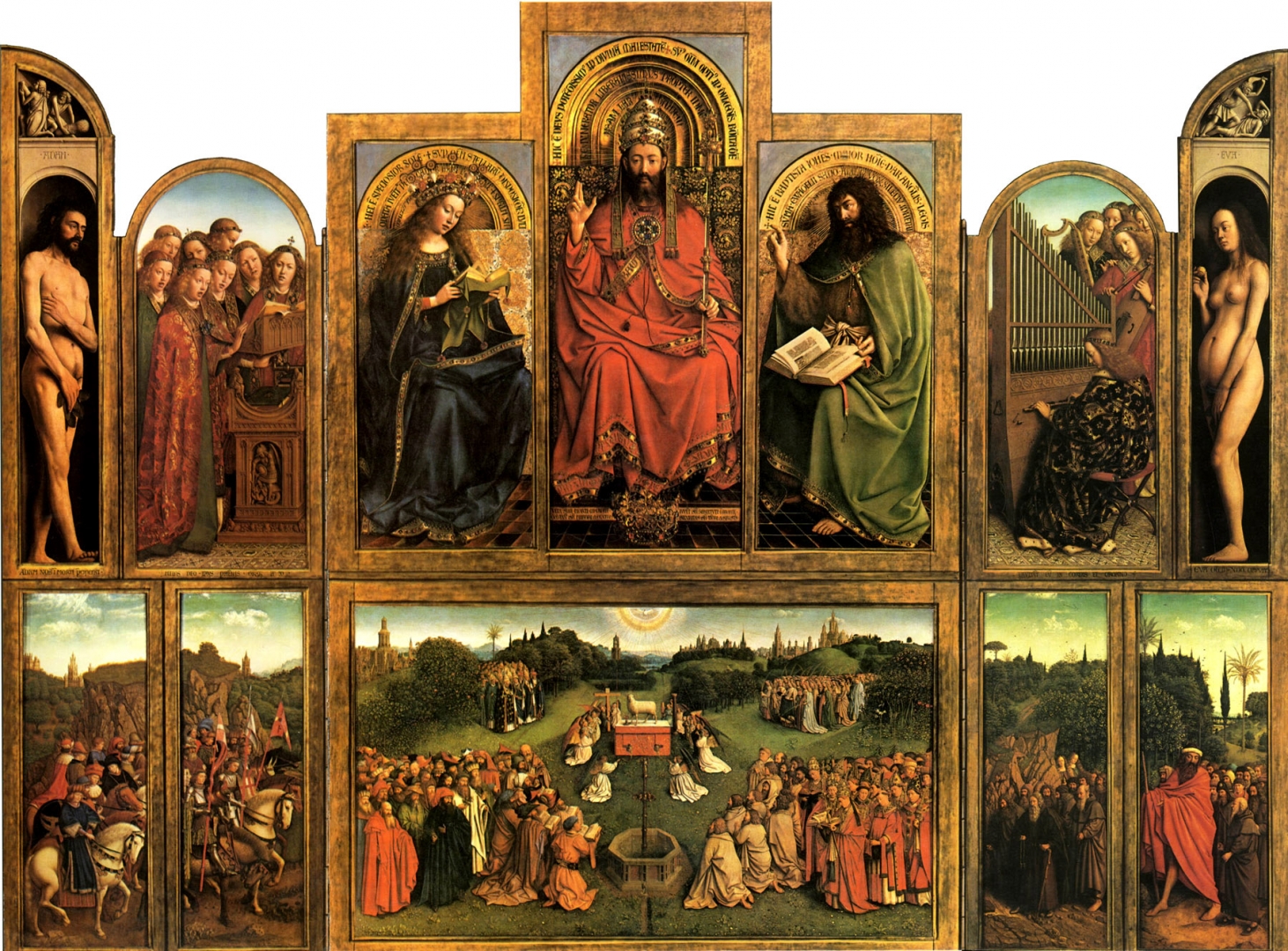
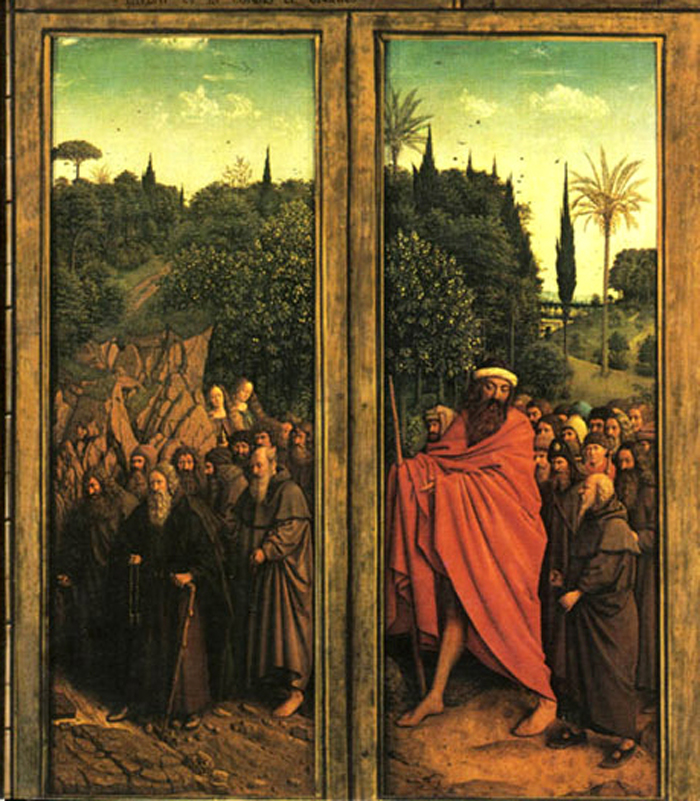
♦ Panel with the Hermits and Pelgrims / The Ghent Altarpiece ♦
The man in this painting is a giant. He is at least one-third taller than the others
He is Saint Christopher, who, according to legend, carried pilgrims—including Christ—across the river.
♦ Diagnosis
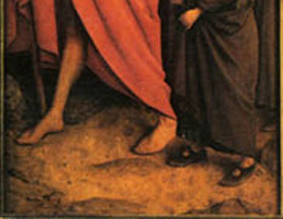
Main features: Very tall man; giant. The left foot is deformed, with a clubfoot (talipes equinovarus), and the great toe is deviated (hallux valgus).
Additional feature: male
Clinical diagnosis: Gigantism, acromegaly, and secondary osteoarthritis.
♦ Definition: gigantism en acromegaly
There are two forms of excessive growth: gigantism and acromegaly
Gigantism develops during adolescence when the body produces too much growth hormone before the growth plates at the ends of the long bones have closed.
Acromegaly develops when the excess production of growth hormone begins after the growth plates have closed.
When excessive growth hormone production begins during adolescence and continues into adulthood, gigantism and acromegaly may occur together.
♦ Discussion
The characteristic feature of acromegaly is an increase in the size of the bones and soft tissues of the hands, feet, brow ridges, sinuses, and lower jaw.
The skin becomes thick and coarse. The subcutaneous tissues also increase in thickness, which is often most noticeable in the tongue, lips, and ears. Internal organs such as the heart, thyroid gland, and liver may also become enlarged. Carbohydrate tolerance decreases, and approximately half of untreated patients develop glucose in the urine (glycosuria).
As the disease progresses, the patient often develops osteoarthritis, a degenerative condition affecting the cartilage. Kyphosis and muscle weakness may also occur. High blood pressure is a common complication. Mental tasks may become more difficult, and patients often become irritable and complain of persistent headaches.
Some of these symptoms are caused by impaired pituitary function due to pressure from a pituitary tumour.
The disease usually progresses slowly. However, in many patients who show certain signs of acromegaly, the condition appears to have become stable and no longer progresses.
Source: Jan Dequeker

Gigantism & Acromegaly
References
Jan Dequeker
The Artist and the Doctor Look at Paintings
Photos
Wikipedia